Olmedo Andrés, Ullrich René, Hofrichter Martin, Del Río José C, Martínez Ángel T, Gutiérrez Ana
Instituto de Recursos Naturales y Agrobiología de Sevilla, CSIC, Av. Reina Mercedes 10, 41012 Seville, Spain.
Unit of Bio- and Environmental Sciences, TU Dresden, International Institute Zittau, Markt 23, 02763 Zittau, Germany.
Antioxidants (Basel). 2022 Apr 8;11(4):744. doi: 10.3390/antiox11040744.
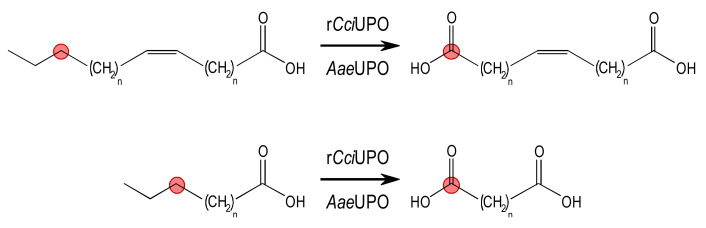
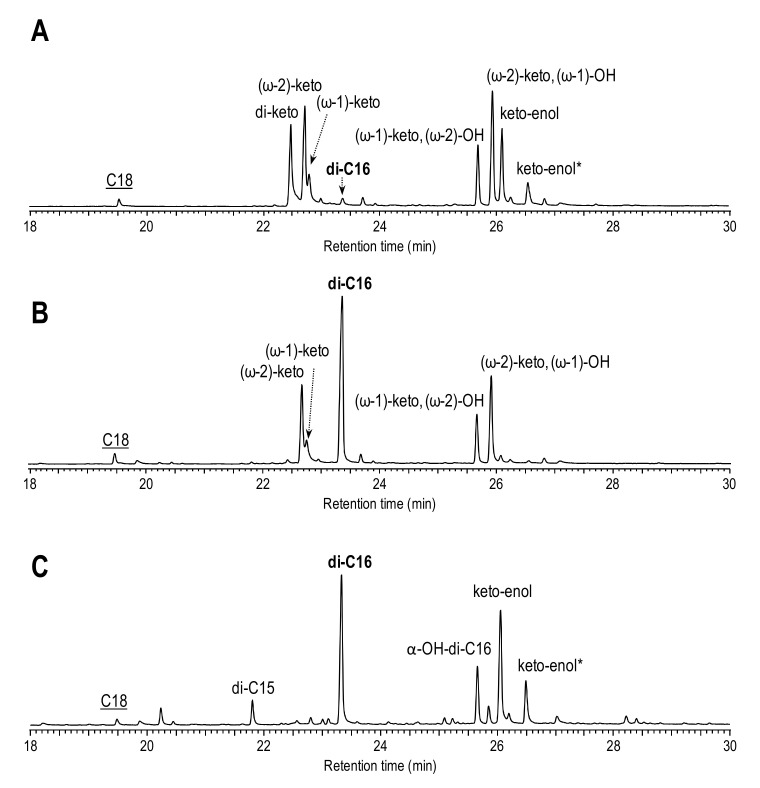
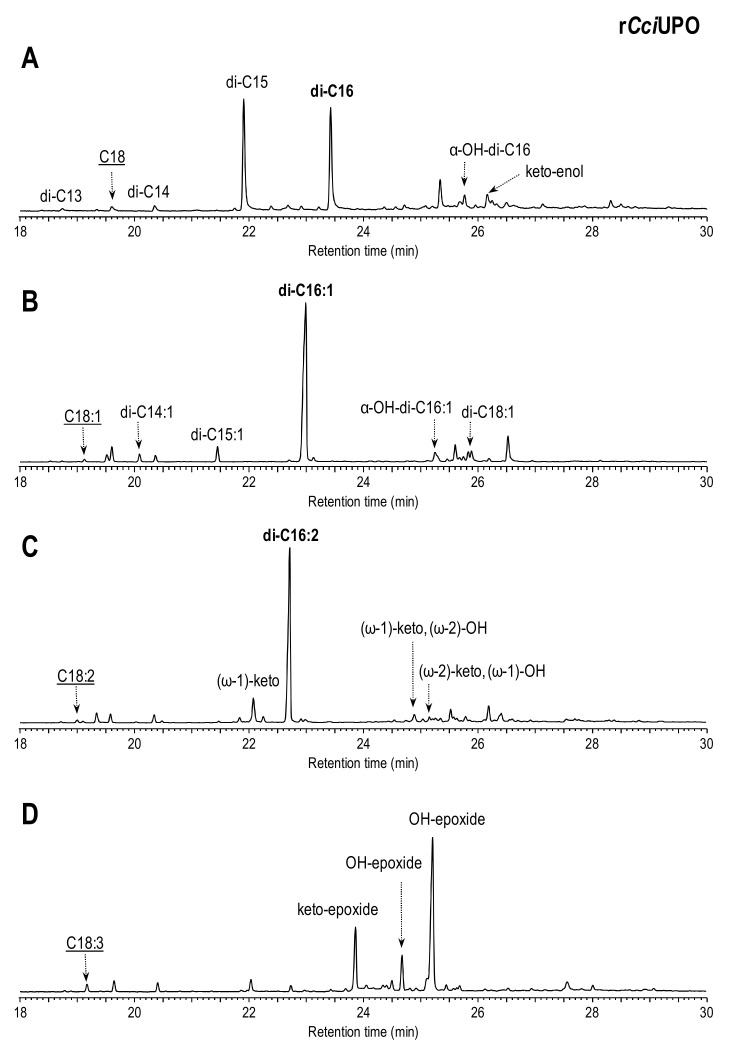
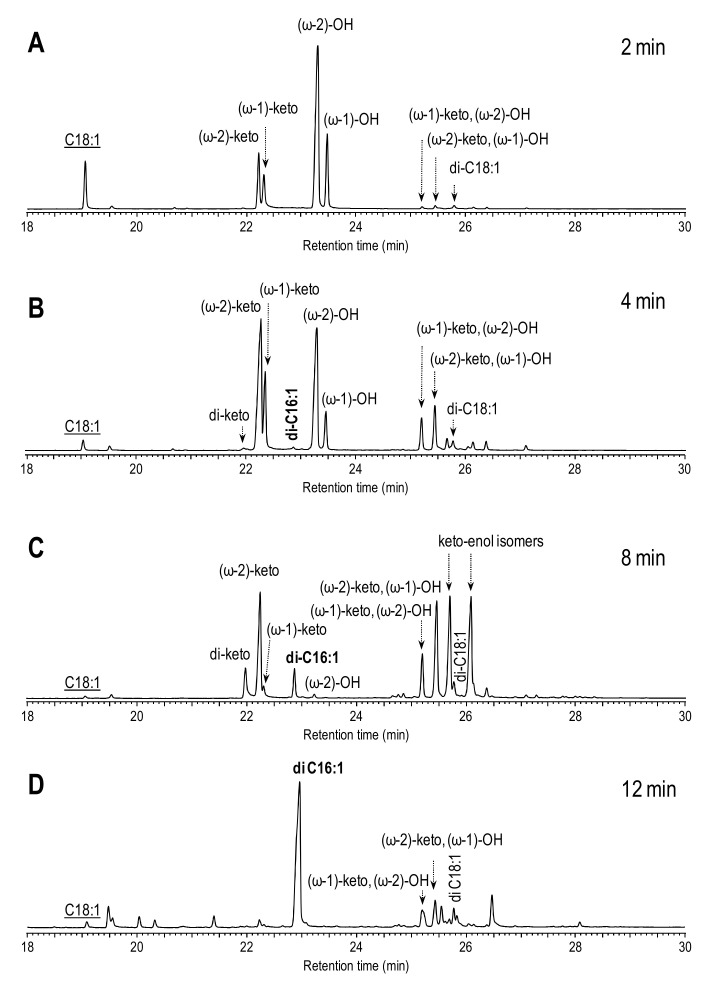
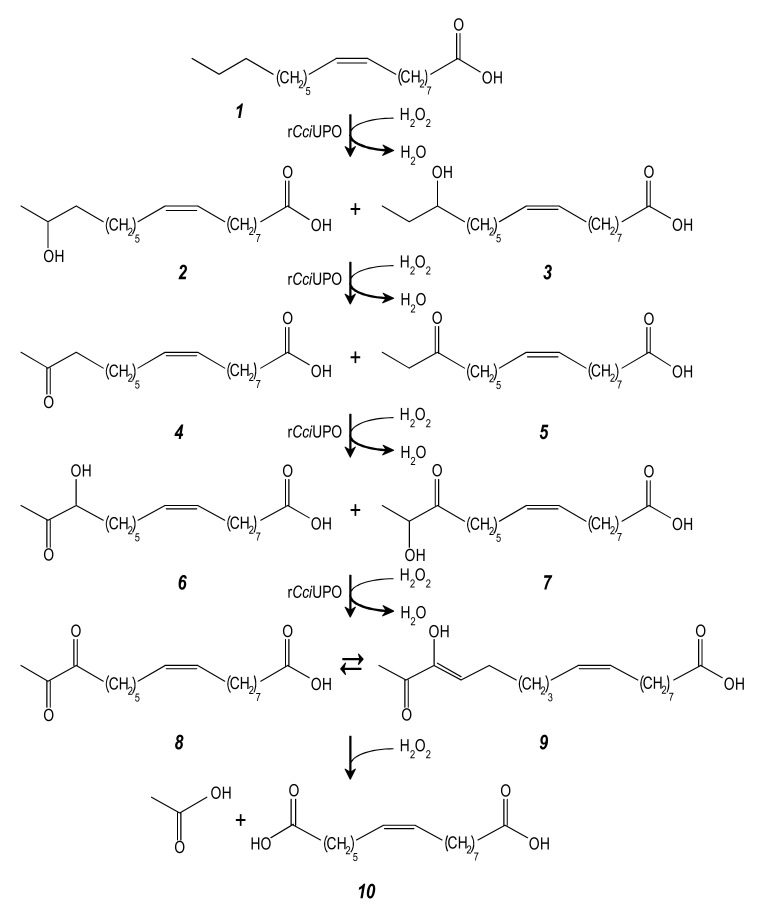
Unspecific peroxygenases (UPOs), the extracellular enzymes capable of oxygenating a potpourri of aliphatic and aromatic substrates with a peroxide as co-substrate, come out with a new reaction: carbon-chain shortening during the conversion of fatty acids with the well-known UPOs from (rUPO) and () (UPO). Although a pathway (Cα-oxidation) for shortening the hydrocarbon chain of saturated fatty acids has already been reported for the UPO from (UPO), it turned out that rUPO and UPO shorten the chain length of both saturated and unsaturated fatty acids in a different way. Thus, the reaction sequence does not necessarily start at the Cα-carbon (adjacent to the carboxyl group), as in the case of UPO, but proceeds through the subterminal (ω-1 and ω-2) carbons of the chain via several oxygenations. This new type of shortening leads to the formation of a dicarboxylic fatty acid reduced in size by two carbon atoms in the first step, which can subsequently be further shortened, carbon by carbon, by the UPO Cα-oxidation mechanism.
非特异性过氧酶(UPOs)是一类胞外酶,能够以过氧化物作为共底物,氧化多种脂肪族和芳香族底物。它们展现出一种新反应:在利用来自[具体来源1](rUPO)和[具体来源2](UPO)的著名UPOs转化脂肪酸的过程中,实现碳链缩短。尽管针对来自[具体来源3]的UPO(UPO)已有报道一种缩短饱和脂肪酸烃链的途径(α-氧化),但结果表明rUPO和UPO以不同方式缩短饱和脂肪酸和不饱和脂肪酸的链长。因此,反应序列不一定像UPO那样从α-碳(与羧基相邻)开始,而是通过链的亚末端(ω-1和ω-2)碳,经过多次氧化进行。这种新型的缩短方式在第一步会导致形成一种碳原子数减少两个的二羧酸脂肪酸,随后它可以通过UPO的α-氧化机制逐个碳原子地进一步缩短。