Karich Alexander, Ullrich René, Scheibner Katrin, Hofrichter Martin
Department of Bio-and Environmental Sciences, Technische Universität Dresden-International Institute ZittauZittau, Germany.
Enzyme Technology Unit, Brandenburg University of TechnologyCottbus, Germany.
Front Microbiol. 2017 Aug 9;8:1463. doi: 10.3389/fmicb.2017.01463. eCollection 2017.
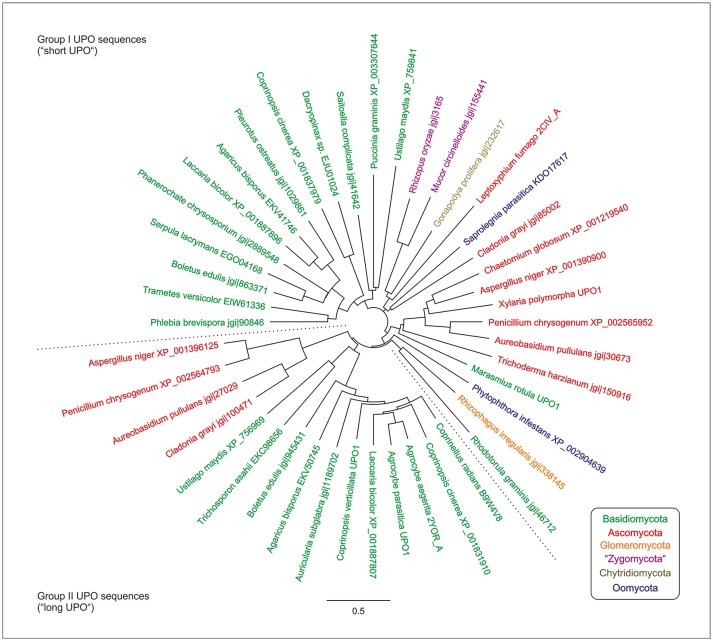
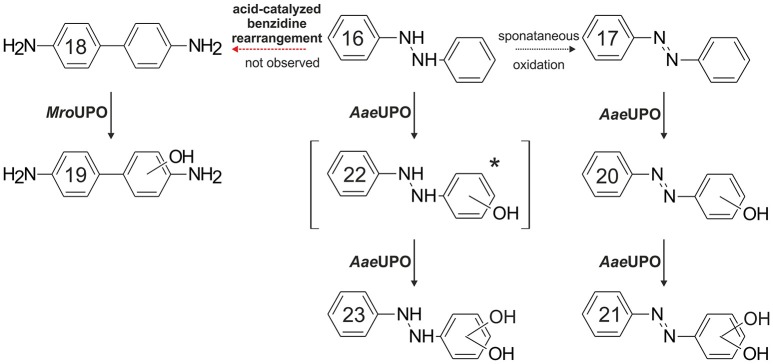
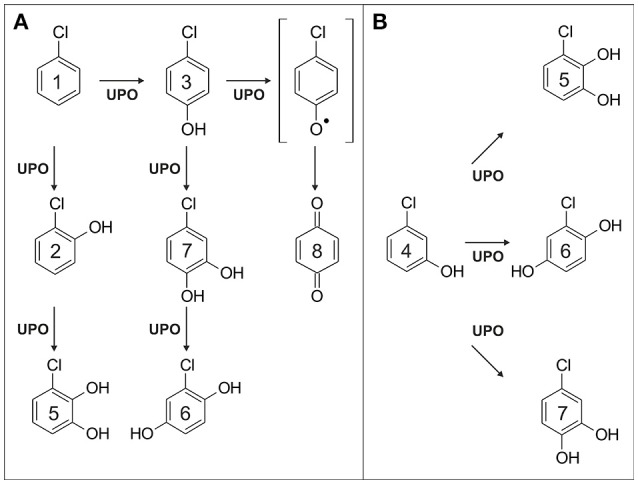
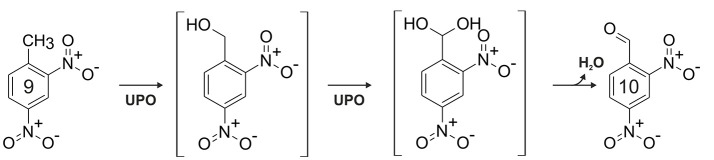
Unspecific peroxygenases (UPOs) are secreted fungal enzymes with promiscuity for oxygen transfer and oxidation reactions. Functionally, they represent hybrids of P450 monooxygenases and heme peroxidases; phylogenetically they belong to the family of heme-thiolate peroxidases. Two UPOs from the basidiomycetous fungi (UPO) and (UPO) converted 35 out of 40 compounds listed as EPA priority pollutants, including chlorinated benzenes and their derivatives, halogenated biphenyl ethers, nitroaromatic compounds, polycyclic aromatic hydrocarbons (PAHs) and phthalic acid derivatives. These oxygenations and oxidations resulted in diverse products and-if at all-were limited for three reasons: (i) steric hindrance caused by multiple substitutions or bulkiness of the compound as such (e.g., hexachlorobenzene or large PAHs), (ii) strong inactivation of aromatic rings (e.g., nitrobenzene), and (iii) low water solubility (e.g., complex arenes). The general outcome of our study is that UPOs can be considered as extracellular counterparts of intracellular monooxygenases, both with respect to catalyzed reactions and catalytic versatility. Therefore, they should be taken into consideration as a relevant biocatalytic detoxification and biodegradation tool used by fungi when confronted with toxins, xenobiotics and pollutants in their natural environments.
非特异性过氧酶(UPOs)是真菌分泌的酶,对氧转移和氧化反应具有广泛的适应性。在功能上,它们代表了细胞色素P450单加氧酶和血红素过氧化物酶的杂交体;在系统发育上,它们属于血红素硫醇盐过氧化物酶家族。来自担子菌真菌的两种UPOs(UPO)和(UPO)转化了美国环境保护局(EPA)列为优先污染物的40种化合物中的35种,包括氯苯及其衍生物、卤代联苯醚、硝基芳香化合物、多环芳烃(PAHs)和邻苯二甲酸衍生物。这些氧化反应产生了多种产物,并且——如果有的话——由于三个原因而受到限制:(i)化合物本身的多个取代基或体积较大导致的空间位阻(例如,六氯苯或大型多环芳烃),(ii)芳环的强烈失活(例如,硝基苯),以及(iii)低水溶性(例如,复杂芳烃)。我们研究的总体结果是,就催化反应和催化多功能性而言,UPOs可被视为细胞内单加氧酶的细胞外对应物。因此,当真菌在自然环境中面临毒素、外源化合物和污染物时,应将它们作为真菌使用的一种相关生物催化解毒和生物降解工具加以考虑。