Kung Woon-Man, Lin Chai-Ching, Chen Wei-Jung, Jiang Li-Lin, Sun Yu-Yo, Hsieh Kuang-Hui, Lin Muh-Shi
Division of Neurosurgery, Department of Surgery, Taipei Tzu Chi Hospital, Buddhist Tzu Chi Medical Foundation, New Taipei City 23142, Taiwan.
Department of Exercise and Health Promotion, College of Kinesiology and Health, Chinese Culture University, Taipei 11114, Taiwan.
Biomedicines. 2022 Mar 27;10(4):777. doi: 10.3390/biomedicines10040777.
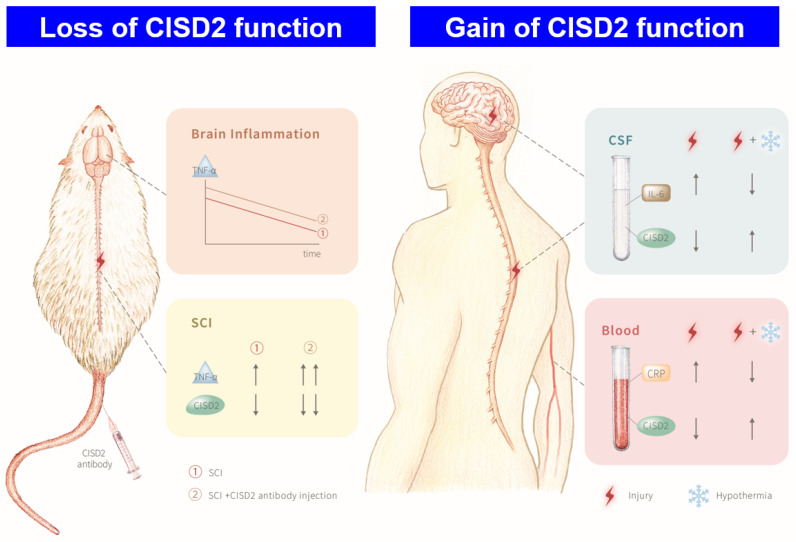
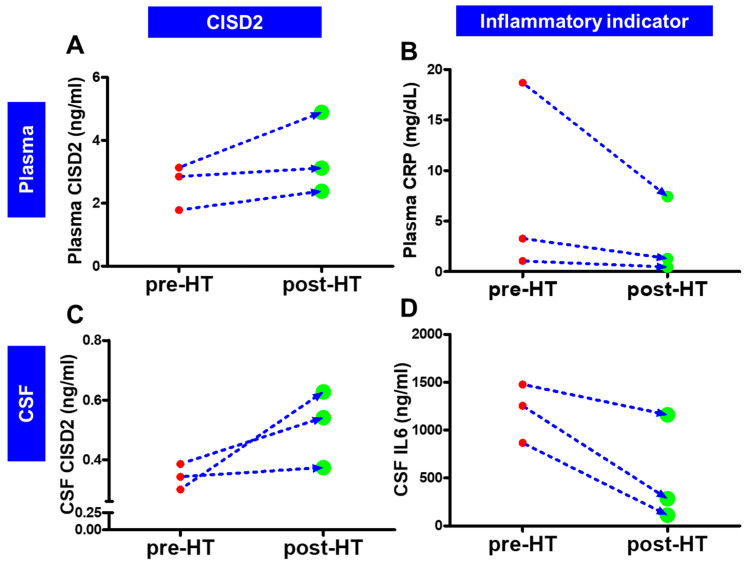
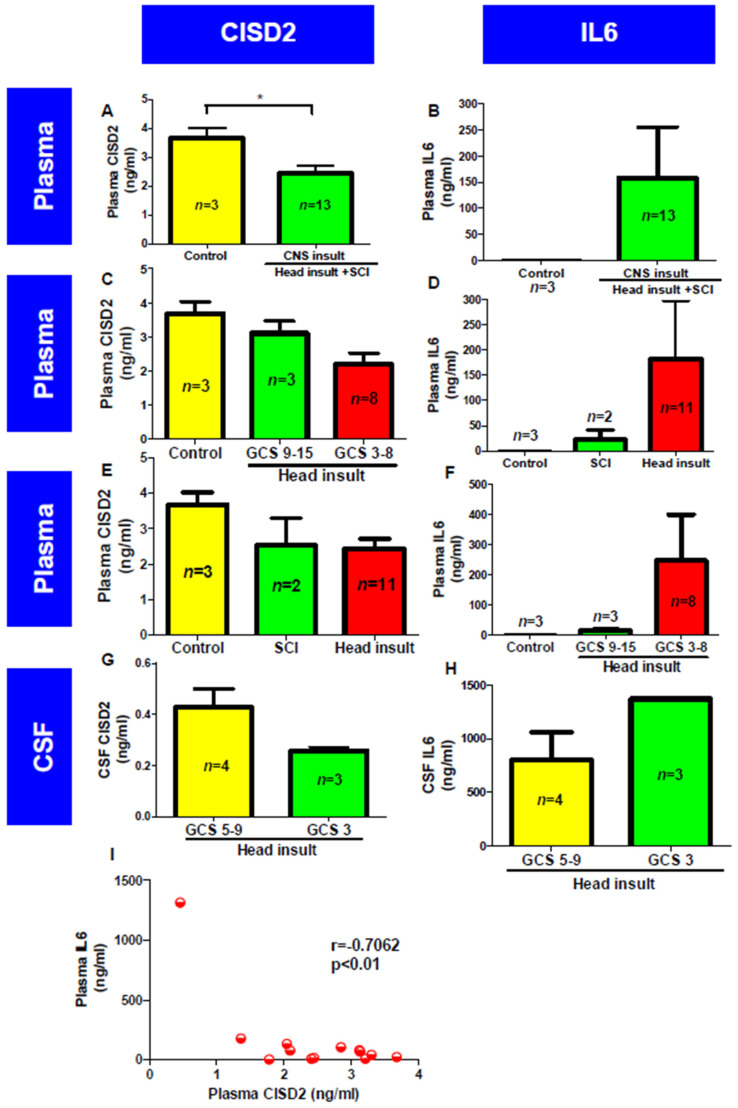
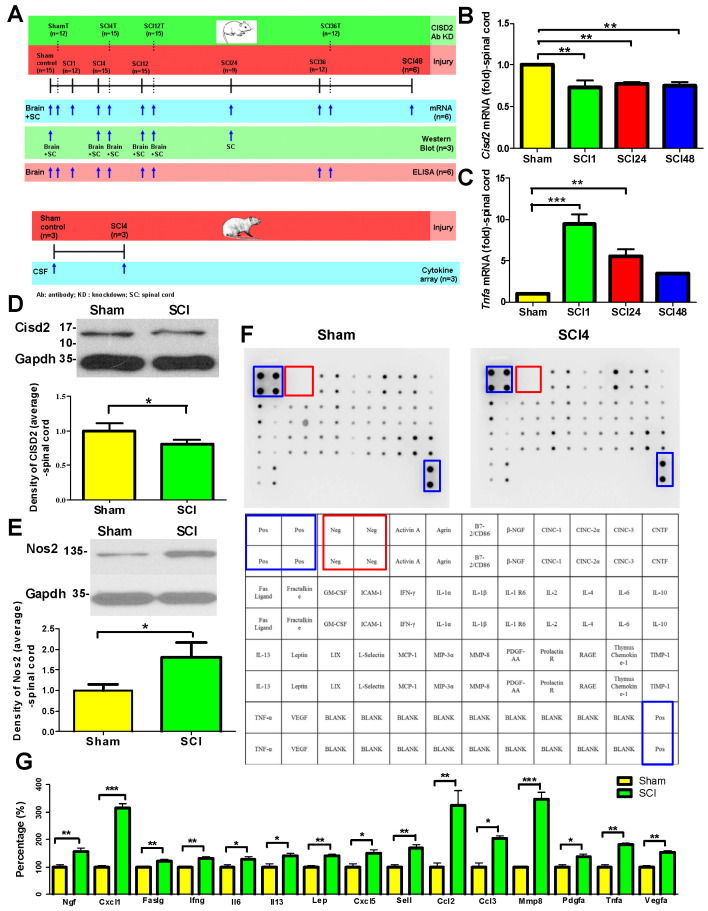
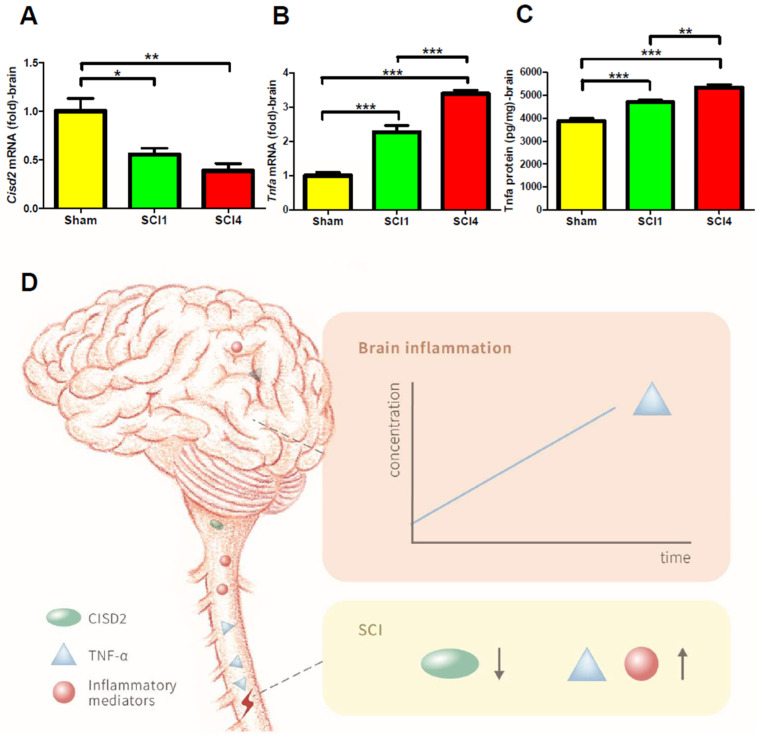
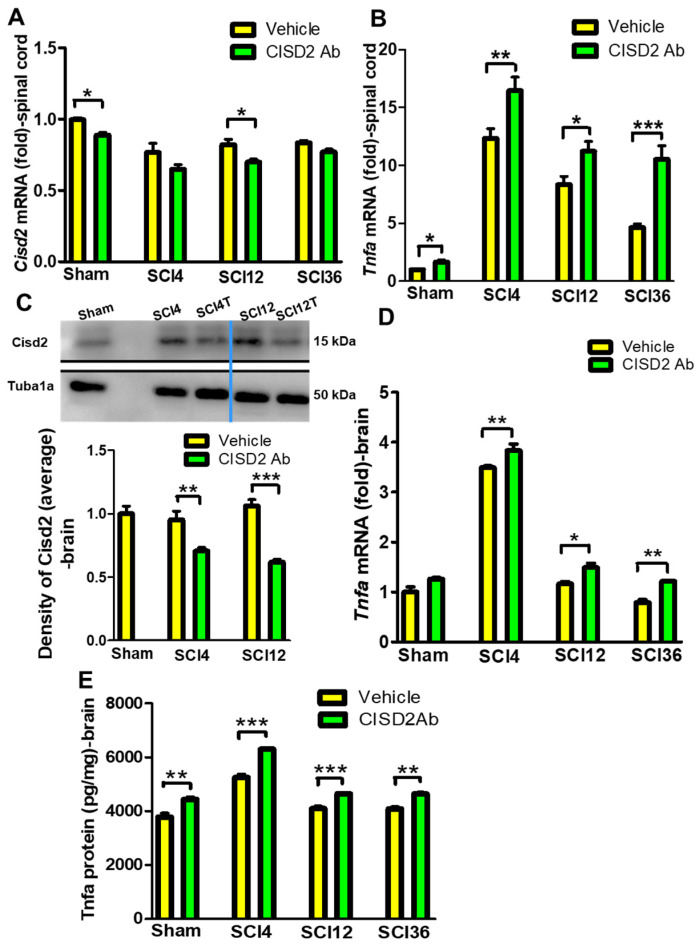
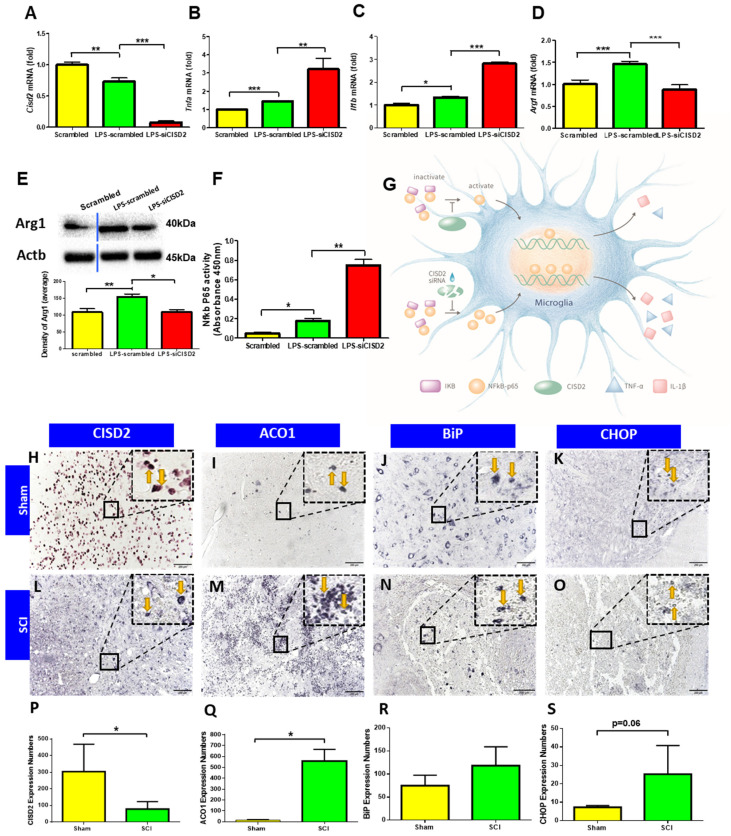
Spinal cord injury (SCI) promotes brain inflammation; conversely, brain injury promotes spinal neuron loss. There is a need to identify molecular biomarkers and therapeutic targets for central nervous system (CNS) injury. CDGSH iron-sulfur structural domain 2 (CISD2), an NF-κB antagonist, is downregulated after injury in vivo and in vitro. We aimed to examine the diagnostic value of CISD2 in patients with CNS insult. Plasma and cerebrospinal fluid (CSF) CISD2 levels were decreased in 13 patients with CNS insult and were negatively correlated with plasma IL6 levels (associated with disease severity; r = −0.7062; p < 0.01). SCI-induced inflammatory mediators delivered through CSF promoted mouse brain inflammation at 1 h post-SCI. Anti-CISD2 antibody treatment exacerbated SCI-induced inflammation in mouse spine and brain. Lipopolysaccharide-stimulated siCISD2-transfected EOC microglial cells exhibited proinflammatory phenotypes (enhanced M1 polarization, decreased M2 polarization, and increased intranuclear NF-κB p65 translocation). Plasma and CSF CISD2 levels were increased in three patients with CNS insult post-therapeutic hypothermia. CISD2 levels were negatively correlated with plasma and CSF levels of inflammatory mediators. CISD2 inhibition and potentiation experiments in cells, animals, and humans revealed CISD2 as a biomarker for CNS insult and upregulation of CISD2 anti-inflammatory properties as a potential therapeutic strategy for CNS insult.
脊髓损伤(SCI)会引发脑部炎症;相反,脑损伤会促使脊髓神经元丢失。有必要确定中枢神经系统(CNS)损伤的分子生物标志物和治疗靶点。CDGSH铁硫结构域2(CISD2)作为一种核因子κB拮抗剂,在体内和体外损伤后表达下调。我们旨在研究CISD2在中枢神经系统损伤患者中的诊断价值。13例中枢神经系统损伤患者的血浆和脑脊液(CSF)中CISD2水平降低,且与血浆白细胞介素6水平呈负相关(白细胞介素6与疾病严重程度相关;r = -0.7062;p < 0.01)。脊髓损伤后1小时,通过脑脊液传递的脊髓损伤诱导的炎症介质会促进小鼠脑部炎症。抗CISD2抗体治疗会加剧脊髓损伤诱导的小鼠脊柱和脑部炎症。脂多糖刺激的转染siCISD2的EOC小胶质细胞表现出促炎表型(M1极化增强、M2极化降低以及核内核因子κB p65易位增加)。3例接受治疗性低温的中枢神经系统损伤患者的血浆和脑脊液CISD2水平升高。CISD2水平与炎症介质的血浆和脑脊液水平呈负相关。在细胞、动物和人类中进行的CISD2抑制和增强实验表明,CISD2是中枢神经系统损伤的生物标志物,上调CISD2的抗炎特性是中枢神经系统损伤的一种潜在治疗策略。