Domenicale Chiara, Mercatelli Daniela, Albanese Federica, Novello Salvatore, Vincenzi Fabrizio, Varani Katia, Morari Michele
Department of Neuroscience and Rehabilitation, University of Ferrara, 44121 Ferrara, Italy.
Technopole of Ferrara, LTTA Laboratory for Advanced Therapies, 44121 Ferrara, Italy.
Biomedicines. 2022 Apr 12;10(4):881. doi: 10.3390/biomedicines10040881.
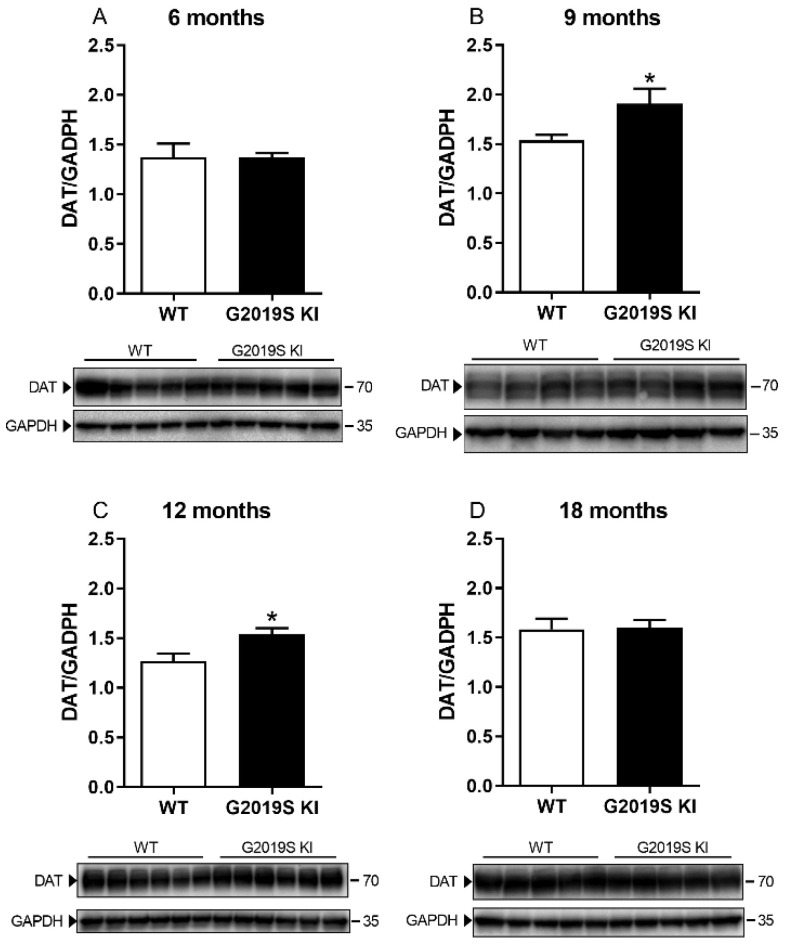
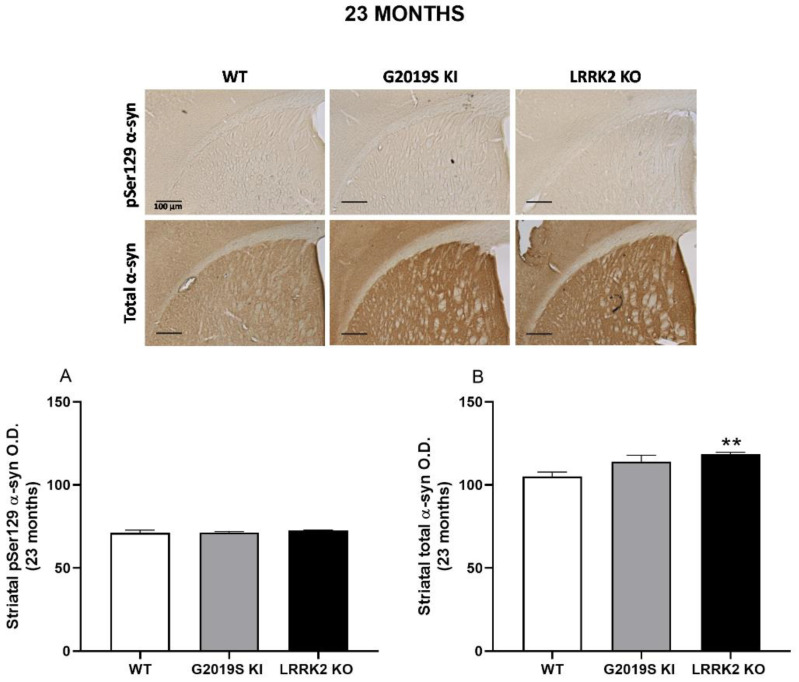
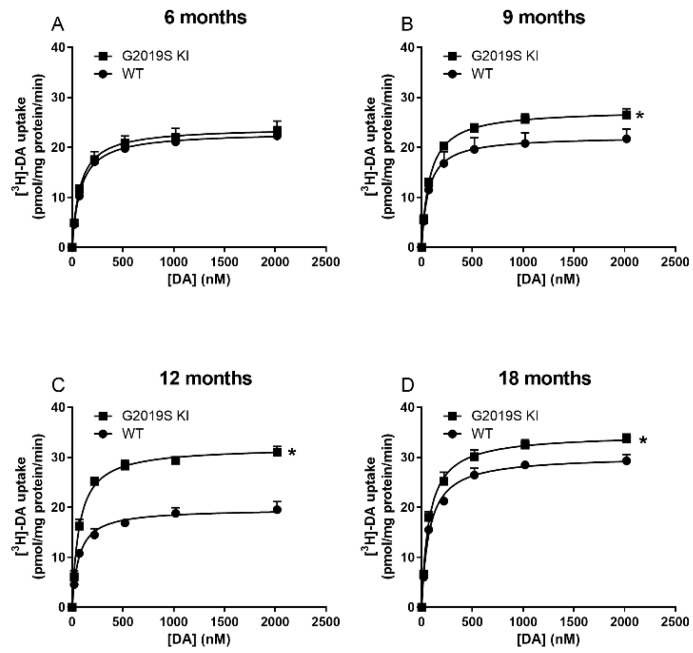
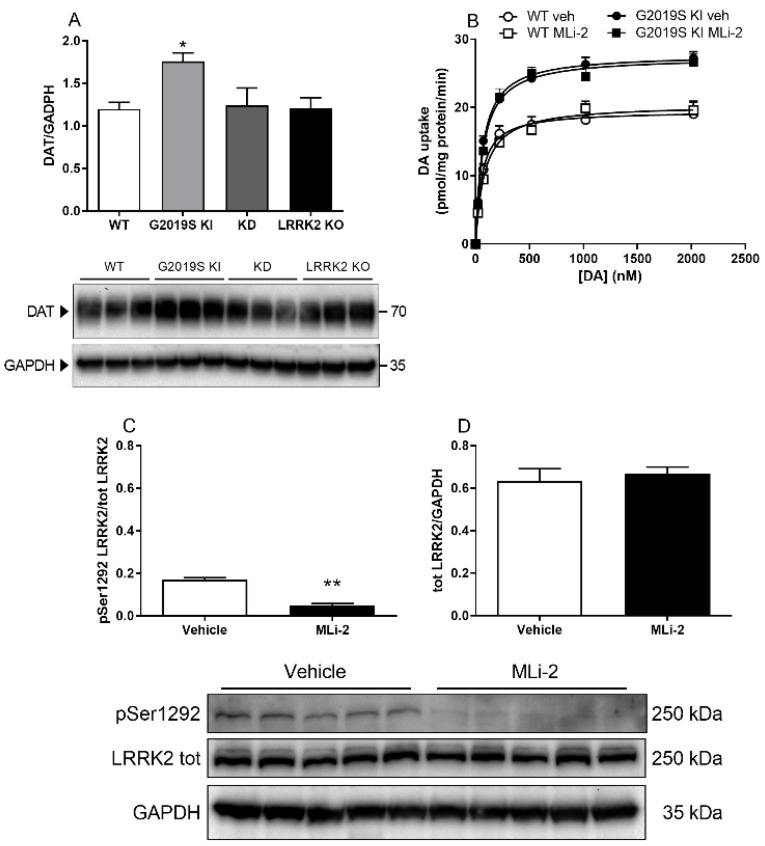
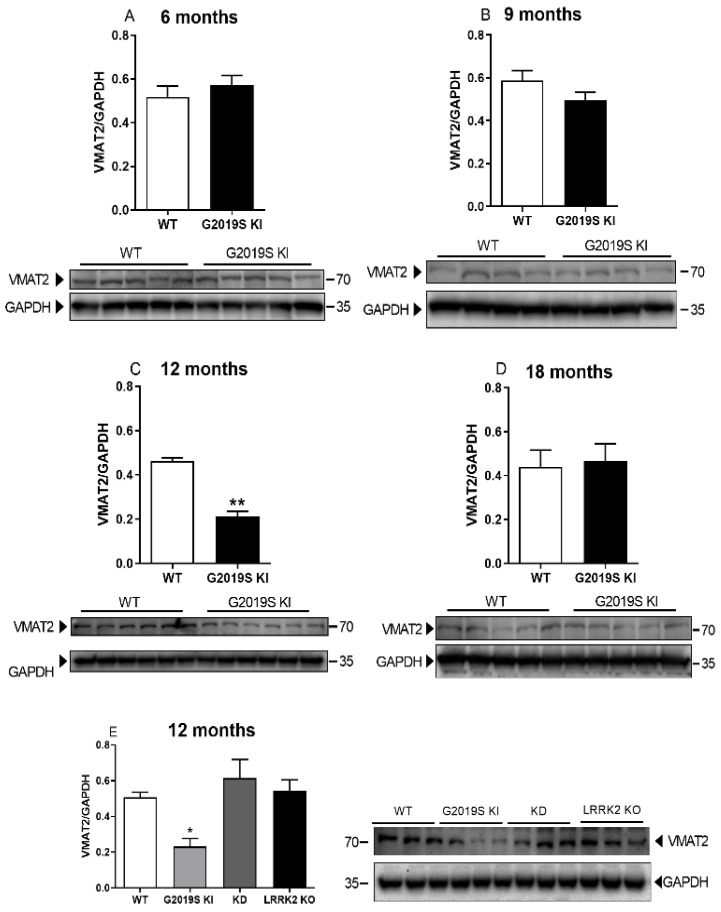
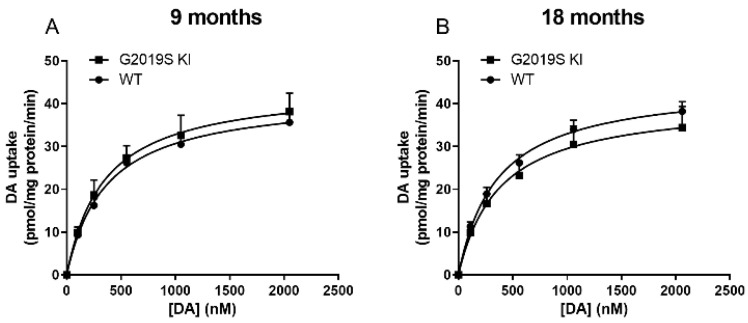
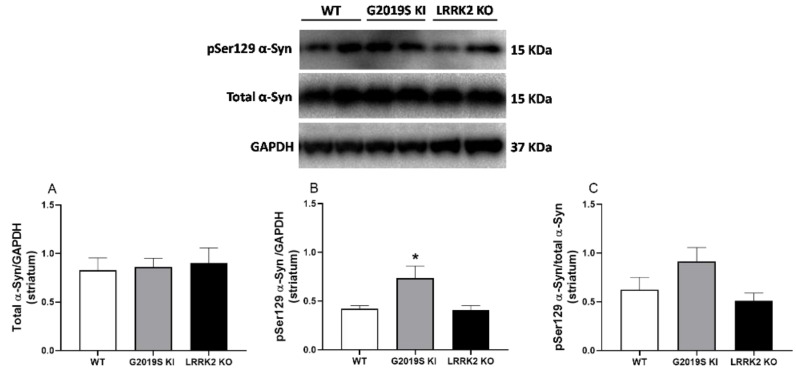
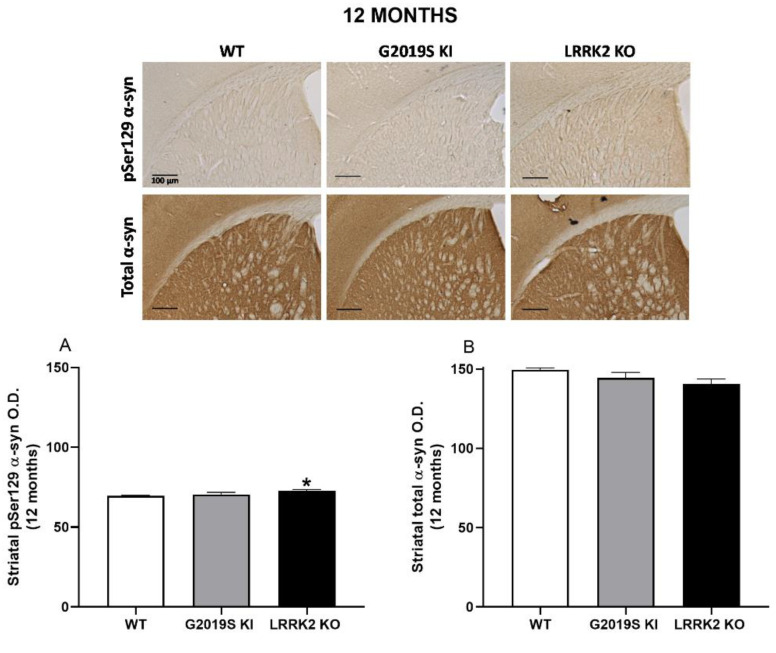
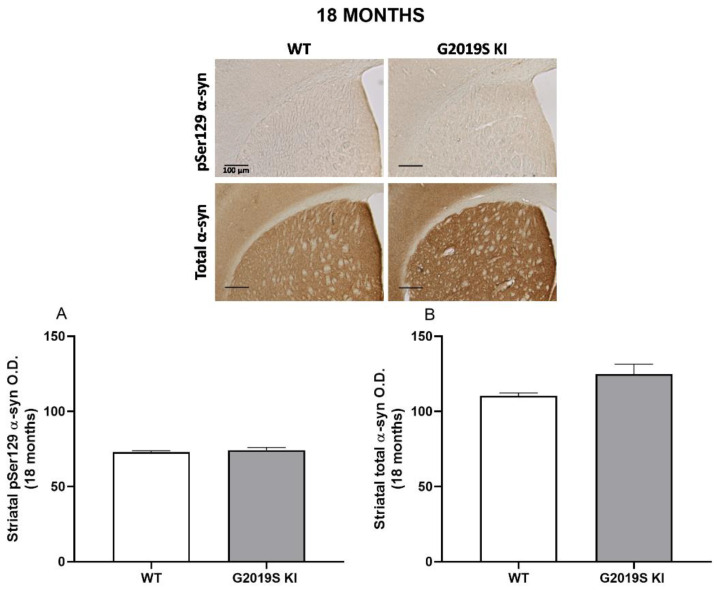
The G2019S mutation in leucine rich-repeat kinase 2 (LRRK2) is a major cause of familial Parkinson's disease. We previously reported that G2019S knock-in mice manifest dopamine transporter dysfunction and phosphoSerine129 α-synuclein (pSer129 α-syn) immunoreactivity elevation at 12 months of age, which might represent pathological events leading to neuronal degeneration. Here, the time-dependence of these changes was monitored in the striatum of 6, 9, 12, 18 and 23-month-old G2019S KI mice and wild-type controls using DA uptake assay, Western analysis and immunohistochemistry. Western analysis showed elevation of membrane dopamine transporter (DAT) levels at 9 and 12 months of age, along with a reduction of vesicular monoamine transporter 2 (VMAT2) levels at 12 months. DAT uptake was abnormally elevated from 9 to up to 18 months. DAT and VMAT2 level changes were specific to the G2019S mutation since they were not observed in LRRK2 kinase-dead or knock-out mice. Nonetheless, dysfunctional DAT uptake was not normalized by acute pharmacological inhibition of LRRK2 kinase activity with MLi-2. Immunoblot analysis showed elevation of pSer129 α-syn levels in the striatum of 12-month-old G2019S KI mice, which, however, was not confirmed by immunohistochemical analysis. Instead, total α-syn immunoreactivity was found elevated in the striatum of 23-month-old LRRK2 knock-out mice. These data indicate mild changes in DA transporters and α-syn metabolism in the striatum of 12-month-old G2019S KI mice whose pathological relevance remains to be established.
富含亮氨酸重复激酶2(LRRK2)中的G2019S突变是家族性帕金森病的主要病因。我们之前报道,G2019S基因敲入小鼠在12月龄时表现出多巴胺转运体功能障碍和磷酸化丝氨酸129 α-突触核蛋白(pSer129 α-syn)免疫反应性升高,这可能代表导致神经元变性的病理事件。在此,使用多巴胺摄取测定、蛋白质免疫印迹分析和免疫组织化学方法,对6、9、12、18和23月龄的G2019S基因敲入小鼠及野生型对照小鼠纹状体中这些变化的时间依赖性进行了监测。蛋白质免疫印迹分析显示,在9和12月龄时膜多巴胺转运体(DAT)水平升高,同时在12月龄时囊泡单胺转运体2(VMAT2)水平降低。从9月龄到18月龄,DAT摄取异常升高。DAT和VMAT2水平的变化是G2019S突变所特有的,因为在LRRK2激酶失活或敲除小鼠中未观察到这些变化。尽管如此,用MLi-2急性药理学抑制LRRK2激酶活性并不能使功能失调的DAT摄取恢复正常。免疫印迹分析显示,12月龄G2019S基因敲入小鼠纹状体中pSer129 α-syn水平升高,然而,免疫组织化学分析未证实这一点。相反,在23月龄LRRK2基因敲除小鼠的纹状体中发现总α-突触核蛋白免疫反应性升高。这些数据表明,12月龄G2019S基因敲入小鼠纹状体中多巴胺转运体和α-突触核蛋白代谢有轻微变化,但其病理相关性仍有待确定。