Buliga-Finis Oana Nicoleta, Ouatu Anca, Badescu Minerva Codruta, Dima Nicoleta, Tanase Daniela Maria, Richter Patricia, Rezus Ciprian
Department of Internal Medicine, "Grigore T. Popa" University of Medicine and Pharmacy, 700115 Iasi, Romania.
Internal Medicine Clinic, "Sf. Spiridon" County Clinical Emergency Hospital, 700111 Iasi, Romania.
Diagnostics (Basel). 2022 Mar 22;12(4):773. doi: 10.3390/diagnostics12040773.
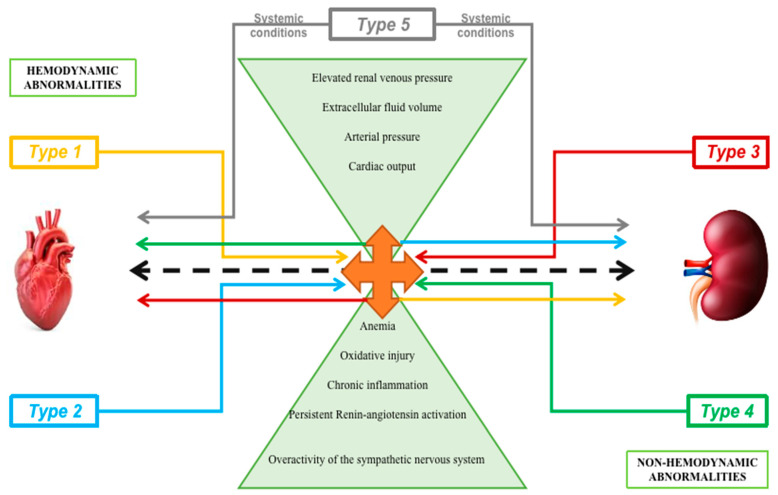
Cardiorenal syndrome encompasses complex multifactorial facets and carries significant morbidity and mortality worldwide. The bi-directional relationship between the heart and kidneys, where dysfunction in one organ worsens the function of the other, has been the leading motor for research in the last few years. In the pathophysiological process, small noncoding RNAs, epigenetics, vascular growth factors, oxidative stress, hemodynamic factors, and biomarkers play a pivotal role in the development of cardiorenal syndrome. It is therefore important to elucidate all the mechanisms in order to provide diagnostic and treatments tools. This review summarizes the hemodynamic and non-hemodynamic pathways along with biomarkers that could be the next target for diagnosis, treatment, and prognosis in cardiorenal syndrome.
心肾综合征包含复杂的多因素层面,在全球范围内具有显著的发病率和死亡率。心脏和肾脏之间的双向关系,即一个器官的功能障碍会使另一个器官的功能恶化,这在过去几年一直是研究的主要驱动力。在病理生理过程中,小非编码RNA、表观遗传学、血管生长因子、氧化应激、血流动力学因素和生物标志物在心肾综合征的发展中起关键作用。因此,阐明所有机制以提供诊断和治疗工具很重要。本综述总结了血流动力学和非血流动力学途径以及生物标志物,这些可能是心肾综合征诊断、治疗和预后的下一个靶点。