Verma Deepak, Firoz Amena, Garlapati Sameer Krishna Prasad, Sai Charaan Reddy Sathi Thanmay, Haris Muhammad, Dhungana Bibek, Ray Barun, Shah Gunjan, Kc Bibek, Paudel Palak
Internal Medicine/Family Medicine, Janaki Medical College, Janakpurdham, NPL.
Research, California Institute of Behavioral Neurosciences & Psychology, Fairfield, USA.
Cureus. 2021 Aug 17;13(8):e17240. doi: 10.7759/cureus.17240. eCollection 2021 Aug.
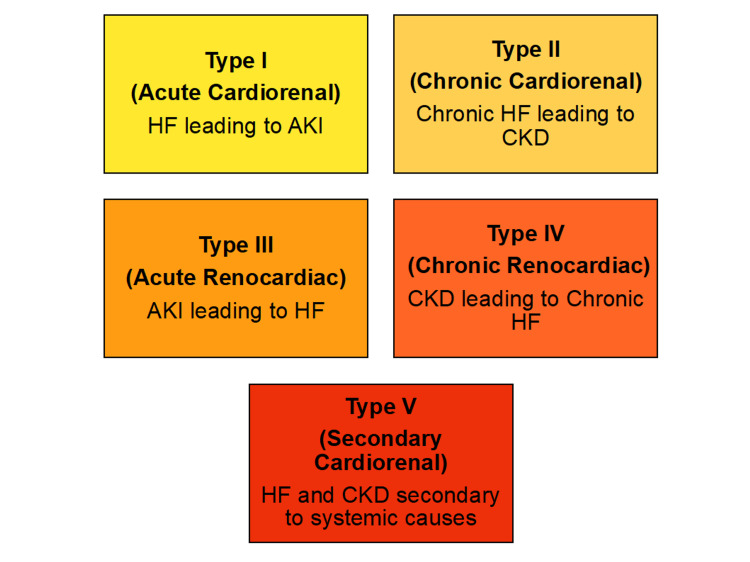
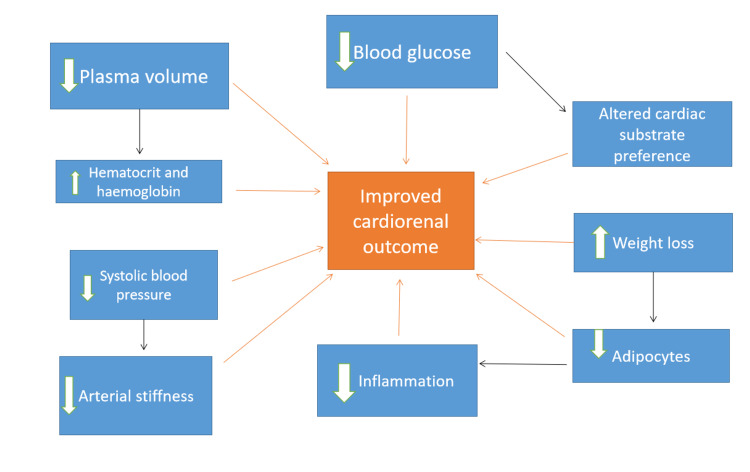
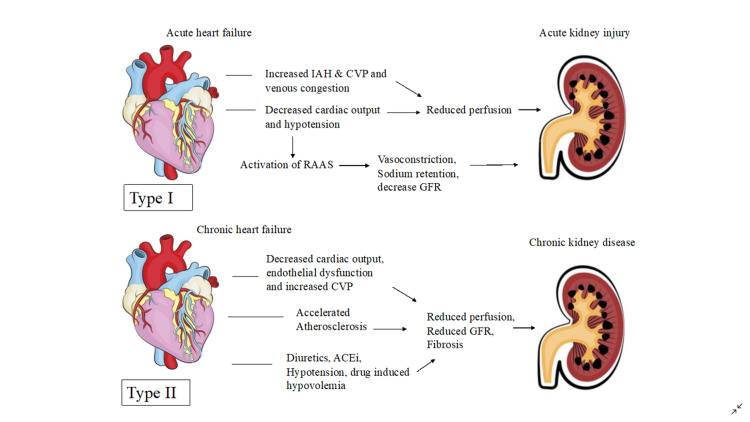
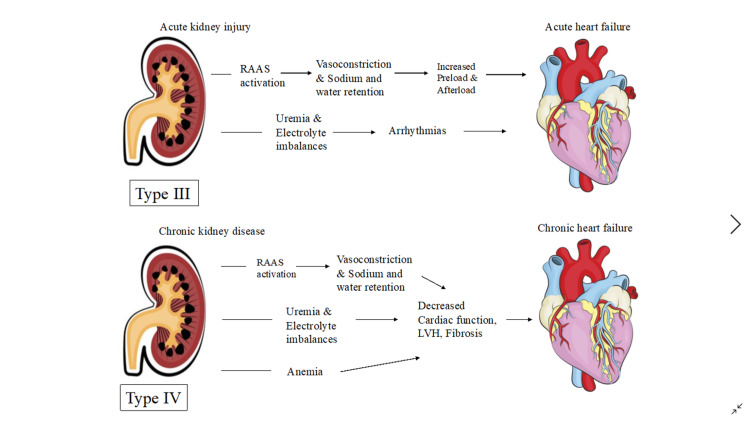
Cardiorenal syndrome refers to combined cardiac and renal dysfunction that adversely impacts both organs and is also associated with severe clinical outcomes. The pathophysiology is believed to be multifactorial and complex. Increased central venous pressure and intra-abdominal pressure, overactivation of the Renin-Angiotensin-Aldosterone System (RAAS), systemic illnesses like sepsis, amyloidosis, diabetes are important factors in developing the cardiorenal syndrome. Our review article attempts to review the pathophysiology and treatment aspect of cardiorenal syndrome and explores potential therapeutic strategies that can be adopted for the management. We searched PubMed, EMBASE, Google Scholar for relevant articles using different keywords and Medical Subject Headings, and finalized 38 articles to be included in our study. Cardiorenal syndrome management aims to eliminate venous congestion and fluid retention, which leads to improved cardiorenal status. This is usually achieved using pharmacologic agents like diuretics, vasodilators, inotropes, angiotensin-converting enzyme inhibitors (ACEIs)/angiotensin II receptor blockers (ARBs), neprilysin inhibitors, and extracorporeal methods like ultrafiltration. The use of therapeutic agents such as sodium-glucose co-transporter 2 inhibitors and tolvaptan (a vasopressin V2 receptor antagonist), and cardiac resynchronization therapy has also been shown to have potential benefits in managing the disease. These agents can be instrumental in the management and require large-scale clinical trials specifically aimed at improving cardiorenal outcomes based on severity and type of cardiorenal syndrome.
心肾综合征是指心脏和肾脏功能同时出现障碍,这对两个器官都会产生不利影响,并且还与严重的临床后果相关。其病理生理学被认为是多因素且复杂的。中心静脉压和腹内压升高、肾素 - 血管紧张素 - 醛固酮系统(RAAS)过度激活、败血症、淀粉样变性、糖尿病等全身性疾病是心肾综合征发生发展的重要因素。我们的综述文章试图回顾心肾综合征的病理生理学和治疗方面,并探索可用于管理的潜在治疗策略。我们使用不同的关键词和医学主题词在PubMed、EMBASE、谷歌学术上搜索相关文章,最终确定38篇文章纳入我们的研究。心肾综合征的管理旨在消除静脉淤血和液体潴留,从而改善心肾状况。这通常通过使用利尿剂、血管扩张剂、正性肌力药物、血管紧张素转换酶抑制剂(ACEIs)/血管紧张素II受体阻滞剂(ARBs)、中性肽链内切酶抑制剂等药物以及超滤等体外方法来实现。使用钠 - 葡萄糖协同转运蛋白2抑制剂和托伐普坦(一种血管加压素V2受体拮抗剂)等治疗药物以及心脏再同步治疗也已显示在该疾病的管理中具有潜在益处。这些药物在管理中可能发挥作用,并且需要专门针对根据心肾综合征的严重程度和类型改善心肾结局的大规模临床试验。