Sablone Sara, Lagona Valeria, Introna Francesco
Section of Legal Medicine, Department of Interdisciplinary Medicine, University of Bari, Piazza Giulio Cesare 11, 70124 Bari, Italy.
Diagnostics (Basel). 2022 Apr 4;12(4):899. doi: 10.3390/diagnostics12040899.
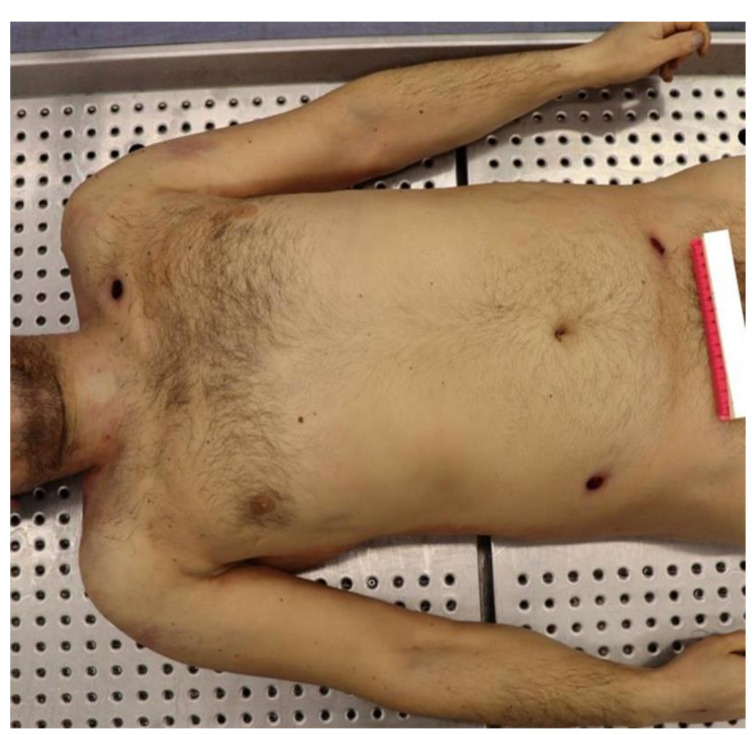
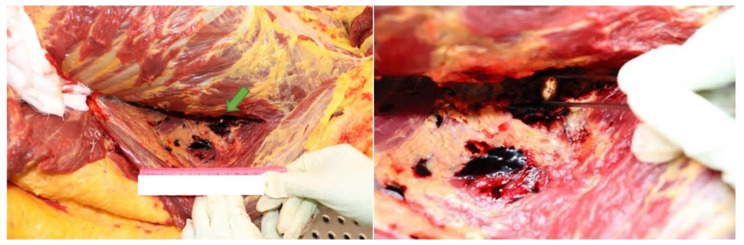
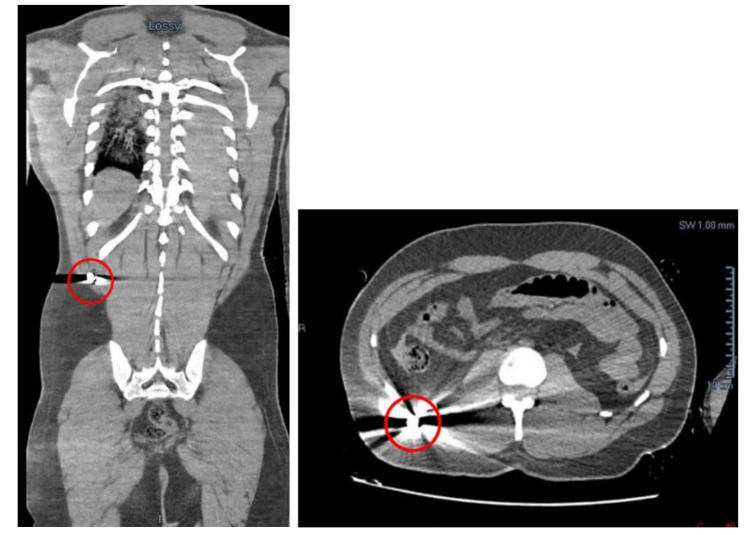
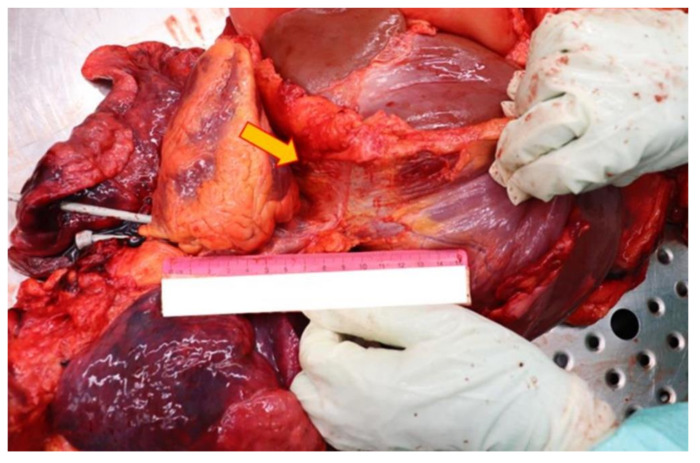
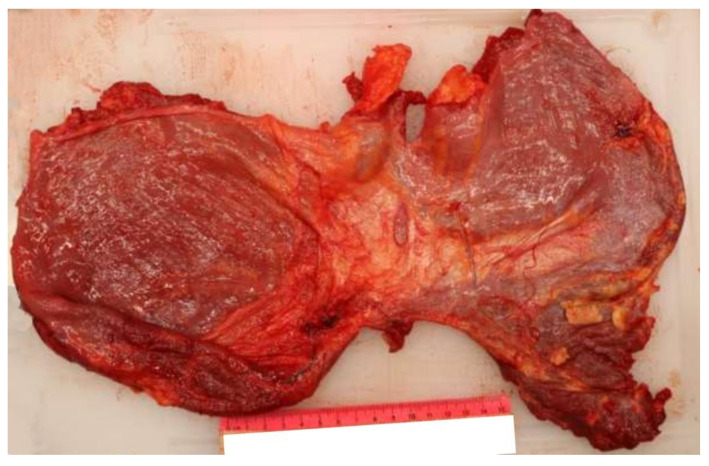
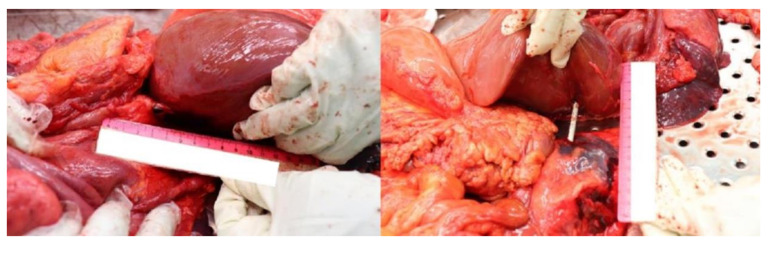
In case of thoracoabdominal gunshot wounds (GSW), diaphragmatic lesions are common autopsy findings. In these cases, the bullet's path involves both the thorax and the abdomen, so the diaphragm (the muscle that separates the two cavities) is frequently damaged. In the present report we illustrate a very unusual autopsy finding, came up after a man was shot twice and affected by a lethal thoracoabdominal gunshot wound. In particular, as expected based on CT scans, the corpse exhibited a thoracic-abdominal path and a retained bullet in the abdomen, but no diaphragmatic lesions or hemorrhagic infiltrations of this muscle have been detected during the autopsy. After a scrupulous examination and the section of all the organs, the intracorporeal projectile's path was reconstructed, inferring that the thoracoabdominal transit of the bullet extraordinarily had occurred in correspondence of the diaphragmatic inferior vena cava's ostium, thus exploiting a natural passage without damaging the diaphragmatic muscle.
在胸腹枪伤(GSW)病例中,膈肌损伤是常见的尸检发现。在这些病例中,子弹的路径涉及胸部和腹部,因此膈肌(分隔两个腔的肌肉)经常受损。在本报告中,我们阐述了一例非常不寻常的尸检发现,该发现出现在一名男子被枪击两次并遭受致命胸腹枪伤之后。具体而言,正如基于CT扫描所预期的那样,尸体呈现出一条胸腹路径且腹部有一枚滞留子弹,但在尸检过程中未检测到膈肌损伤或该肌肉的出血浸润。经过仔细检查并切开所有器官后,重建了体内子弹的路径,推断子弹的胸腹穿行异常地发生在膈肌下腔静脉口处,从而利用了一个天然通道而未损伤膈肌肌肉。