Metz Ethan P, Wilder Phillip J, Popay Tessa M, Wang Jing, Liu Qi, Kalluchi Achyuth, Rowley M Jordan, Tansey William P, Rizzino Angie
Eppley Institute for Research in Cancer and Allied Diseases, Fred & Pamela Buffett Cancer Center, University of Nebraska Medical Center, Omaha, NE 68198, USA.
Department of Cell and Developmental Biology, Vanderbilt University School of Medicine, Nashville, TN 37232, USA.
Cancers (Basel). 2022 Apr 12;14(8):1946. doi: 10.3390/cancers14081946.
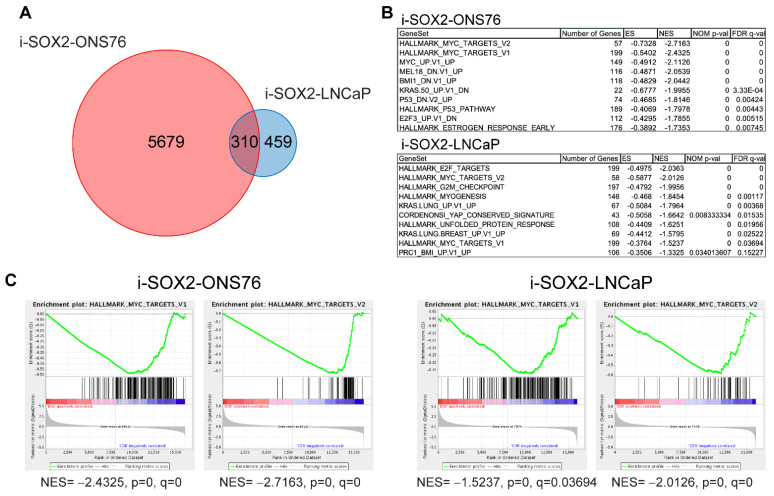
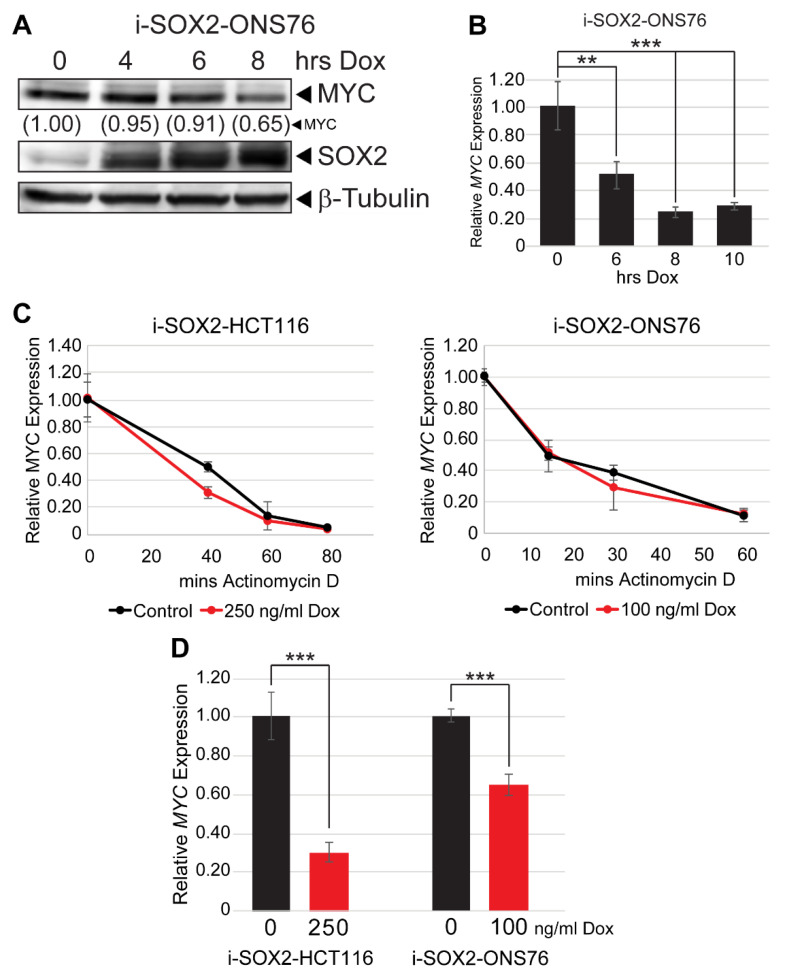
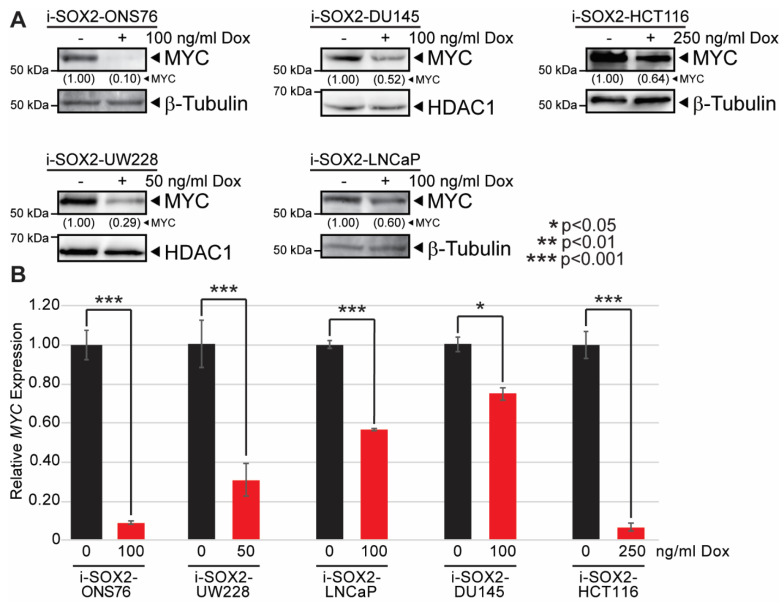
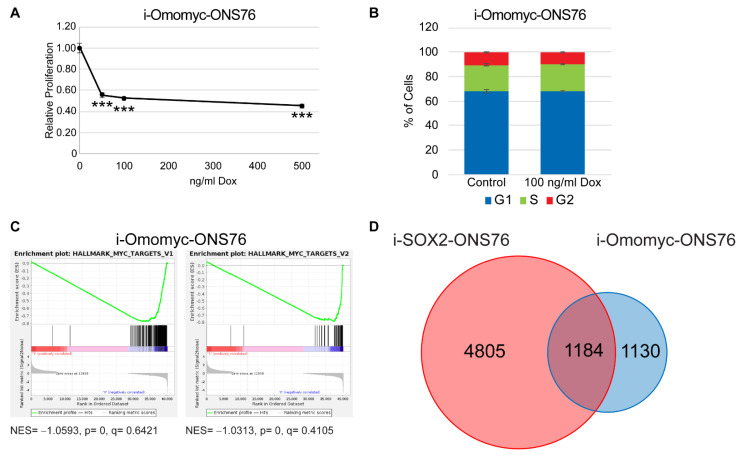
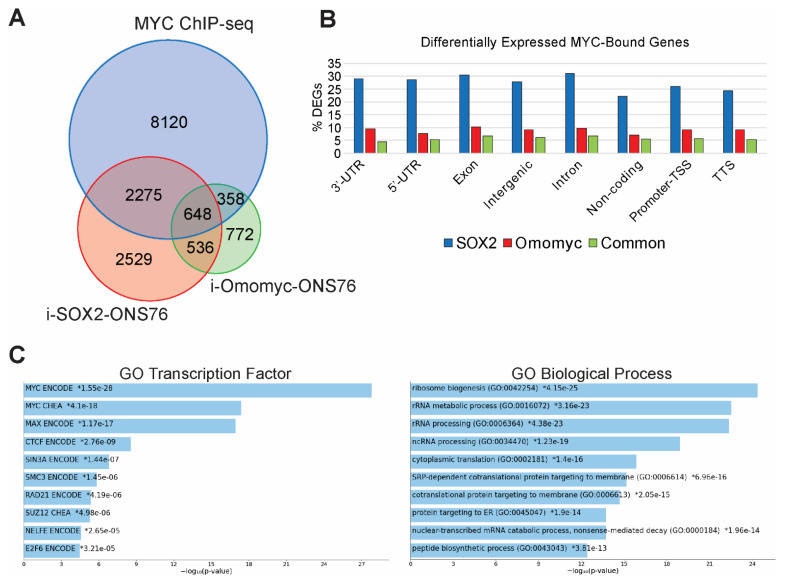
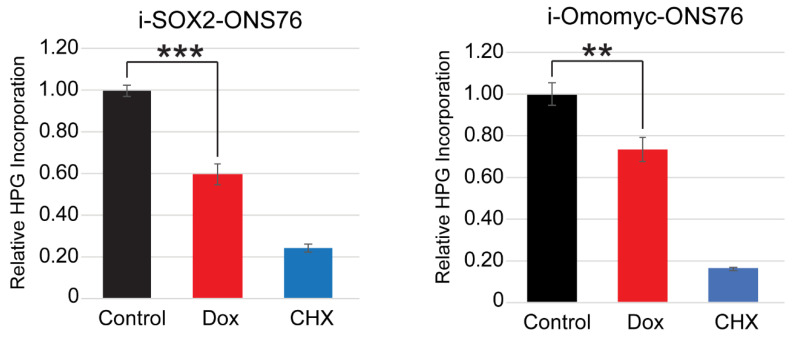
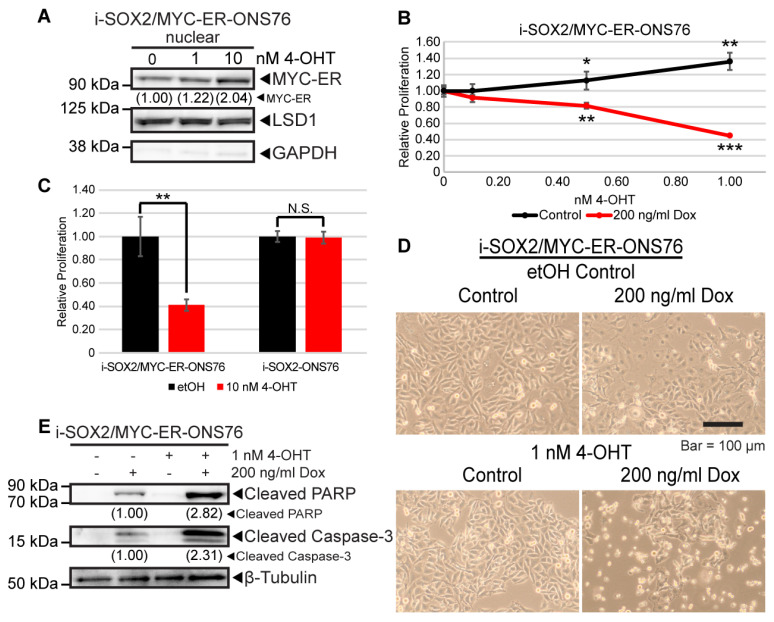
Slowly cycling/infrequently proliferating tumor cells present a clinical challenge due to their ability to evade treatment. Previous studies established that high levels of SOX2 in both fetal and tumor cells restrict cell proliferation and induce a slowly cycling state. However, the mechanisms through which elevated SOX2 levels inhibit tumor cell proliferation have not been identified. To identify common mechanisms through which SOX2 elevation restricts tumor cell proliferation, we initially performed RNA-seq using two diverse tumor cell types. SOX2 elevation in both cell types downregulated MYC target genes. Consistent with these findings, elevating SOX2 in five cell lines representing three different human cancer types decreased MYC expression. Importantly, the expression of a dominant-negative MYC variant, omomyc, recapitulated many of the effects of SOX2 on proliferation, cell cycle, gene expression, and biosynthetic activity. We also demonstrated that rescuing MYC activity in the context of elevated SOX2 induces cell death, indicating that the downregulation of MYC is a critical mechanistic step necessary to maintain survival in the slowly cycling state induced by elevated SOX2. Altogether, our findings uncover a novel SOX2:MYC signaling axis and provide important insights into the molecular mechanisms through which SOX2 elevation induces a slowly cycling proliferative state.
由于其具有逃避治疗的能力,缓慢循环/增殖不频繁的肿瘤细胞带来了临床挑战。先前的研究表明,胎儿细胞和肿瘤细胞中高水平的SOX2会限制细胞增殖并诱导缓慢循环状态。然而,SOX2水平升高抑制肿瘤细胞增殖的机制尚未明确。为了确定SOX2升高限制肿瘤细胞增殖的共同机制,我们最初使用两种不同的肿瘤细胞类型进行了RNA测序。两种细胞类型中SOX2的升高均下调了MYC靶基因。与这些发现一致,在代表三种不同人类癌症类型的五种细胞系中升高SOX2会降低MYC表达。重要的是,显性负性MYC变体omomyc的表达概括了SOX2对增殖、细胞周期、基因表达和生物合成活性的许多影响。我们还证明,在SOX2升高的情况下挽救MYC活性会诱导细胞死亡,这表明MYC的下调是维持由SOX2升高诱导的缓慢循环状态下生存所必需的关键机制步骤。总之,我们的发现揭示了一种新的SOX2:MYC信号轴,并为SOX2升高诱导缓慢循环增殖状态的分子机制提供了重要见解。