Eppley Institute for Research in Cancer and Allied Diseases Fred & Pamela Buffett Cancer Center, University of Nebraska Medical Center, Omaha, NE, 68198-6805, USA.
Department of Pathology and Microbiology, University of Nebraska Medical Center Fred & Pamela Buffett Cancer Center, Omaha, NE, 68198-6805, USA.
BMC Cancer. 2020 Oct 1;20(1):941. doi: 10.1186/s12885-020-07370-7.
Quiescent tumor cells pose a major clinical challenge due to their ability to resist conventional chemotherapies and to drive tumor recurrence. Understanding the molecular mechanisms that promote quiescence of tumor cells could help identify therapies to eliminate these cells. Significantly, recent studies have determined that the function of SOX2 in cancer cells is highly dose dependent. Specifically, SOX2 levels in tumor cells are optimized to promote tumor growth: knocking down or elevating SOX2 inhibits proliferation. Furthermore, recent studies have shown that quiescent tumor cells express higher levels of SOX2 compared to adjacent proliferating cells. Currently, the mechanisms through which elevated levels of SOX2 restrict tumor cell proliferation have not been characterized.
To understand how elevated levels of SOX2 restrict the proliferation of tumor cells, we engineered diverse types of tumor cells for inducible overexpression of SOX2. Using these cells, we examined the effects of elevating SOX2 on their proliferation, both in vitro and in vivo. In addition, we examined how elevating SOX2 influences their expression of cyclins, cyclin-dependent kinases (CDKs), and p27.
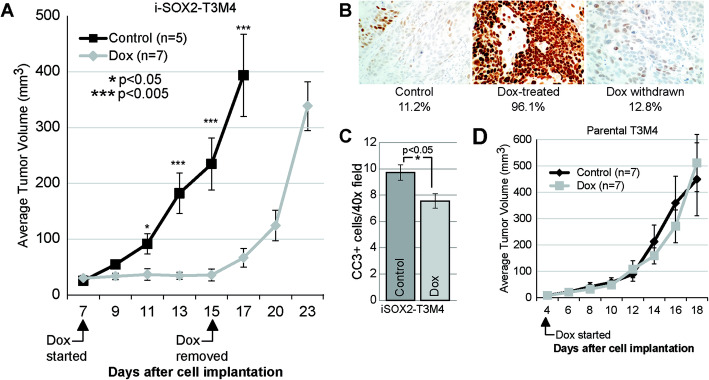
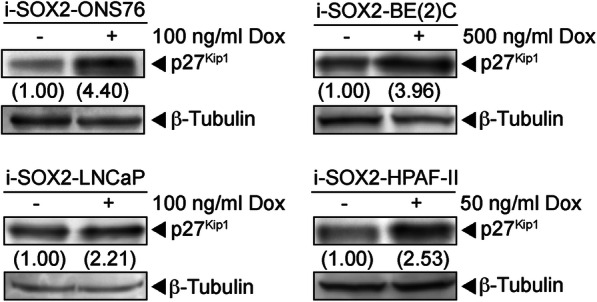
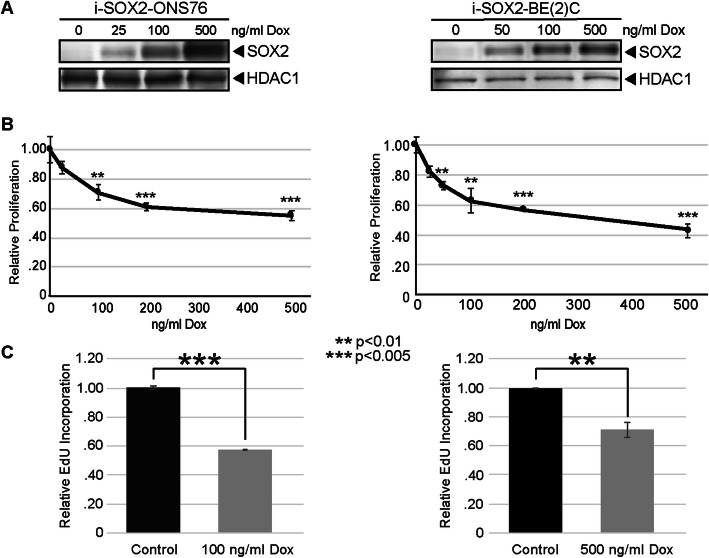
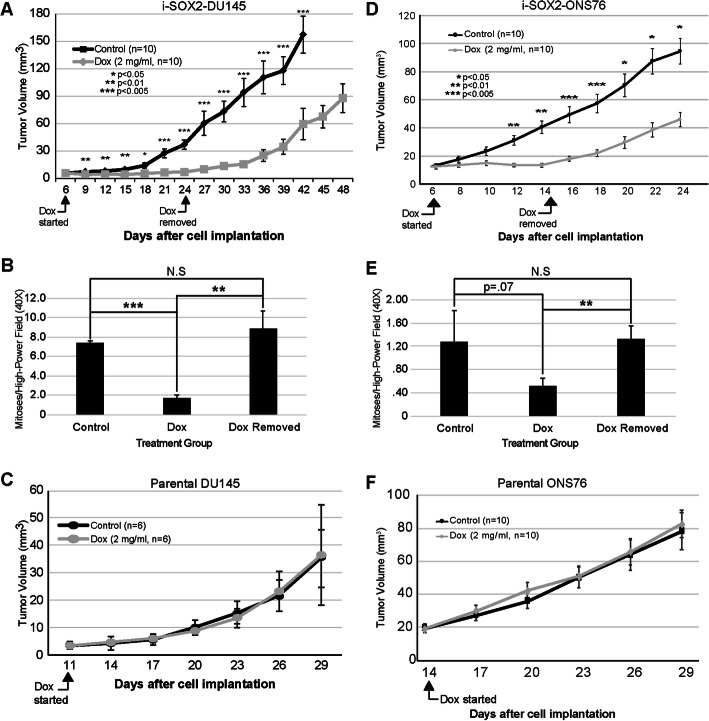
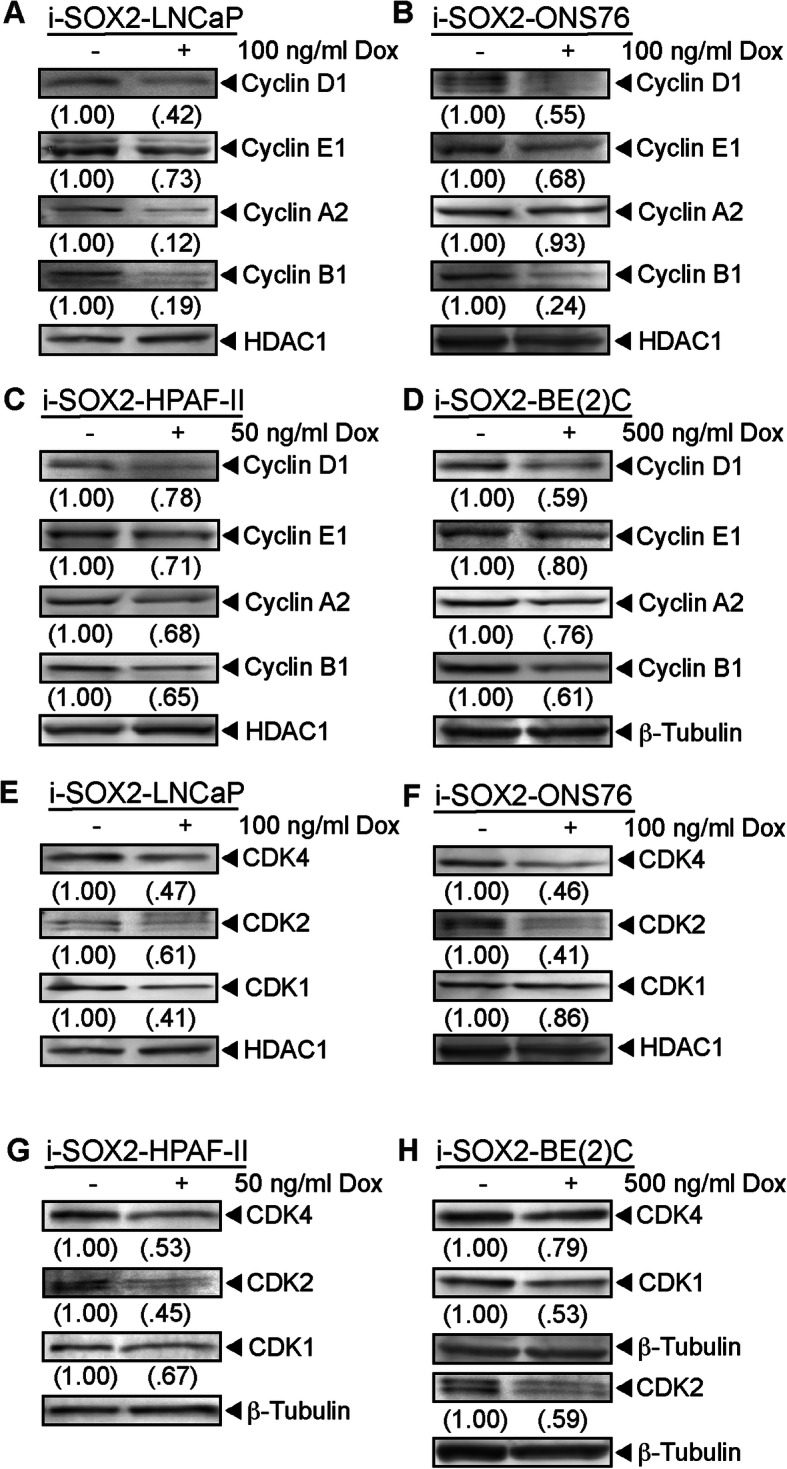
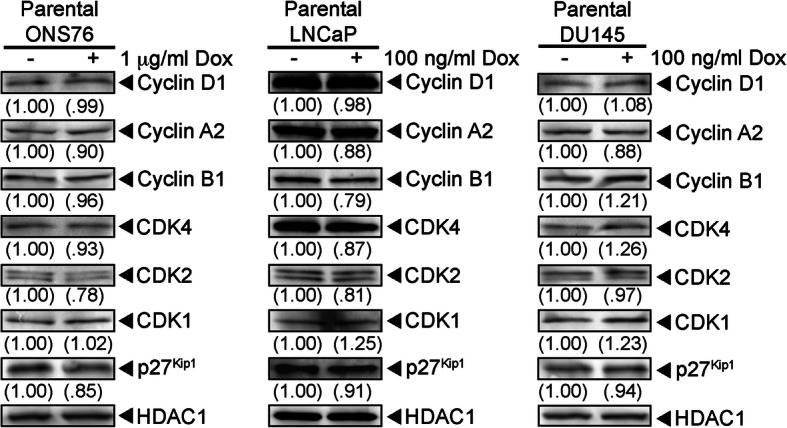
Elevating SOX2 in diverse tumor cell types led to growth inhibition in vitro. Significantly, elevating SOX2 in vivo in pancreatic ductal adenocarcinoma, medulloblastoma, and prostate cancer cells induced a reversible state of tumor growth arrest. In all three tumor types, elevation of SOX2 in vivo quickly halted tumor growth. Remarkably, tumor growth resumed rapidly when SOX2 returned to endogenous levels. We also determined that elevation of SOX2 in six tumor cell lines decreased the levels of cyclins and CDKs that control each phase of the cell cycle, while upregulating p27.
Our findings indicate that elevating SOX2 above endogenous levels in a diverse set of tumor cell types leads to growth inhibition both in vitro and in vivo. Moreover, our findings indicate that SOX2 can function as a master regulator by controlling the expression of a broad spectrum of cell cycle machinery. Importantly, our SOX2-inducible tumor studies provide a novel model system for investigating the molecular mechanisms by which elevated levels of SOX2 restrict cell proliferation and tumor growth.
静止肿瘤细胞因其能够抵抗传统化疗并驱动肿瘤复发而成为主要的临床挑战。了解促进肿瘤细胞静止的分子机制有助于确定消除这些细胞的疗法。重要的是,最近的研究已经确定,SOX2 在癌细胞中的功能高度依赖于剂量。具体来说,肿瘤细胞中的 SOX2 水平被优化以促进肿瘤生长:敲低或升高 SOX2 会抑制增殖。此外,最近的研究表明,静止的肿瘤细胞表达的 SOX2 水平高于相邻的增殖细胞。目前,尚不清楚升高的 SOX2 水平限制肿瘤细胞增殖的机制。
为了了解升高的 SOX2 如何限制肿瘤细胞的增殖,我们设计了多种类型的肿瘤细胞用于 SOX2 的诱导过表达。使用这些细胞,我们检查了在体外和体内升高 SOX2 对其增殖的影响。此外,我们还检查了升高 SOX2 如何影响它们的细胞周期蛋白、细胞周期蛋白依赖性激酶 (CDK) 和 p27 的表达。
在多种肿瘤细胞类型中升高 SOX2 导致体外生长抑制。重要的是,在胰腺导管腺癌、髓母细胞瘤和前列腺癌细胞中体内升高 SOX2 诱导了肿瘤生长的可逆停滞状态。在所有三种肿瘤类型中,体内升高 SOX2 迅速停止肿瘤生长。值得注意的是,当 SOX2 恢复到内源性水平时,肿瘤生长迅速恢复。我们还确定,在六种肿瘤细胞系中升高 SOX2 会降低控制细胞周期每个阶段的细胞周期蛋白和 CDK 的水平,同时上调 p27。
我们的研究结果表明,在多种肿瘤细胞类型中升高 SOX2 超过内源性水平会导致体外和体内生长抑制。此外,我们的研究结果表明,SOX2 可以作为主调控因子通过控制广泛的细胞周期机制来发挥作用。重要的是,我们的 SOX2 诱导型肿瘤研究为研究升高的 SOX2 如何限制细胞增殖和肿瘤生长提供了一个新的模型系统。