Elemam Noha Mousaad, Hasswan Hind, Aljaibeji Hayat, Sharif-Askari Narjes Saheb, Halwani Rabih, Taneera Jalal, Sulaiman Nabil
Sharjah Institute for Medical Research, College of Medicine, University of Sharjah, Sharjah 27272, United Arab Emirates.
Division of Endocrinology, Diabetes and Hypertension, Department of Medicine, Brigham and Women's Hospital, Harvard Medical School, Boston, MA 02115, USA.
Life (Basel). 2022 Apr 12;12(4):575. doi: 10.3390/life12040575.
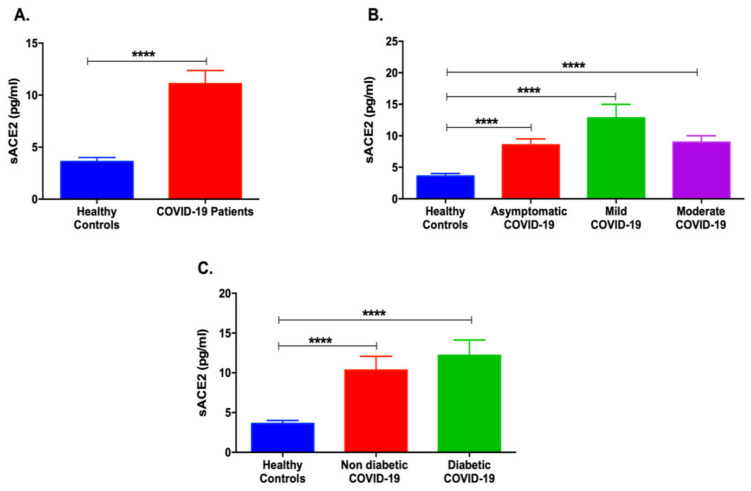
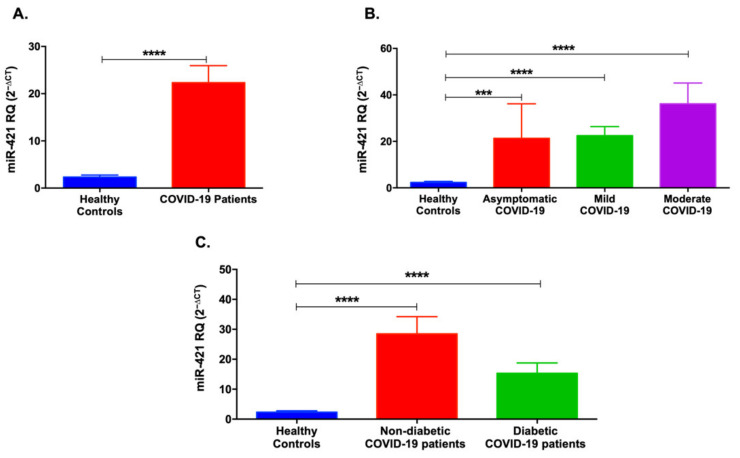
The main mechanism of viral entry in COVID-19 infection is through the angiotensin-converting enzyme 2 (ACE2) receptor present in the lungs. Numerous studies suggested a clinical significance of risk factors, such as gender, obesity, and diabetes on the soluble form of ACE2 (sACE2) and related miRNAs in COVID-19 infection. This study aims to investigate the serum level of sACE2 and 4 miRNAs (miR-421, miR-3909, miR-212-5p, and miR-4677-3p) in COVID-19 patients and assess their associations with clinicopathological parameters. Serum samples were collected from non-diabetic and diabetic COVID-19 patients and healthy controls. sACE2 levels were quantified using ELISA, and serum miRNA levels were measured using qPCR. In addition, laboratory blood tests were retrieved from the clinical records of COVID-19 patients. sACE2 levels were upregulated in COVID-19 patients regardless of sex, diabetes status, or obesity. Furthermore, the four investigated miRNAs were upregulated in COVID-19 patients and were positively correlated with each other. Furthermore, miR-421, miR-3909, and miR-4677-3p were positively associated with sACE2, suggesting a strong link between these markers. Notably, miR-212-5p was selectively upregulated in moderate, male, and non-obese COVID-19 patients. Interestingly, miR-212-5p was correlated with D-dimer, while sACE2 was correlated with coagulation tests, such as aPTT and platelets, indicating their potential as markers of coagulopathy in COVID-19. Additionally, there was a positive correlation between sACE2 and C-reactive protein in diabetic COVID-19 patients, indicating a promising role of this marker in the inflammatory status of these patients. sACE2 and its regulatory miRNAs were upregulated and correlated with laboratory investigations of COVID-19 patients, thus indicating their clinical significance as biomarkers in COVID-19 infection.
新型冠状病毒肺炎(COVID-19)感染中病毒进入的主要机制是通过肺部存在的血管紧张素转换酶2(ACE2)受体。大量研究表明,性别、肥胖和糖尿病等危险因素对COVID-19感染中可溶性ACE2(sACE2)和相关微小RNA(miRNA)具有临床意义。本研究旨在调查COVID-19患者血清中sACE2和4种miRNA(miR-421、miR-3909、miR-212-5p和miR-4677-3p)的水平,并评估它们与临床病理参数的相关性。从非糖尿病和糖尿病COVID-19患者及健康对照中采集血清样本。使用酶联免疫吸附测定(ELISA)对sACE2水平进行定量,使用定量聚合酶链反应(qPCR)测量血清miRNA水平。此外,从COVID-19患者的临床记录中获取实验室血液检查结果。无论性别、糖尿病状态或肥胖情况如何,COVID-19患者的sACE2水平均上调。此外,所研究的4种miRNA在COVID-19患者中上调,且彼此呈正相关。此外,miR-421、miR-3909和miR-4677-3p与sACE2呈正相关,表明这些标志物之间存在紧密联系。值得注意的是,miR-212-5p在中度、男性和非肥胖COVID-19患者中选择性上调。有趣的是,miR-212-5p与D-二聚体相关,而sACE2与活化部分凝血活酶时间(aPTT)和血小板等凝血检查相关,表明它们在COVID-19中作为凝血病标志物的潜力。此外,糖尿病COVID-19患者中sACE2与C反应蛋白呈正相关,表明该标志物在这些患者炎症状态中具有重要作用。sACE2及其调节性miRNA上调并与COVID-19患者的实验室检查相关,因此表明它们作为COVID-19感染生物标志物的临床意义。