Lange Falko, Venus Jakob, Shams Esfand Abady Daria, Porath Katrin, Einsle Anne, Sellmann Tina, Neubert Valentin, Reichart Gesine, Linnebacher Michael, Köhling Rüdiger, Kirschstein Timo
Oscar-Langendorff-Institute of Physiology, Rostock University Medical Center, 18057 Rostock, Germany.
Center for Transdisciplinary Neurosciences Rostock, University of Rostock, 18147 Rostock, Germany.
Life (Basel). 2022 Apr 14;12(4):580. doi: 10.3390/life12040580.
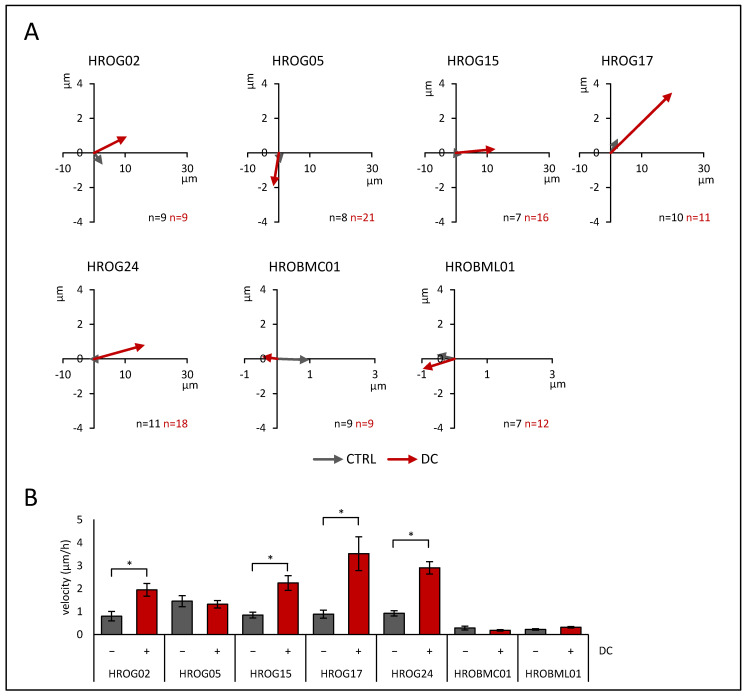
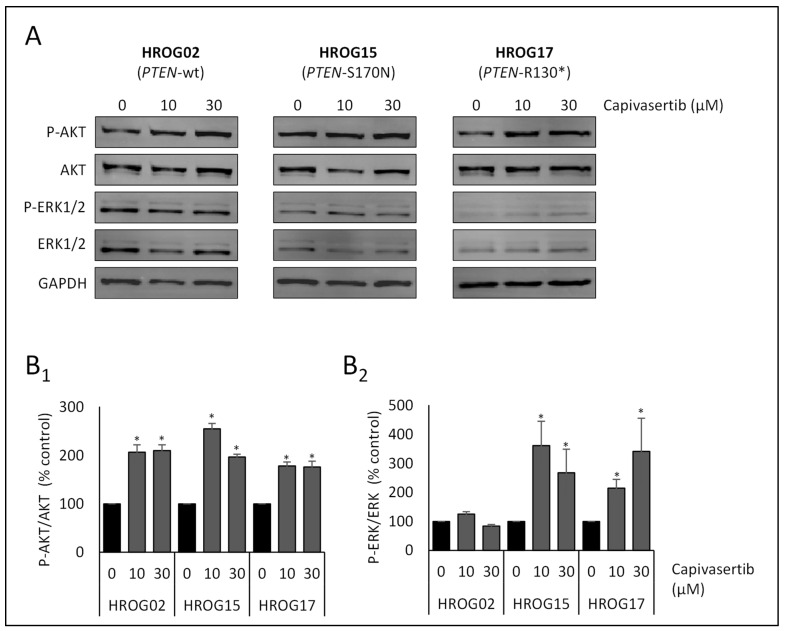
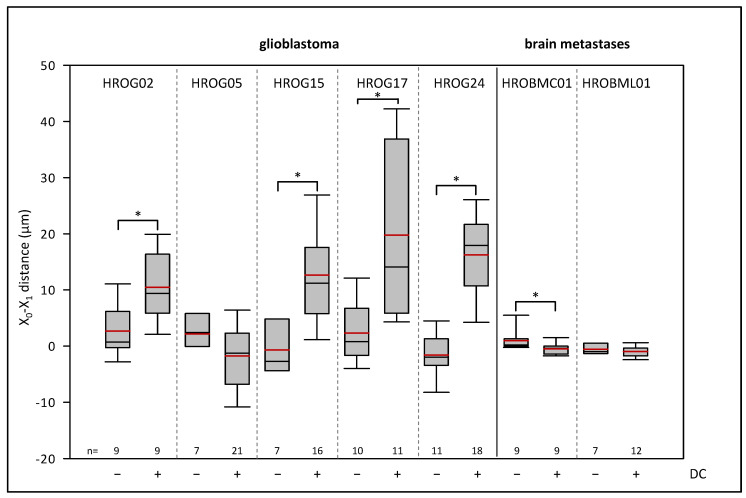
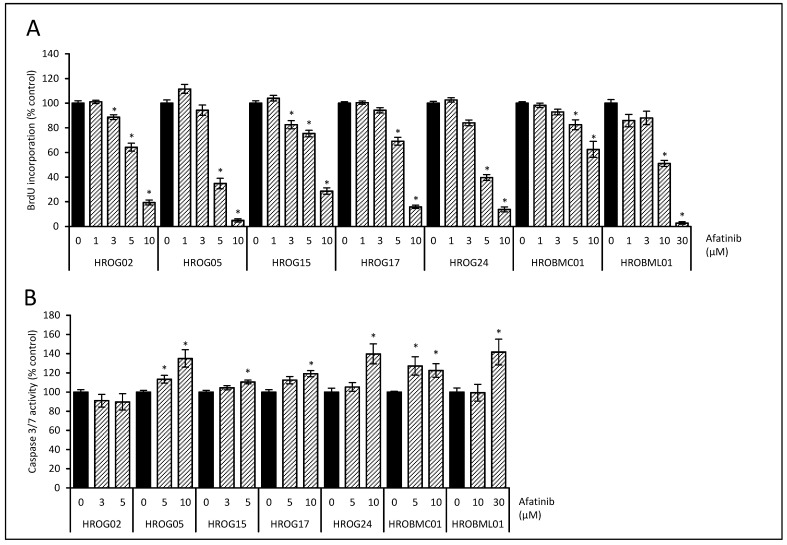
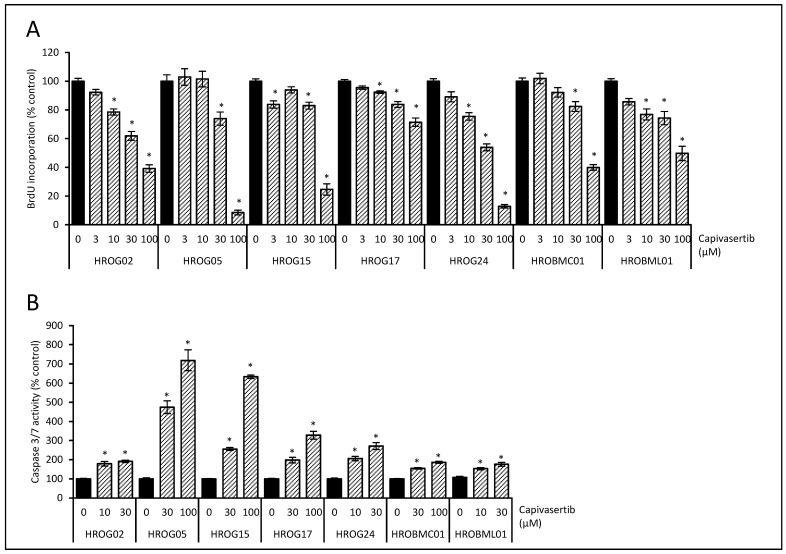
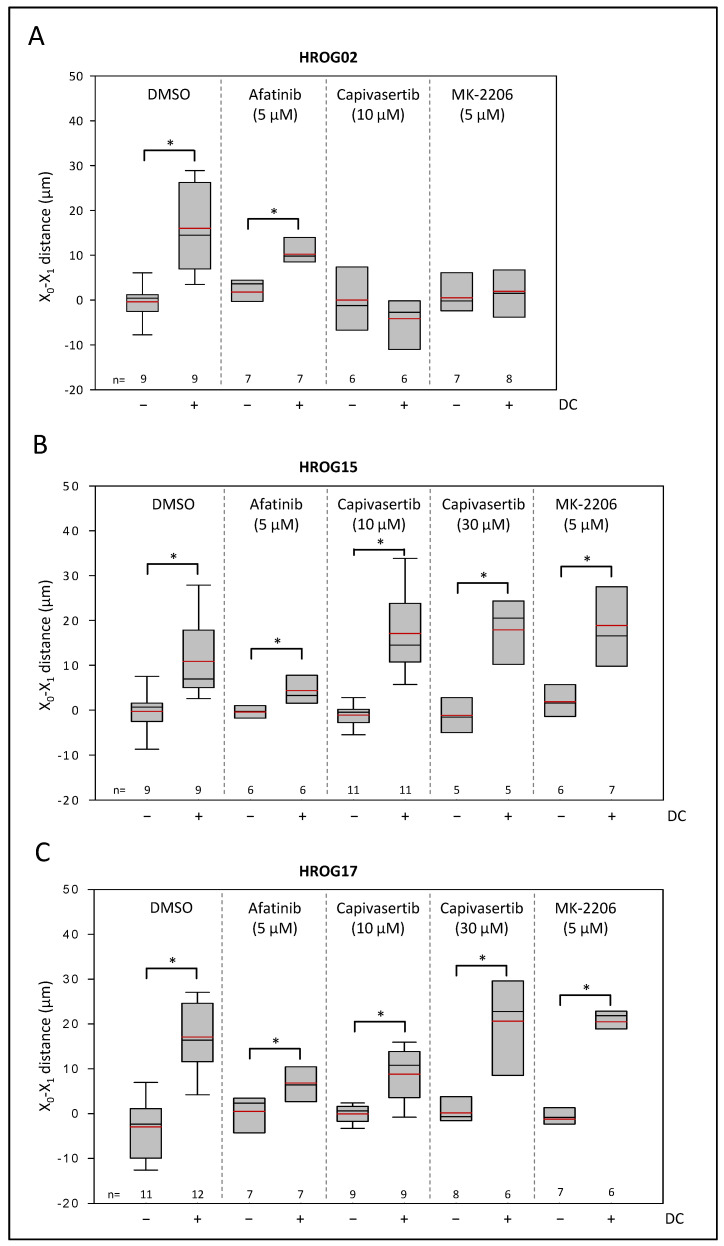
Galvanotaxis, the migration along direct current electrical fields, may contribute to the invasion of brain cancer cells in the tumor-surrounding tissue. We hypothesized that pharmacological perturbation of the epidermal growth factor (EGF) receptor and downstream phosphatidylinositol 3-kinase (PI3K)/AKT pathway prevent galvanotactic migration. In our study, patient-derived glioblastoma and brain metastases cells were exposed to direct current electrical field conditions. Velocity and direction of migration were estimated. To determine the effects of EGF receptor antagonist afatinib and AKT inhibitor capivasertib, assays of cell proliferation, apoptosis and immunoblot analyses were performed. Both inhibitors attenuated cell proliferation in a dose-dependent manner and induced apoptosis. We found that most of the glioblastoma cells migrated preferentially in an anodal direction, while brain metastases cells were unaffected by direct current stimulations. Afatinib presented only a mild attenuation of galvanotaxis. In contrast, capivasertib abolished the migration of glioblastoma cells without genetic alterations in the PI3K/AKT pathway, but not in cells harboring mutation. In these cells, an increase in the activation of ERK1/2 may in part substitute the inhibition of the AKT pathway. Overall, our data demonstrate that glioblastoma cells migrate in the electrical field and the PI3K/AKT pathway was found to be highly involved in galvanotaxis.
趋电性,即沿直流电场的迁移,可能有助于脑癌细胞侵入肿瘤周围组织。我们假设表皮生长因子(EGF)受体及下游磷脂酰肌醇3激酶(PI3K)/AKT信号通路的药物干扰可阻止趋电迁移。在我们的研究中,将患者来源的胶质母细胞瘤和脑转移瘤细胞置于直流电场条件下。估算迁移速度和方向。为确定EGF受体拮抗剂阿法替尼和AKT抑制剂卡匹西利的作用,进行了细胞增殖、凋亡检测及免疫印迹分析。两种抑制剂均以剂量依赖方式减弱细胞增殖并诱导凋亡。我们发现,大多数胶质母细胞瘤细胞优先向阳极方向迁移,而脑转移瘤细胞不受直流刺激影响。阿法替尼仅使趋电性略有减弱。相比之下,卡匹西利可消除PI3K/AKT信号通路无基因改变的胶质母细胞瘤细胞的迁移,但对携带该通路突变的细胞无效。在这些细胞中,细胞外调节蛋白激酶1/2(ERK1/2)激活增加可能部分替代了AKT信号通路的抑制作用。总体而言,我们的数据表明胶质母细胞瘤细胞在电场中迁移,且PI3K/AKT信号通路高度参与趋电迁移。