Department of Biochemistry, Faculty of Medicine, University of Medicine and Pharmacy, 200349 Craiova, Romania.
Department of Neurology, University of Medicine and Pharmacy of Craiova and Clinical, Hospital of Neuropsychiatry, 200349 Craiova, Romania.
Int J Mol Sci. 2021 Jan 8;22(2):587. doi: 10.3390/ijms22020587.
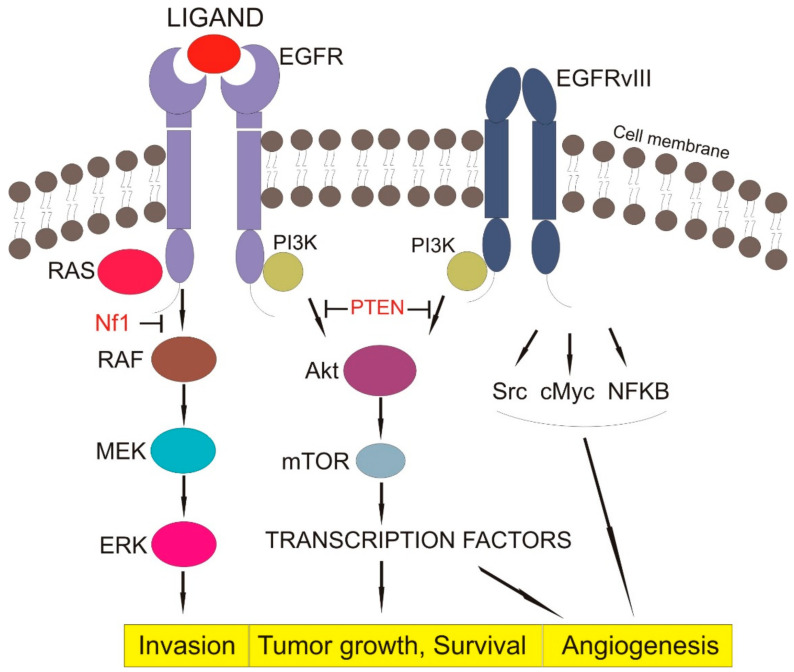
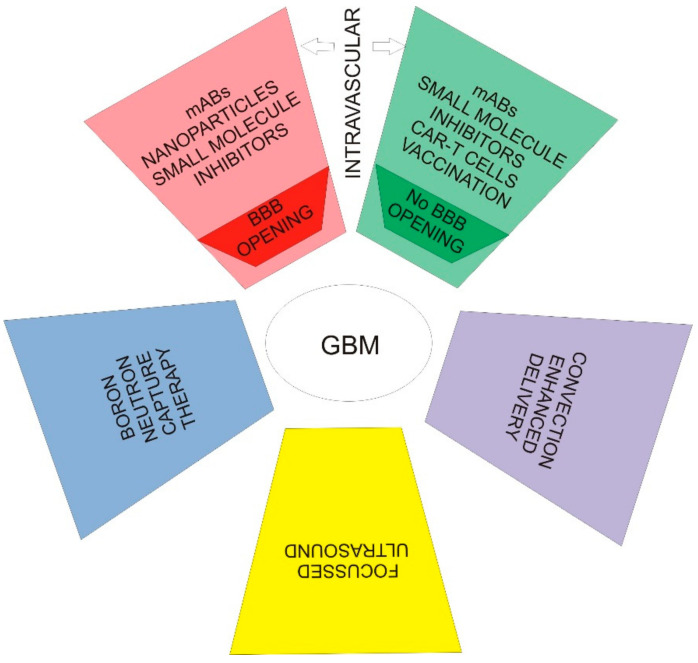
Nowadays, due to recent advances in molecular biology, the pathogenesis of glioblastoma is better understood. For the newly diagnosed, the current standard of care is represented by resection followed by radiotherapy and temozolomide administration, but because median overall survival remains poor, new diagnosis and treatment strategies are needed. Due to the quick progression, even with aggressive multimodal treatment, glioblastoma remains almost incurable. It is known that epidermal growth factor receptor (EGFR) amplification is a characteristic of the classical subtype of glioma. However, targeted therapies against this type of receptor have not yet shown a clear clinical benefit. Many factors contribute to resistance, such as ineffective blood-brain barrier penetration, heterogeneity, mutations, as well as compensatory signaling pathways. A better understanding of the EGFR signaling network, and its interrelations with other pathways, are essential to clarify the mechanisms of resistance and create better therapeutic agents.
如今,由于分子生物学的最新进展,胶质母细胞瘤的发病机制得到了更好的理解。对于新诊断的患者,目前的标准治疗方法是手术切除,然后进行放疗和替莫唑胺治疗,但由于中位总生存期仍然较差,因此需要新的诊断和治疗策略。由于进展迅速,即使采用积极的多模式治疗,胶质母细胞瘤仍然几乎无法治愈。已知表皮生长因子受体 (EGFR) 扩增是经典型神经胶质瘤的特征。然而,针对这种受体的靶向治疗尚未显示出明显的临床获益。许多因素导致耐药性,例如血脑屏障穿透效果不佳、异质性、突变以及补偿性信号通路。更好地了解 EGFR 信号网络及其与其他途径的相互关系,对于阐明耐药机制和开发更好的治疗药物至关重要。