Korman-Hacohen Shir, Regev Dafna, Roginsky Efrat
School of Creative Arts Therapies, University of Haifa, 199 Aba Khoushy Ave. Mount Carmel, Haifa 3498838, Israel.
Children (Basel). 2022 Mar 26;9(4):467. doi: 10.3390/children9040467.
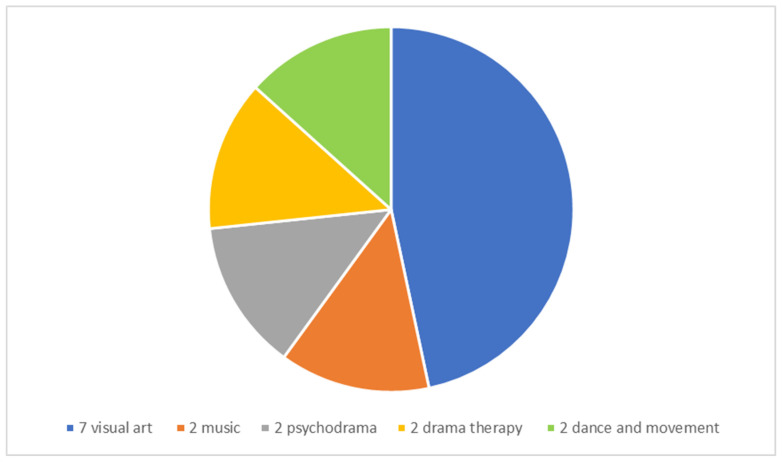
Many creative arts therapists work in the education system on a regular basis. As a result of the pandemic, all have had to treat students in a "remote therapeutic response" format. The aim of the present study was to map creative arts therapists' perceptions of the "remote therapeutic response" in the education system. Semi-structured interviews were conducted with 15 creative arts therapists who participated in the study. The consensual qualitative research approach yielded seven domains: (1) the emotional experiences of transitioning to a remote therapeutic response; (2) the implementation of the remote therapeutic response; (3) benefits of remote creative arts therapy; (4) challenges in remote creative arts therapy; (5) remote contact with parents; (6) working in the educational system; (7) insights and recommendations. Although the findings show that creative arts therapists believe that remote creative arts therapy will never be a fully satisfactory replacement for most clients, remote work, despite its many difficulties and challenges, has also opened the door to new possibilities in the world of creative arts therapy in the education system.
许多创意艺术治疗师经常在教育系统中工作。由于疫情,所有人都不得不以“远程治疗应对”的形式为学生提供治疗。本研究的目的是梳理创意艺术治疗师对教育系统中“远程治疗应对”的看法。对参与研究的15名创意艺术治疗师进行了半结构化访谈。共识定性研究方法得出了七个领域:(1)过渡到远程治疗应对的情感体验;(2)远程治疗应对的实施;(3)远程创意艺术治疗的益处;(4)远程创意艺术治疗的挑战;(5)与家长的远程联系;(6)在教育系统中工作;(7)见解和建议。尽管研究结果表明,创意艺术治疗师认为远程创意艺术治疗对大多数客户来说永远不会是一个完全令人满意的替代方案,但远程工作尽管存在诸多困难和挑战,也为教育系统中创意艺术治疗领域的新可能性打开了大门。