Kristiansson Amanda, Vilhelmsson Timmermand Oskar, Altai Mohamed, Strand Joanna, Strand Sven-Erik, Åkerström Bo, Örbom Anders
Department of Clinical Sciences Lund, Oncology, Lund University, 222 42 Lund, Sweden.
Department of Hematology, Oncology, Radiation Physics, Skåne University Hospital, Lund University, 222 43 Lund, Sweden.
Pharmaceutics. 2022 Mar 28;14(4):731. doi: 10.3390/pharmaceutics14040731.
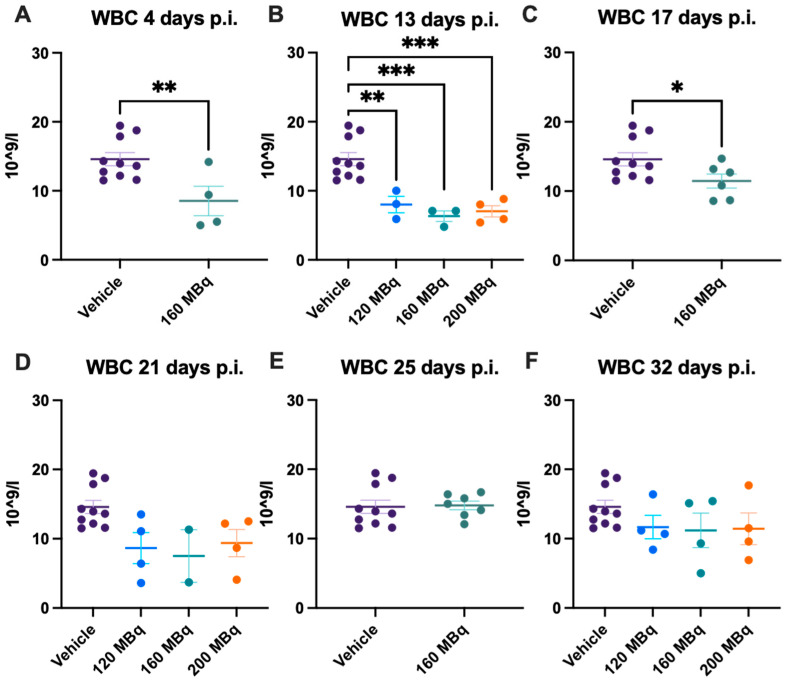
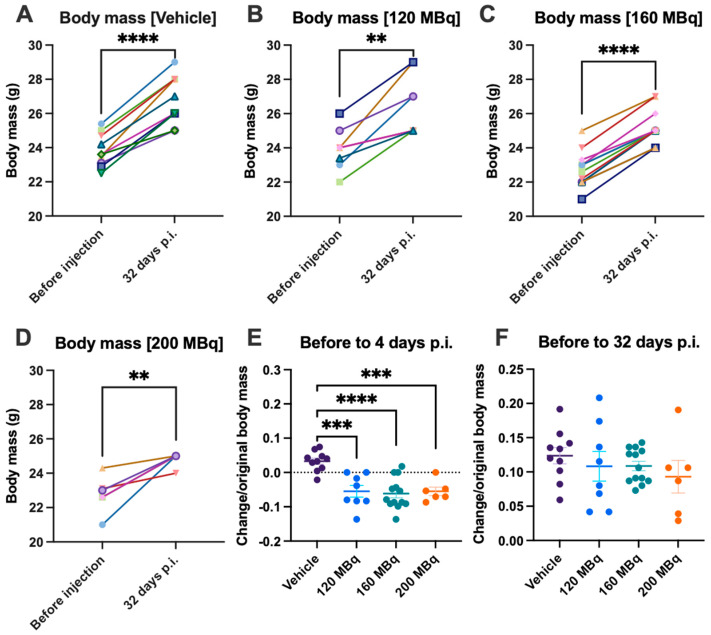
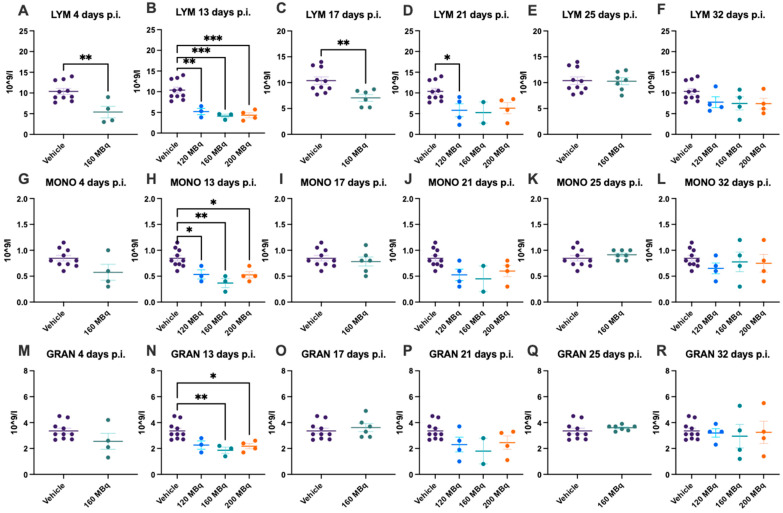
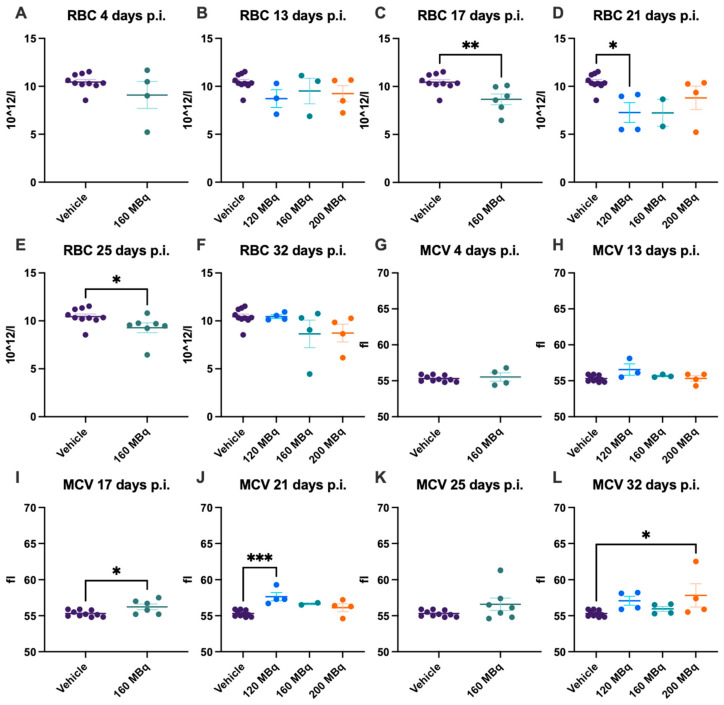
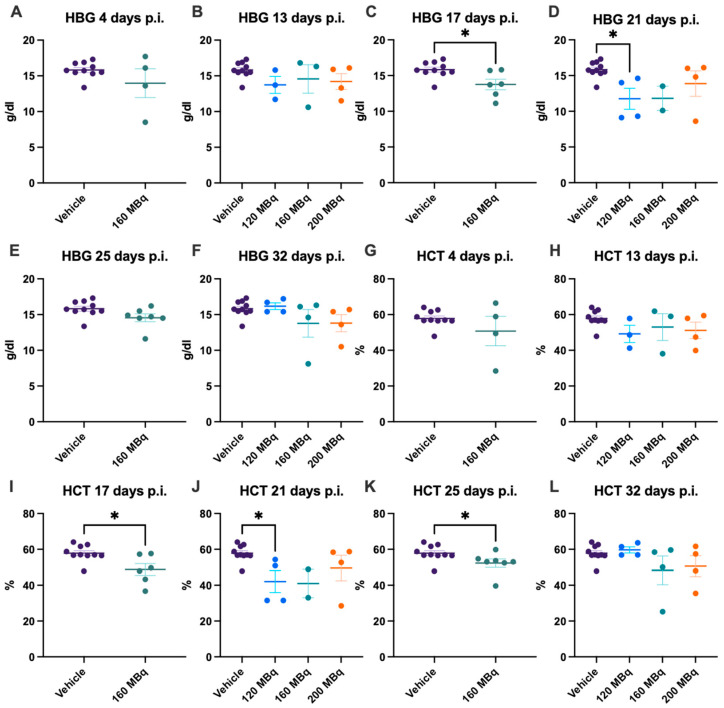
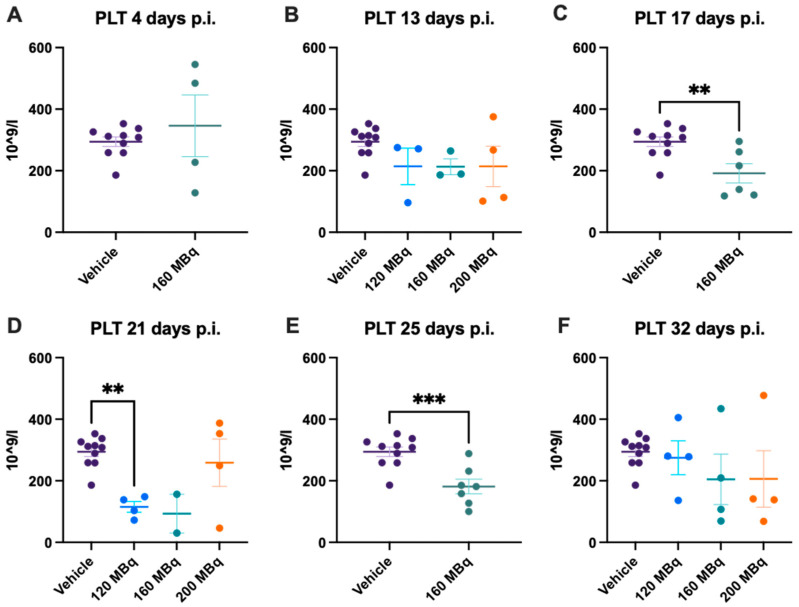
Prostate cancer (PC) is one of the most common malignancies affecting men, with poor prognosis after progression to metastatic castration-resistant prostate cancer (mCRPC). Radioligand therapy (RLT) targeting the overexpressed PSMA on PC cells, with, e.g., Lu-PSMA-617, has been effective in reducing tumor burden and prolonging survival in mCRPC. However, it is not a curative method with kidney and bone marrow toxicity limiting the activity given to patients. Previous preclinical models have reported transient hematotoxicity for up to 120 MBq. This activity may still be too low to investigate the effect on renal function since it corresponds to an absorbed dose below 10 Gy, whereas the kidneys in a clinical setting usually receive an absorbed dose more than double. Here we investigated the hematotoxicity and recovery after administered activities of 120, 160, and 200 MBq in a Lu-PSMA-617 BALB/cAnNRj mouse model. The animals had an initial drop in white blood cells (WBC) starting 4 days post injection, which recovered after 21 days. The effect on red blood cells (RBC) and platelets was detected later; 17 days post-injection levels decreased compared to the control group. The reduction was restored again 32 days post injection. No correlation between injected activity and hematotoxicity was found. Our results suggest that activities up to 200 MBq of Lu-PSMA-617 give transient hematotoxicity from which animals recover within a month and no radiation-related deaths. Injecting these high activities could allow animal studies with increased clinical relevance when studying renal toxicity in animal models.
前列腺癌(PC)是影响男性的最常见恶性肿瘤之一,进展为转移性去势抵抗性前列腺癌(mCRPC)后预后较差。靶向前列腺癌细胞上过度表达的前列腺特异性膜抗原(PSMA)的放射性配体疗法(RLT),例如使用Lu-PSMA-617,已有效降低mCRPC患者的肿瘤负担并延长生存期。然而,它并非一种治愈性方法,肾毒性和骨髓毒性限制了给予患者的剂量。先前的临床前模型报告,高达120 MBq的剂量会产生短暂的血液毒性。由于该剂量对应的吸收剂量低于10 Gy,而临床环境中肾脏通常接受的吸收剂量是其两倍多,所以这个剂量可能仍过低,无法研究对肾功能的影响。在此,我们在Lu-PSMA-617 BALB/cAnNRj小鼠模型中研究了120、160和200 MBq给药剂量后的血液毒性及恢复情况。动物在注射后第4天开始出现白细胞(WBC)初始下降,21天后恢复。对红细胞(RBC)和血小板的影响出现较晚;注射后17天,其水平与对照组相比有所下降。注射后32天,这种下降再次恢复。未发现注射剂量与血液毒性之间存在相关性。我们的结果表明,高达200 MBq的Lu-PSMA-617剂量会产生短暂的血液毒性,动物在一个月内可恢复,且无辐射相关死亡。在动物模型中研究肾毒性时,注射这些高剂量可使动物研究具有更高的临床相关性。