Guimarães Tânia M T, Moniz Tânia, Nunes Cláudia, Zaharieva Maya Margaritova, Kaleva Mila, Yoncheva Krassimira, Najdenski Hristo, Costa Lima Sofia A, Reis Salette
LAQV, REQUIMTE, Department of Chemical Sciences, Faculty of Pharmacy, University of Porto, Rua de Jorge Viterbo Ferreira, 228, 4050-313 Porto, Portugal.
Department of Infectious Microbiology, The Stephan Angeloff Institute of Microbiology, Bulgarian Academy of Sciences, 26 Acad. G. Bonchev Str., 1113 Sofia, Bulgaria.
Pharmaceutics. 2022 Mar 30;14(4):752. doi: 10.3390/pharmaceutics14040752.
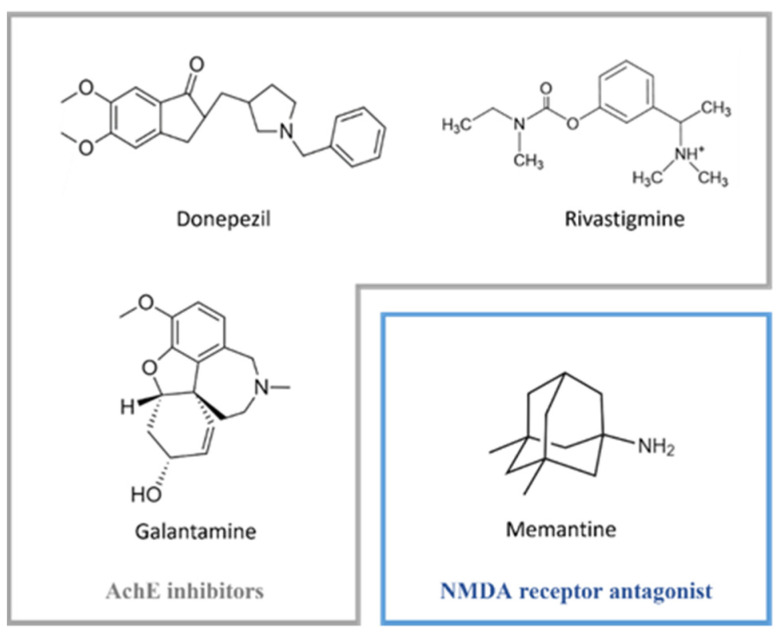
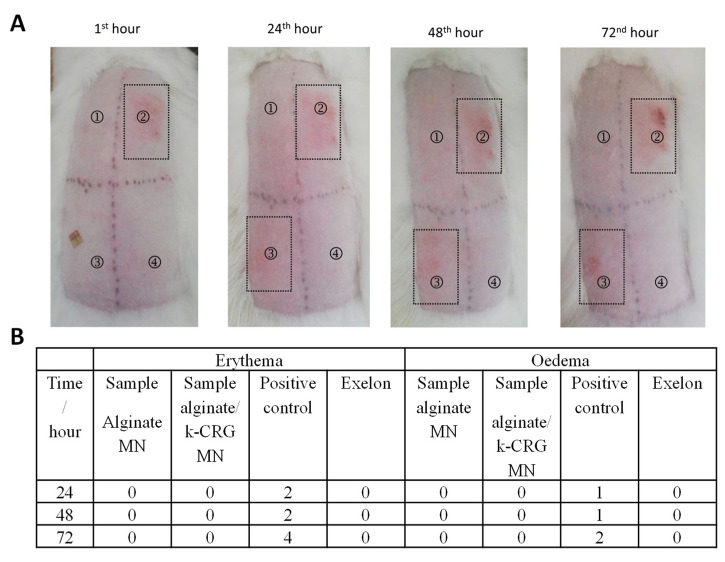
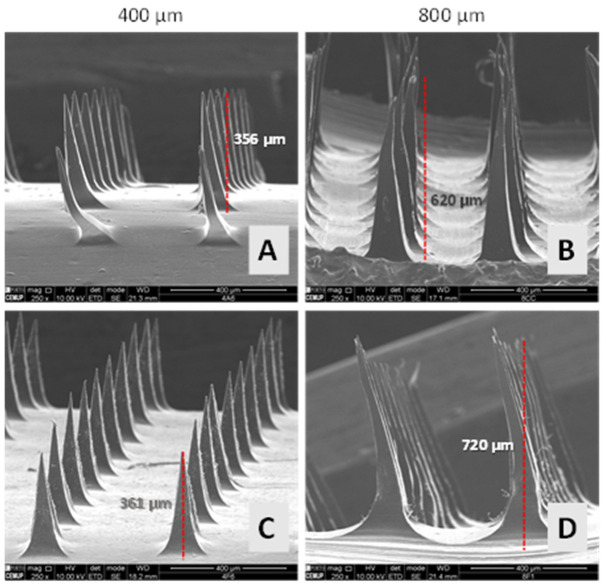
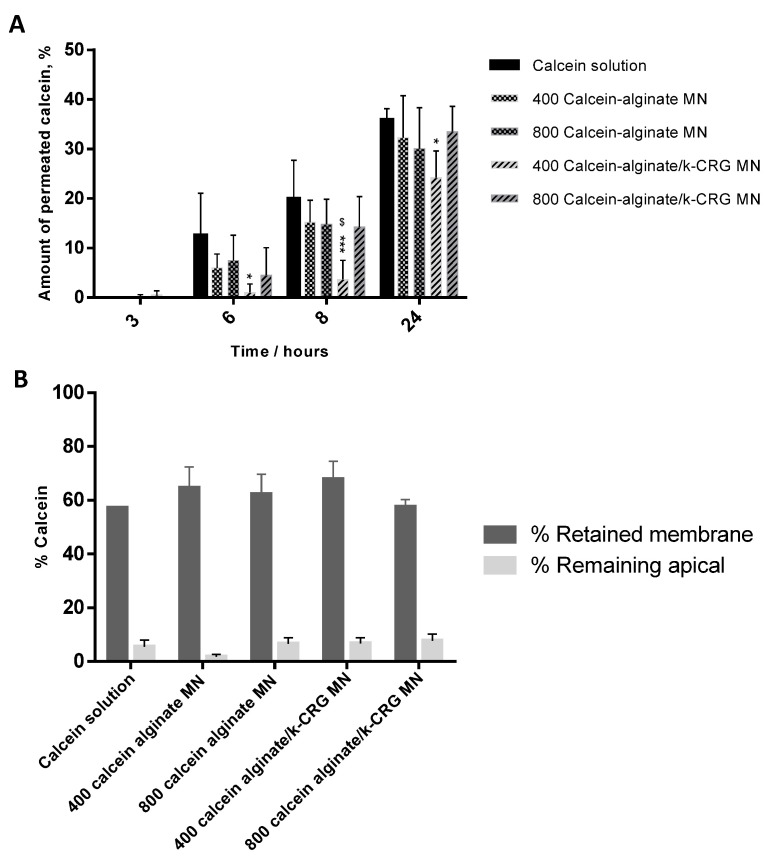
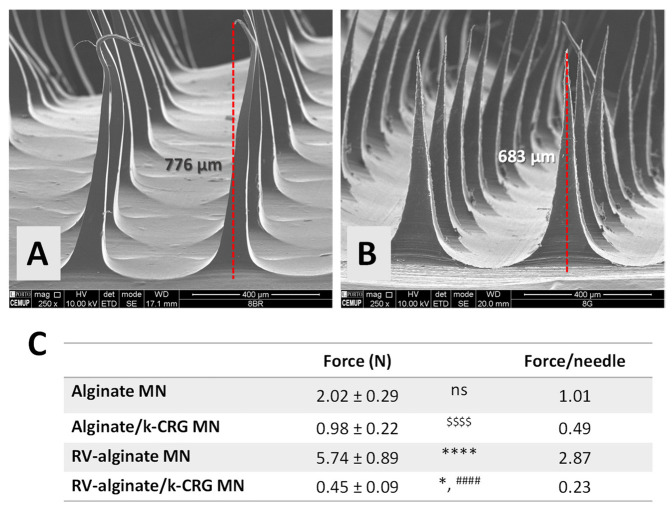
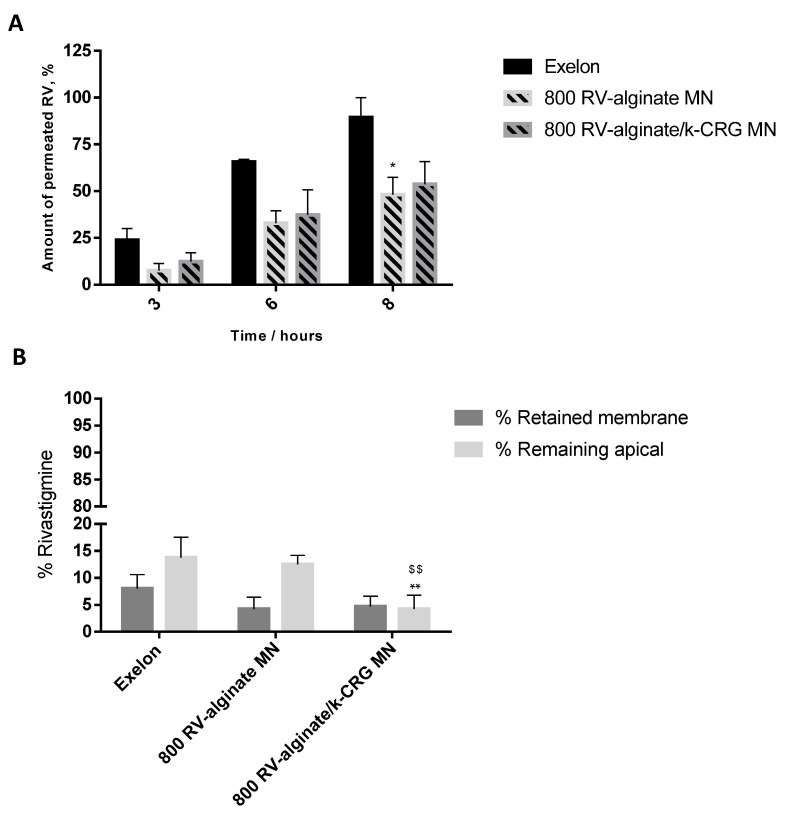
In the last years, microneedles (MNs) have been considered a valuable, painless, and minimally invasive approach for controlled transdermal drug delivery (TDD). Rivastigmine (RV), a drug administered to patients suffering from dementia, is currently delivered by oral or transdermal routes; however, both present limitations, mainly gastrointestinal adverse symptoms or local skin irritation and drug losses, respectively, for each route. Given this, the objective of the present work was to develop and evaluate the potential of polymeric MNs for RV transdermal delivery in a controlled manner. Polymeric MNs with two needle heights and different compositions were developed with calcein as a fluorescent model molecule. Morphology and mechanical characterisation were accessed. Skin permeation experiments showed the ability of the devices to deliver calcein and confirmed that the arrays were able to efficiently pierce the skin. To obtain a new TDD anti-dementia therapeutic solution, RV was loaded in 800 µm polymeric MNs of alginate and alginate/k-carrageenan MNs. In the presence of RV, the MN's morphology was maintained; however, the presence of RV influenced the compression force. Skin permeation studies revealed that RV-loaded MNs allowed a more efficient controlled release of the drug than the commercial patch. In vivo, skin irritation tests in rabbits revealed that the developed MNs were innocuous upon removal, in contrast with the evidence found for Exelon, the commercial patch, which caused slight mechanical damage to the skin. The herein-produced MNs demonstrated a more controlled release of the drug, being the more suitable option for the transdermal delivery of RV.
在过去几年中,微针已被视为一种用于控制透皮给药(TDD)的有价值、无痛且微创的方法。利伐斯的明(RV)是一种用于治疗痴呆症患者的药物,目前通过口服或透皮途径给药;然而,这两种途径都存在局限性,分别主要表现为胃肠道不良反应症状或局部皮肤刺激以及药物损失。鉴于此,本研究的目的是开发并评估聚合物微针用于以可控方式透皮递送RV的潜力。以钙黄绿素作为荧光模型分子,开发了具有两种针高和不同组成的聚合物微针。对其形态和力学特性进行了研究。皮肤渗透实验表明该装置能够递送钙黄绿素,并证实微针阵列能够有效刺穿皮肤。为了获得一种新的TDD抗痴呆治疗解决方案,将RV负载到藻酸盐和藻酸盐/κ-卡拉胶的800 µm聚合物微针中。在存在RV的情况下,微针的形态得以保持;然而,RV的存在影响了压缩力。皮肤渗透研究表明,负载RV的微针比商业贴剂能更有效地控制药物释放。在体内,对兔子进行的皮肤刺激试验表明,与商业贴剂Exelon对皮肤造成轻微机械损伤的情况相反,所开发的微针在移除时是无害的。本文制备出的微针显示出对药物更可控的释放,是RV透皮递送的更合适选择。