Unité de Recherche UR17ES30 "Génomique, Biotechnologie et Stratégies Antivirales", Institut Supérieur de Biotechnologie, Université de Monastir, Monastir 5000, Tunisia.
Centro de Biología Molecular "Severo Ochoa" (Consejo Superior de Investigaciones Científicas & Universidad Autónoma de Madrid), 28049 Madrid, Spain.
Viruses. 2022 Apr 18;14(4):841. doi: 10.3390/v14040841.
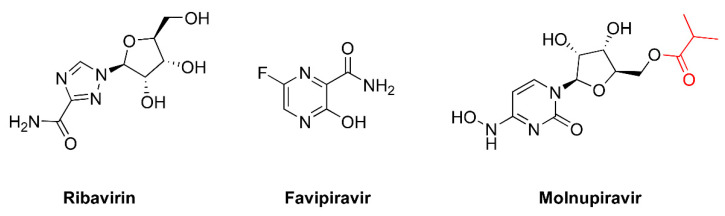
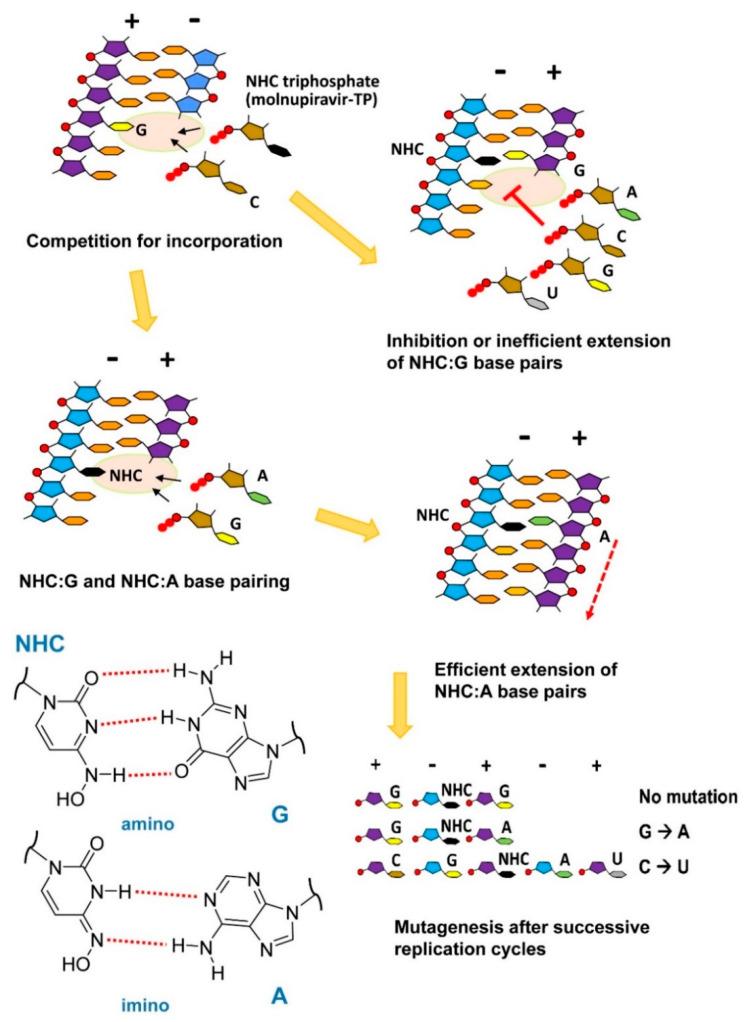
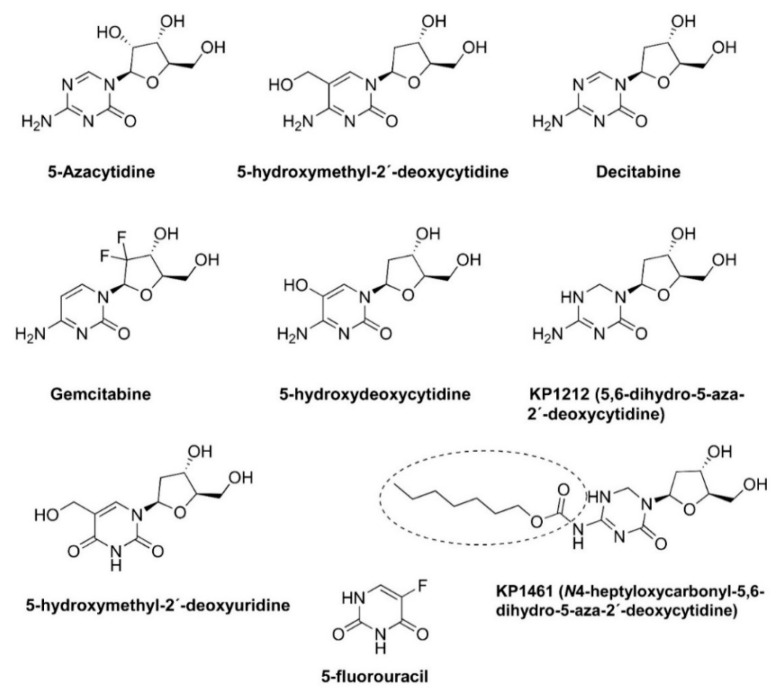
In RNA viruses, a small increase in their mutation rates can be sufficient to exceed their threshold of viability. Lethal mutagenesis is a therapeutic strategy based on the use of mutagens, driving viral populations to extinction. Extinction catastrophe can be experimentally induced by promutagenic nucleosides in cell culture models. The loss of HIV infectivity has been observed after passage in 5-hydroxydeoxycytidine or 5,6-dihydro-5-aza-2'-deoxycytidine while producing a two-fold increase in the viral mutation frequency. Among approved nucleoside analogs, experiments with polioviruses and other RNA viruses suggested that ribavirin can be mutagenic, although its mechanism of action is not clear. Favipiravir and molnupiravir exert an antiviral effect through lethal mutagenesis. Both drugs are broad-spectrum antiviral agents active against RNA viruses. Favipiravir incorporates into viral RNA, affecting the G→A and C→U transition rates. Molnupiravir (a prodrug of β-d-N-hydroxycytidine) has been recently approved for the treatment of SARS-CoV-2 infection. Its triphosphate derivative can be incorporated into viral RNA and extended by the coronavirus RNA polymerase. Incorrect base pairing and inefficient extension by the polymerase promote mutagenesis by increasing the G→A and C→U transition frequencies. Despite having remarkable antiviral action and resilience to drug resistance, carcinogenic risks and genotoxicity are important concerns limiting their extended use in antiviral therapy.
在 RNA 病毒中,其突变率的微小增加就足以使其超过存活的阈值。致死性诱变是一种基于使用诱变剂的治疗策略,促使病毒种群灭绝。在细胞培养模型中,使用促突变核苷可以在实验中诱导灭绝灾难。在 5-羟脱氧胞苷或 5,6-二氢-5-氮杂-2'-脱氧胞苷中传代后,观察到 HIV 感染性丧失,同时病毒突变频率增加了两倍。在已批准的核苷类似物中,对脊髓灰质炎病毒和其他 RNA 病毒的实验表明,利巴韦林可能具有诱变作用,尽管其作用机制尚不清楚。法匹拉韦和莫努匹韦通过致死性诱变发挥抗病毒作用。这两种药物都是广谱抗病毒药物,对 RNA 病毒有效。法匹拉韦掺入病毒 RNA 中,影响 G→A 和 C→U 转换率。莫努匹韦(β-d-N-羟基胞苷的前药)最近已被批准用于治疗 SARS-CoV-2 感染。其三磷酸酯衍生物可掺入病毒 RNA 中,并由冠状病毒 RNA 聚合酶进行延伸。不正确的碱基配对和聚合酶的低效延伸通过增加 G→A 和 C→U 的转换频率促进诱变。尽管具有显著的抗病毒作用和对耐药性的抵抗力,但致癌风险和遗传毒性是限制其在抗病毒治疗中广泛应用的重要关注点。