Tefera Selomon, Bekele Temesgen, Getahun Kefelegn, Negash Abiyot, Ketema Tsige
College of Natural Sciences, Department of Biology, Jimma University, Jimma, Ethiopia.
College of Social Sciences and Humanity, Department of Geography and Environmental Studies, Jimma University, Jimma, Ethiopia.
Malar J. 2022 Apr 22;21(1):128. doi: 10.1186/s12936-022-04149-y.
Countries in malaria endemic regions are determinedly making an effort to achieve the global malaria elimination goals. In Ethiopia, too, all concerned bodies have given attention to this mission as one of their priority areas so that malaria would be eradicated from the country. Despite the success stories from some areas in the country, however, malaria is still a major public health concern in most parts of Ethiopia. Therefore, this study is aimed at analysing the changing malaria trend and assessing the impact of malaria control efforts in one of the malaria endemic regions of Ethiopia.
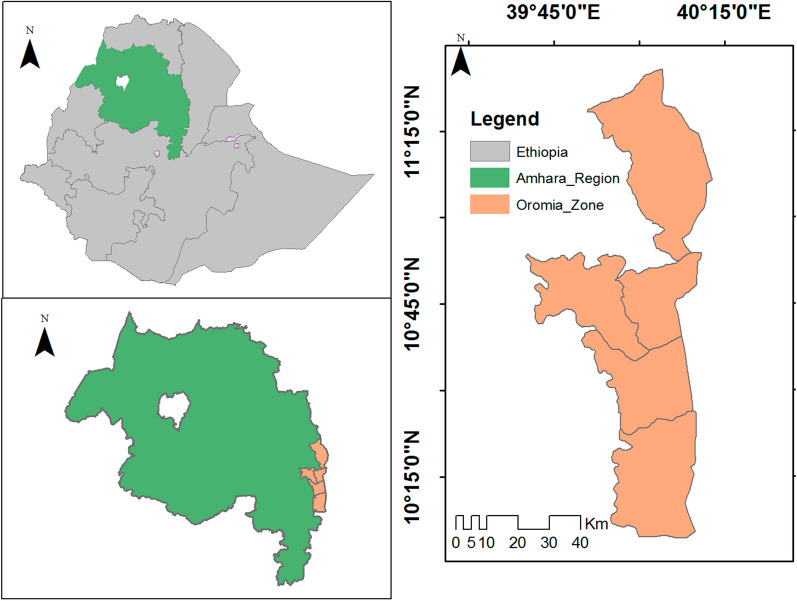
Five years data on clinical malaria cases diagnosed and treated at all health facilities (including 28 Health Centres, 105 Health Posts and 2 Hospitals) in Oromia Special zone, Amhara Regional State, Ethiopia, were reviewed for the period from June 2014 to June 2019. Data on different interventional activities undertaken in the zone during the specified period were obtained from the Regional Health Bureau.
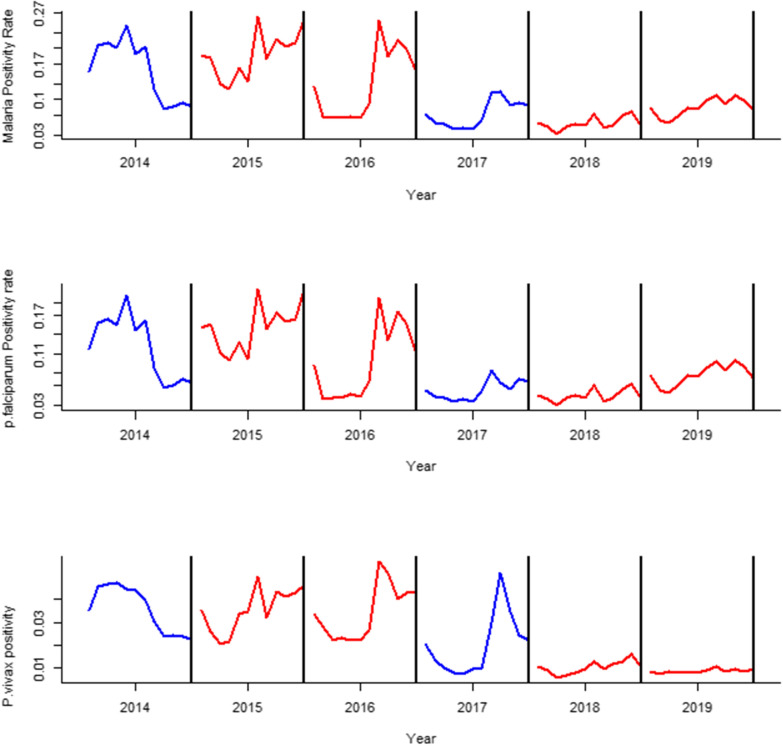
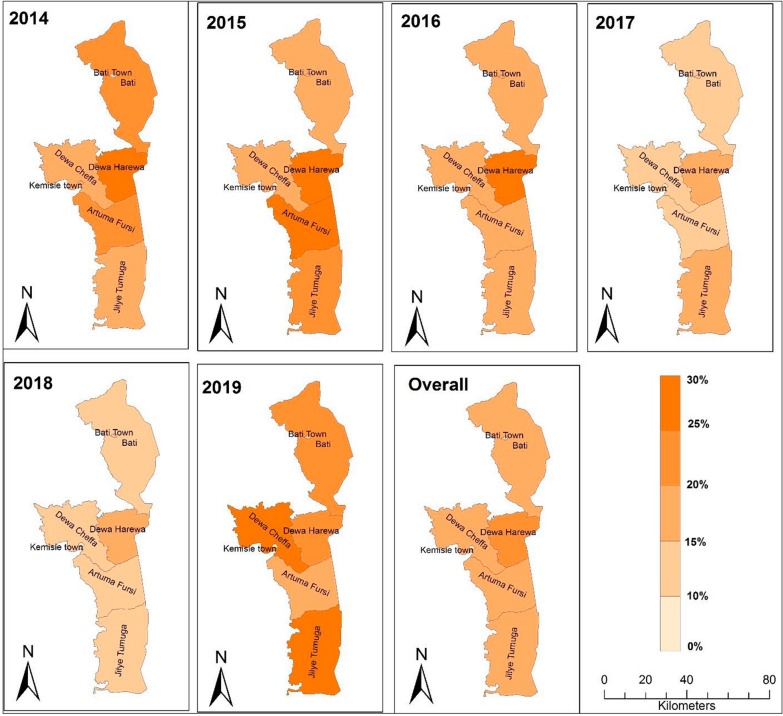
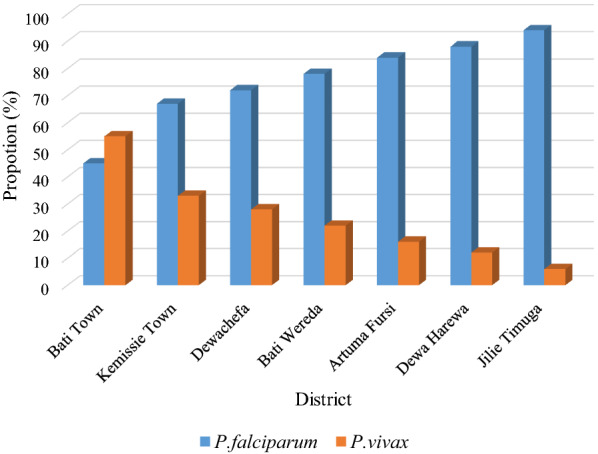
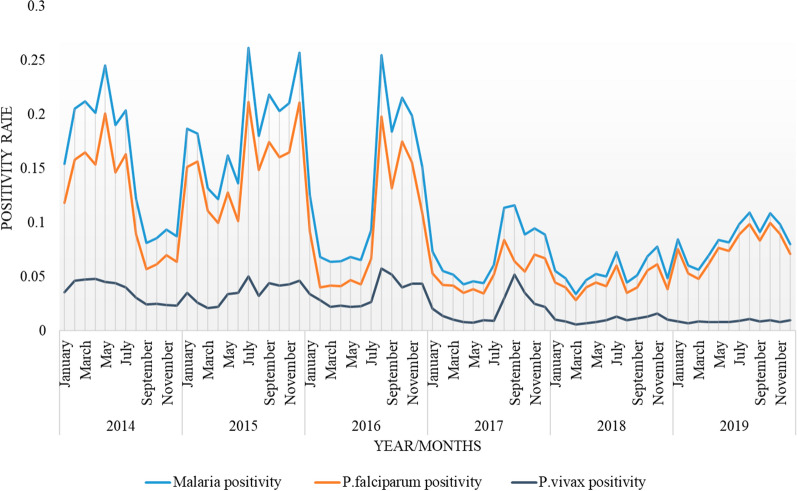
The cumulative malaria positivity rate documented in the zone was 12.5% (n = 65,463/524,722). Plasmodium falciparum infection was the dominant malaria aetiology and accounted for 78.9% (n = 51,679). The age group with the highest malaria burden was found to be those aged above 15 years (54.14%, n = 35,443/65,463). The malaria trend showed a sharp decreasing pattern from 19.33% (in 2015) to 5.65% (in 2018), although insignificant increment was recorded in 2019 (8.53%). Distribution of long-lasting insecticidal nets (LLIN) and indoor residual spraying (IRS) were undertaken in the zone once a year only for two years, specifically in 2014 and 2017. In 2014, a single LLIN was distributed per head of households, which was not sufficient for a family size of more than one family member. Number of houses sprayed with indoor residual spray in 2014 and 2017 were 33,314 and 32,184 houses, respectively, leading to the assumption that, 151,444 (25.9%) and 141,641 (24.2%) population were protected in year 2014 and 2017, respectively. The analysis has shown that P. falciparum positivity rate was significantly decreased following the interventional activities by 3.3% (p = 0.009), but interventional efforts did not appear to have significant effect on vivax malaria, as positivity rate of this parasite increased by 1.49% (p = 0.0218).
Malaria burden has shown a decreasing pattern in the study area, although the pattern was not consistent throughout all the years and across the districts in the study area. Therefore, unremitting surveillance along implementation of interventional efforts should be considered taking into account the unique features of Plasmodium species, population dynamics in the zone, seasonality, and malaria history at different districts of the zone should be in place to achieve the envisaged national malaria elimination goal by 2030.
疟疾流行地区的各国都在坚定地努力实现全球疟疾消除目标。在埃塞俄比亚,所有相关机构也都将这一任务作为其优先领域之一予以关注,以便在该国消除疟疾。然而,尽管该国一些地区取得了成功,但疟疾在埃塞俄比亚大部分地区仍是一个主要的公共卫生问题。因此,本研究旨在分析埃塞俄比亚一个疟疾流行地区疟疾趋势的变化,并评估疟疾控制措施的影响。
回顾了2014年6月至2019年6月期间埃塞俄比亚阿姆哈拉州奥罗米亚特区所有卫生设施(包括28个卫生中心、105个卫生站和2家医院)诊断和治疗的临床疟疾病例的五年数据。该地区在特定时期开展的不同干预活动的数据来自地区卫生局。
该地区记录的累计疟疾阳性率为12.5%(n = 65463/524722)。恶性疟原虫感染是主要的疟疾病因,占78.9%(n = 51679)。疟疾负担最高的年龄组是15岁以上的人群(54.14%,n = 35443/65463)。疟疾趋势呈现出从2015年的19.33%急剧下降到2018年的5.65%的模式,尽管2019年有微小增长(8.53%)。长效驱虫蚊帐(LLIN)和室内滞留喷洒(IRS)仅在2014年和2017年这两年每年在该地区开展一次。2014年,每户只分发了一顶长效驱虫蚊帐,对于家庭成员不止一人的家庭来说是不够的。2014年和2017年进行室内滞留喷洒的房屋数量分别为33314间和32184间,据此推测,2014年和2017年分别有151444人(25.9%)和141641人(24.2%)得到了保护。分析表明,干预活动后恶性疟原虫阳性率显著下降了3.3%(p = 0.009),但干预措施对间日疟原虫似乎没有显著影响,因为这种寄生虫的阳性率上升了1.49%(p = 0.0218)。
研究地区的疟疾负担呈下降趋势,尽管各年份以及研究地区的各个区情况并不一致。因此,应考虑在实施干预措施的同时进行持续监测,要考虑到疟原虫种类的独特特征、该地区的人口动态、季节性以及该地区不同区的疟疾历史,以便在2030年实现国家设想的疟疾消除目标。