Low Alexis An Yee, Hopper William John Telesfor, Angelescu Ilinca, Mason Liam, Will Geert-Jan, Moutoussis Michael
Wellcome Centre for Human Neuroimaging, London, UK.
Paris Brain Institute, Paris, France.
Sci Rep. 2022 Apr 22;12(1):6643. doi: 10.1038/s41598-022-10260-6.
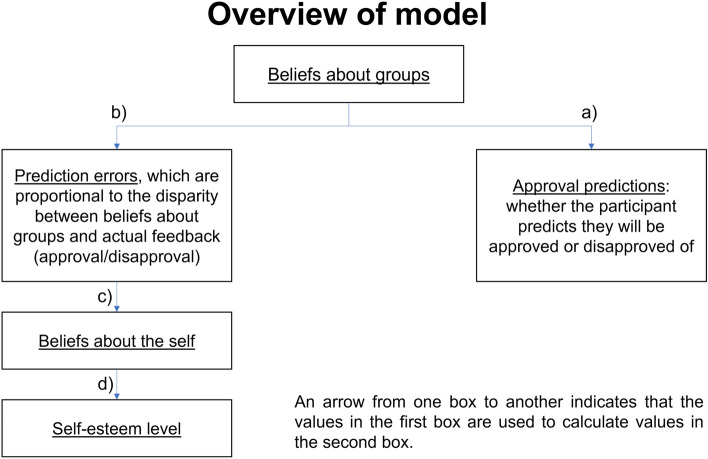
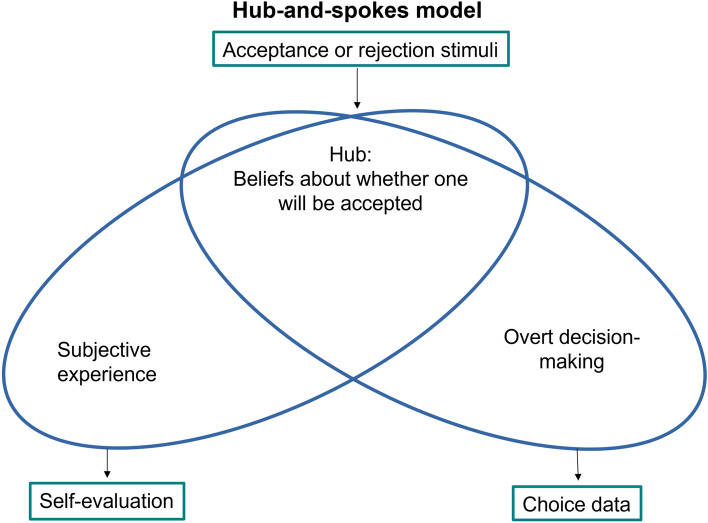
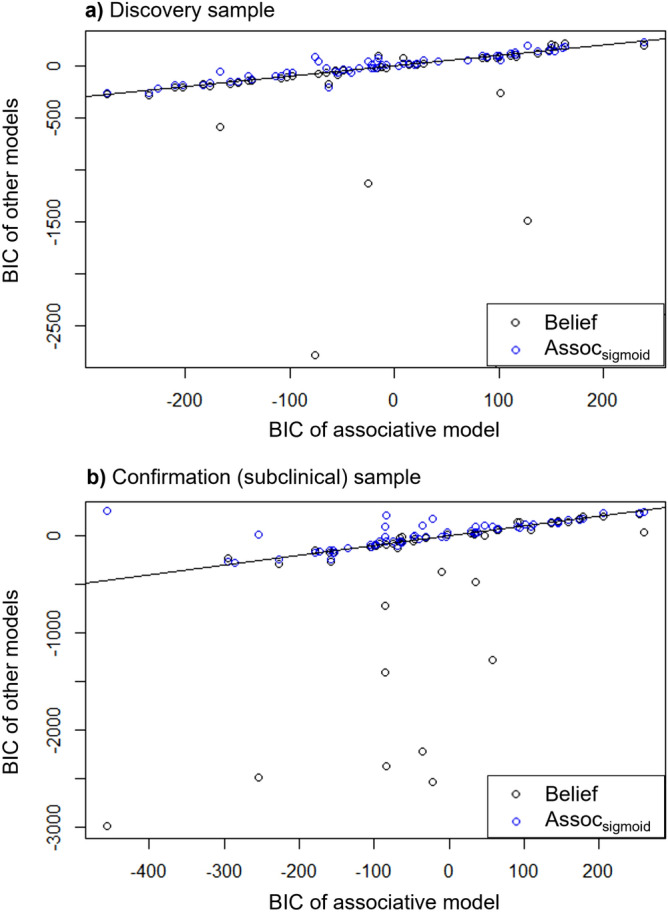
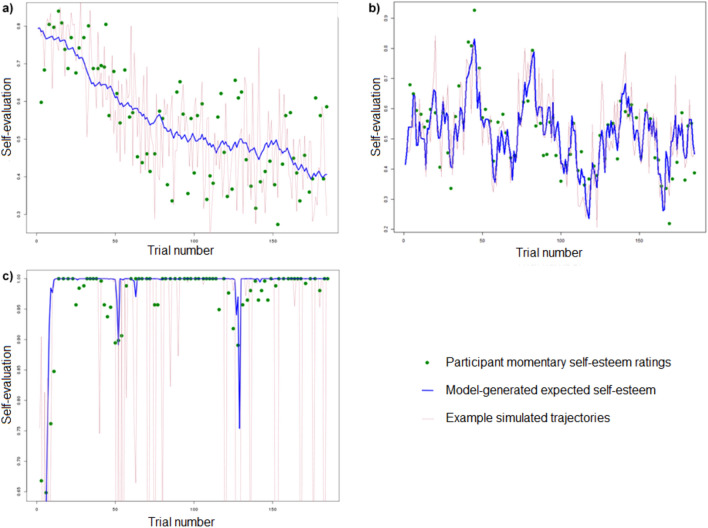
A major challenge in understanding the neurobiological basis of psychiatric disorders is rigorously quantifying subjective metrics that lie at the core of mental illness, such as low self-esteem. Self-esteem can be conceptualized as a 'gauge of social approval' that increases in response to approval and decreases in response to disapproval. Computational studies have shown that learning signals that represent the difference between received and expected social approval drive changes in self-esteem. However, it is unclear whether self-esteem based on social approval should be understood as a value updated through associative learning, or as a belief about approval, updated by new evidence depending on how strongly it is held. Our results show that belief-based models explain self-esteem dynamics in response to social evaluation better than associative learning models. Importantly, they suggest that in the short term, self-esteem signals the direction and rate of change of one's beliefs about approval within a group, rather than one's social position.
理解精神疾病神经生物学基础的一个主要挑战是严格量化处于精神疾病核心的主观指标,比如自卑。自尊可以被概念化为一种“社会认可的衡量标准”,它会随着认可而增加,随着不认可而降低。计算研究表明,代表所获得的与预期的社会认可之间差异的学习信号会驱动自尊的变化。然而,基于社会认可的自尊究竟应被理解为通过联想学习更新的一种价值,还是应被理解为一种关于认可的信念,并根据其被持有的强烈程度由新证据更新,目前尚不清楚。我们的研究结果表明,基于信念的模型比联想学习模型能更好地解释自尊对社会评价的动态反应。重要的是,这些结果表明,在短期内,自尊表明了一个人在群体中对认可的信念的变化方向和速率,而非其社会地位。