Bowes M A, Kenny A J
Immunology. 1987 Feb;60(2):247-53.
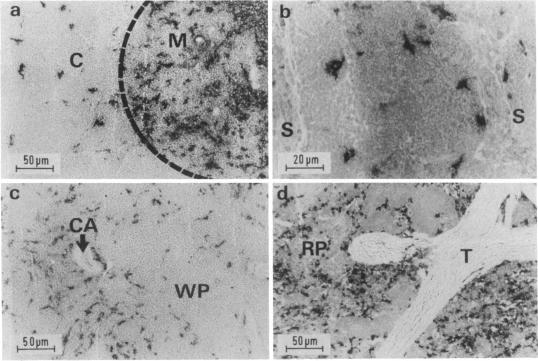
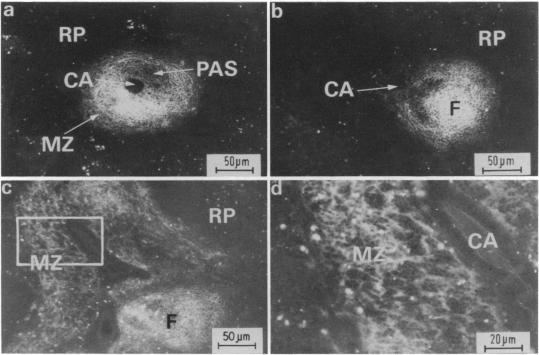
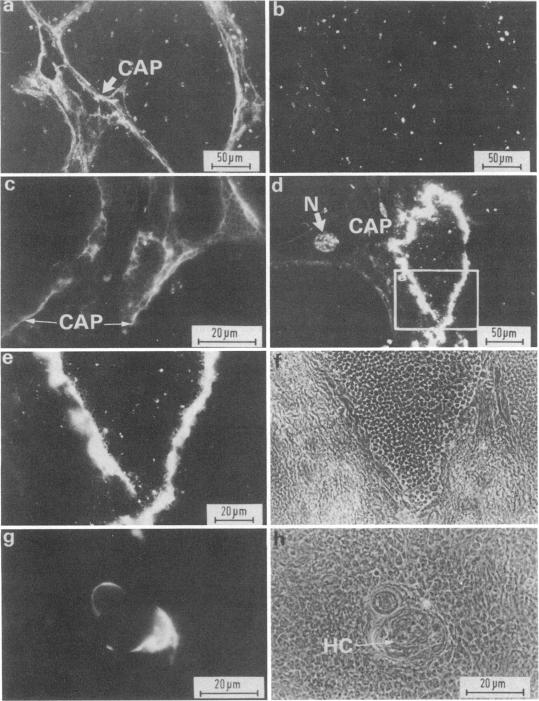
Two cell surface peptidases, endopeptidase-24.11 and aminopeptidase N, thought to be involved in metabolizing regulatory peptides, have been immunohistochemically mapped in pig lymphoid organs using specific monoclonal and polyclonal antibodies. In tonsil, spleen, thymus and Peyer's patches, the endopeptidase-24.11 immunoreactivity exhibited a reticular pattern similar to that previously observed in lymph nodes, where this enzyme is much more abundant. Apart from this location in reticular cells, the only structures seen to express endopeptidase-24.11 were Hassall's corpuscles in the thymus, confirming their reticular cell origin. Aminopeptidase N exhibited a cellular distribution quite distinct from that of the endopeptidase. It was associated with cells scattered throughout the lymphoid organs studied, consistent with its localization in macrophages. In lymph nodes, some fibroblasts buried in trabeculae also stained for aminopeptidase, but this was not observed in spleen and thymus.
两种细胞表面肽酶,即内肽酶-24.11和氨肽酶N,被认为参与调节肽的代谢,利用特异性单克隆抗体和多克隆抗体,通过免疫组织化学方法已在猪淋巴器官中绘制出它们的分布图。在扁桃体、脾脏、胸腺和派伊尔结中,内肽酶-24.11免疫反应呈现出一种网状模式,类似于先前在淋巴结中观察到的模式,在淋巴结中这种酶含量更为丰富。除了在网状细胞中的这种定位外,唯一被发现表达内肽酶-24.11的结构是胸腺中的哈索尔小体,这证实了它们的网状细胞起源。氨肽酶N的细胞分布与内肽酶截然不同。它与散布在整个所研究淋巴器官中的细胞相关联,这与其在巨噬细胞中的定位一致。在淋巴结中,一些埋在小梁中的成纤维细胞也对氨肽酶呈阳性染色,但在脾脏和胸腺中未观察到这种情况。