Chen Yanxia, Fan Xiaodi, Ma Kun, Wang Kaili, Tian Caidie, Li Min, Gong Linjuan
Xiyuan Hospital, China Academy of Chinese Medical Science, Beijing, China.
Institute of Basic Medical Science of Xiyuan Hospital, China Academy of Chinese Medical Science, Beijing, China.
Front Pharmacol. 2022 Apr 6;13:857932. doi: 10.3389/fphar.2022.857932. eCollection 2022.
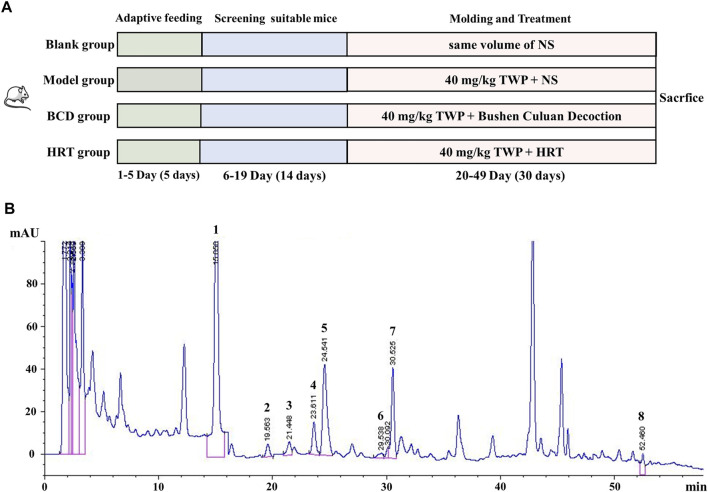
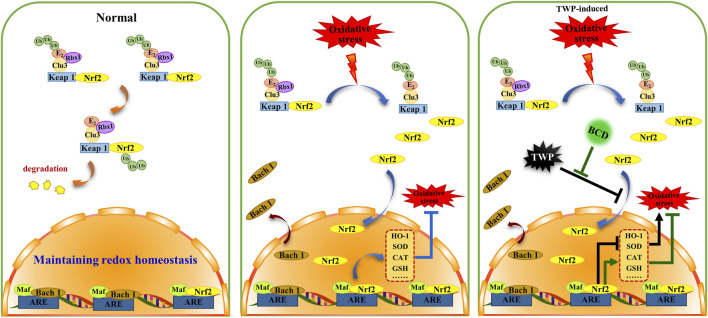
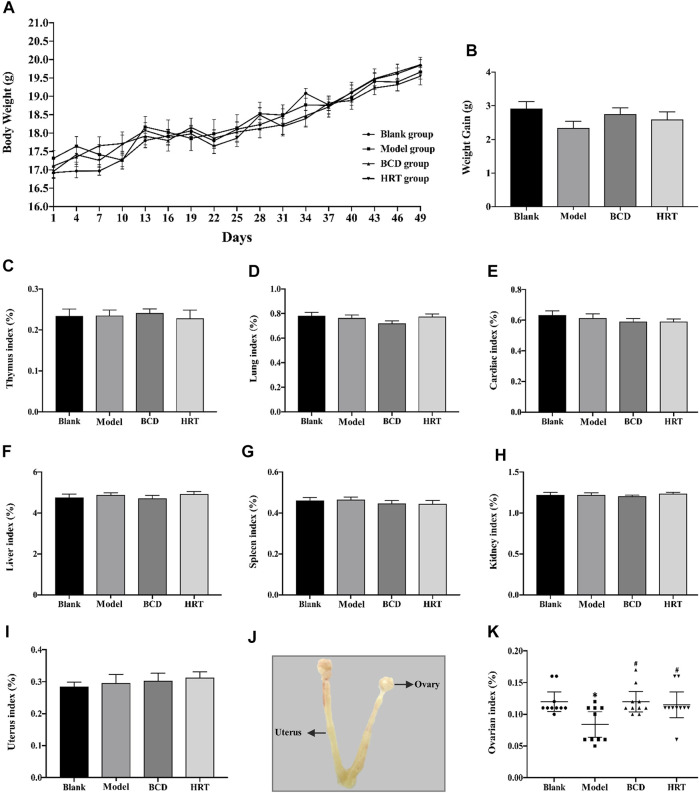
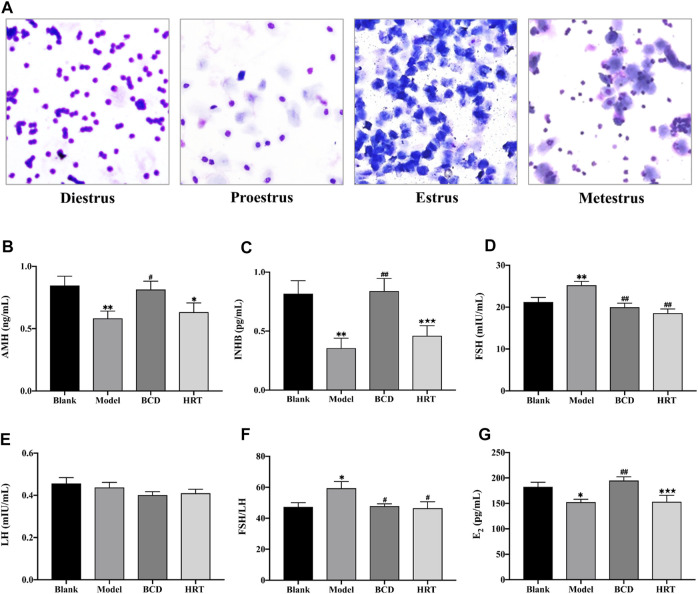
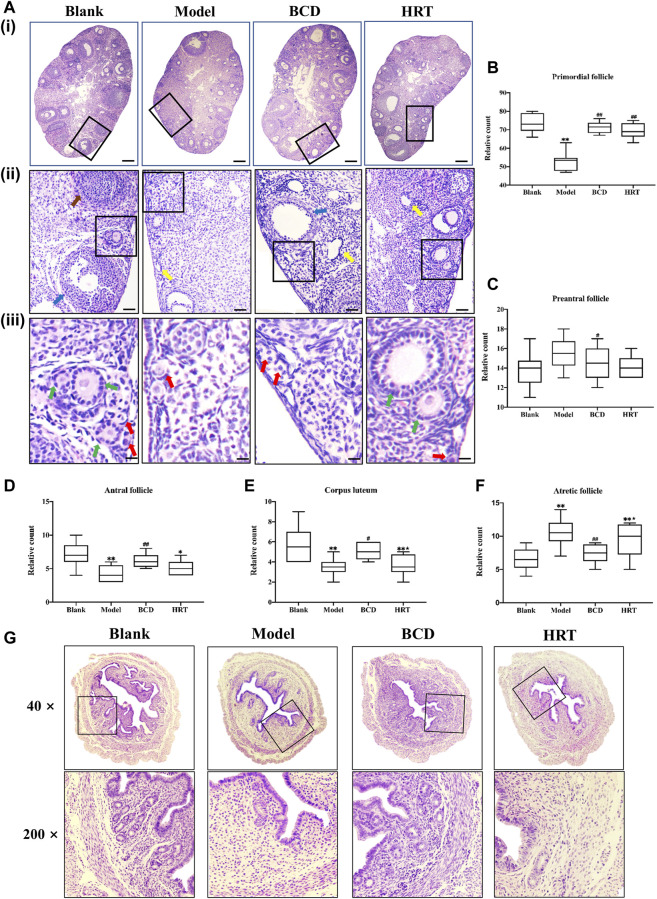
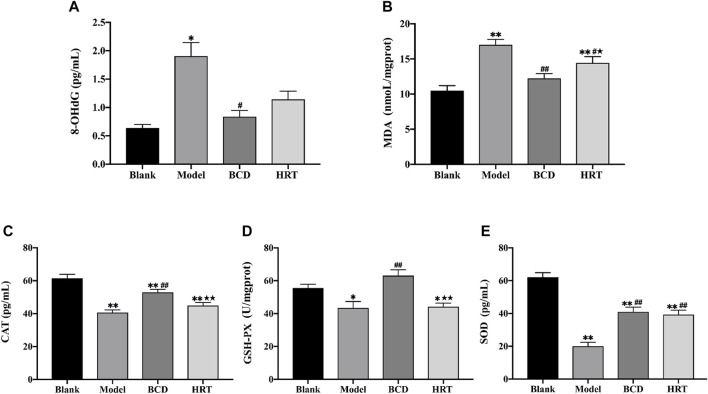
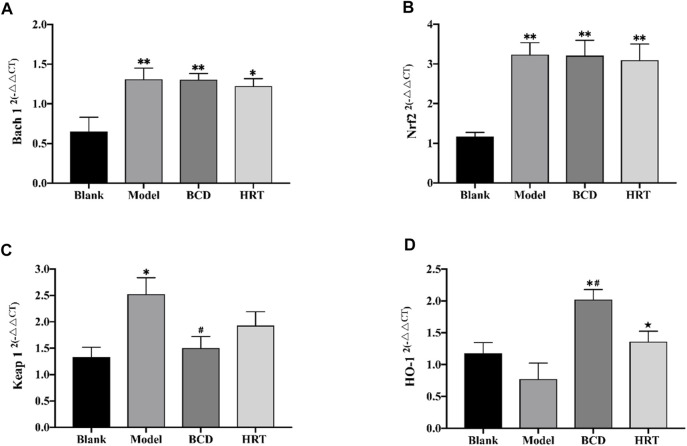
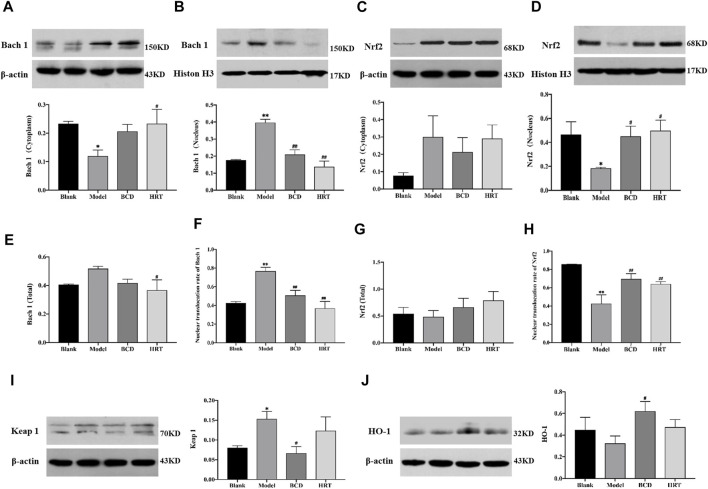
Premature ovarian insufficiency (POI) can result in lower fertility and shorten the female reproductive span. Bushen-Culuan Decoction (BCD) is a traditional Chinese medication utilized for treating POI for many years. We previously observed that BCD protects against further deterioration of the ovarian reserve of POI patients, however, the underlying mechanism has not been well studied. Our investigation seeks to evaluate the effect of BCD on POI induced by Tripterygium wilfordii polyglycosidium (TWP) and the likely mechanistic pathways, which we hypothesize may involve the Nrf2/ARE pathway. The body weights, estrous cycle, serum hormone levels, histological follicular analysis and quantification, levels of oxidative stress biomarkers in the ovarian tissue of POI mice models were evaluated. Western blotting and RT-PCR enabled quantification of the components of the Nrf2/ARE pathway. Our results showed that BCD restored hormonal profiles and estrous cycles of POI mice similar to those observed in healthy controls. BCD reduced the numbers of atretic follicles while increasing the number of primordial follicles. BCD facilitated lower 8-OHdG and MDA levels while increasing levels of key antioxidant enzymes including GSH-Px, CAT, and SOD. Furthermore, TWP increased Bach 1, Nrf2, and Keap 1 expressions at the translational level, while decreased that of HO-1. BCD treatment also promoted nuclear translocation rates of Bach 1 and Nrf2, suppressed Keap 1 protein expression, as well as raised HO-1 protein expression. Taken together, BCD likely augments ovarian reserve by activating the Nrf2/ARE signaling pathway, which stimulated higher levels of antioxidants and suppressed oxidative stress. BCD may be an important therapeutic compound in POI.
卵巢早衰(POI)可导致生育能力下降并缩短女性生殖期。补肾促卵汤(BCD)是一种多年来用于治疗POI的传统中药。我们之前观察到BCD可防止POI患者卵巢储备功能进一步恶化,然而,其潜在机制尚未得到充分研究。我们的研究旨在评估BCD对雷公藤多苷(TWP)诱导的POI的影响以及可能的作用机制途径,我们推测这可能涉及Nrf2/ARE途径。评估了POI小鼠模型的体重、发情周期、血清激素水平、组织学卵泡分析和定量、卵巢组织中氧化应激生物标志物的水平。蛋白质免疫印迹法和逆转录-聚合酶链反应(RT-PCR)可对Nrf2/ARE途径的成分进行定量。我们的结果表明,BCD可恢复POI小鼠的激素水平和发情周期,与健康对照组相似。BCD减少了闭锁卵泡的数量,同时增加了原始卵泡的数量。BCD降低了8-羟基脱氧鸟苷(8-OHdG)和丙二醛(MDA)水平,同时提高了包括谷胱甘肽过氧化物酶(GSH-Px)、过氧化氢酶(CAT)和超氧化物歧化酶(SOD)在内的关键抗氧化酶的水平。此外,TWP在翻译水平上增加了Bach 1、Nrf2和Keap 1的表达,同时降低了血红素加氧酶-1(HO-1)的表达。BCD处理还促进了Bach 1和Nrf2的核转位率,抑制了Keap 1蛋白表达,并提高了HO-1蛋白表达。综上所述,BCD可能通过激活Nrf2/ARE信号通路来增强卵巢储备,该信号通路可刺激更高水平的抗氧化剂并抑制氧化应激。BCD可能是POI的一种重要治疗化合物。