Venugopalan Visha Kumari, Nath Rajib, Sengupta Kajal, Pal Anjan K, Banerjee Saon, Banerjee Purabi, Chandran Malamal A Sarath, Roy Suman, Sharma Laxmi, Hossain Akbar, Siddique Kadambot H M
Department of Agronomy, Bidhan Chandra Krishi Viswavidyalaya, Mohanpur, India.
Indian Council of Agricultural Research (ICAR)-Central Research Institute for Dryland Agriculture, Hyderabad, India.
Front Plant Sci. 2022 Apr 7;13:847743. doi: 10.3389/fpls.2022.847743. eCollection 2022.
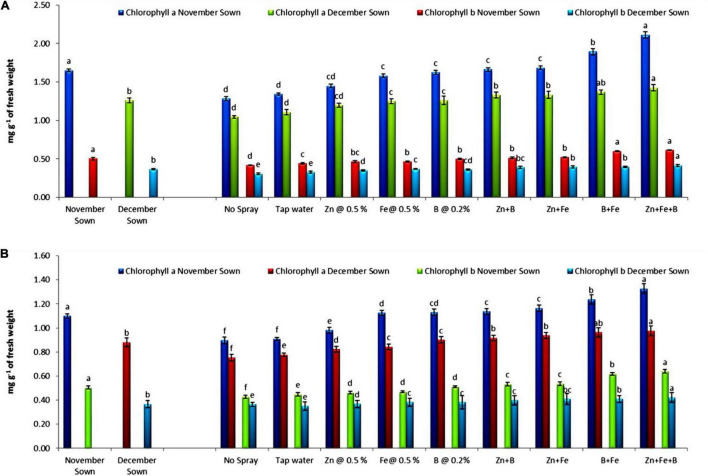
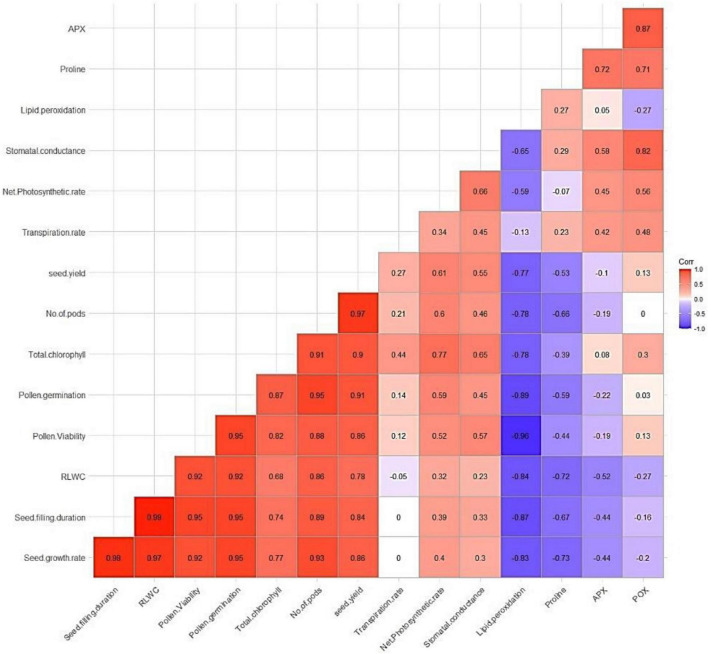
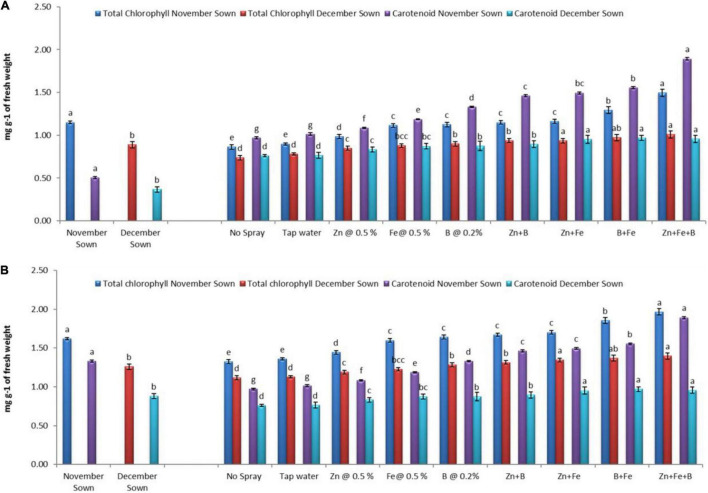
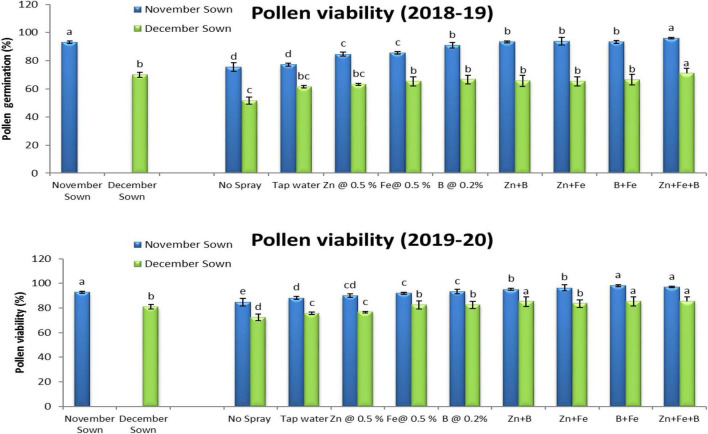
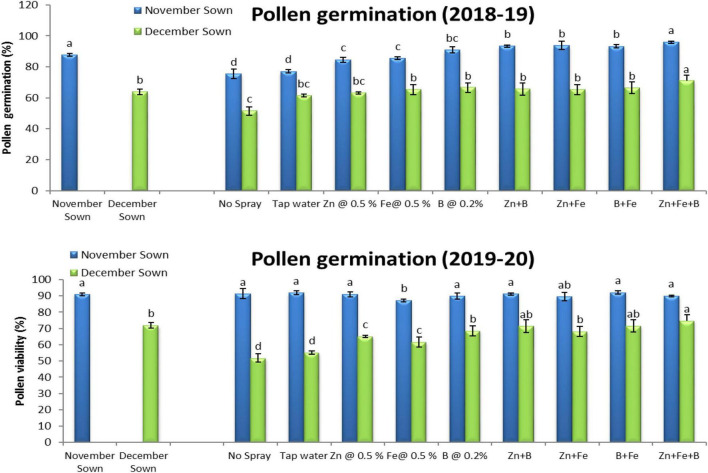
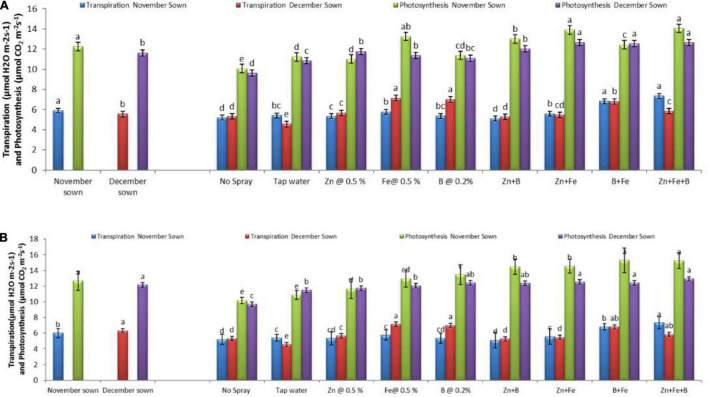
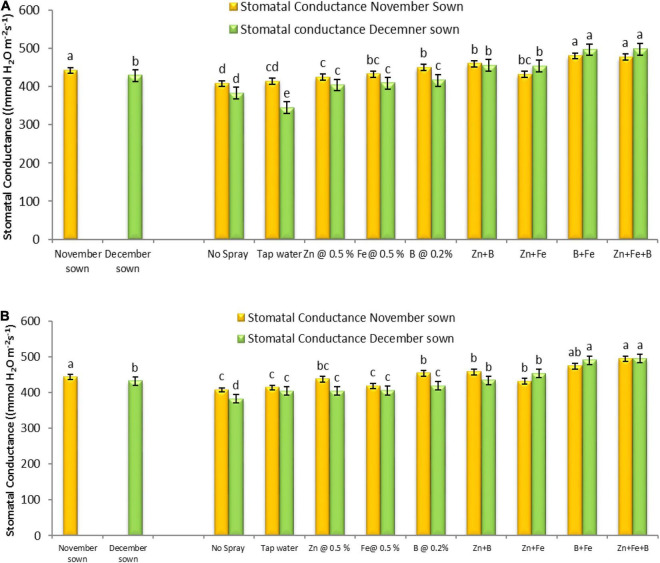
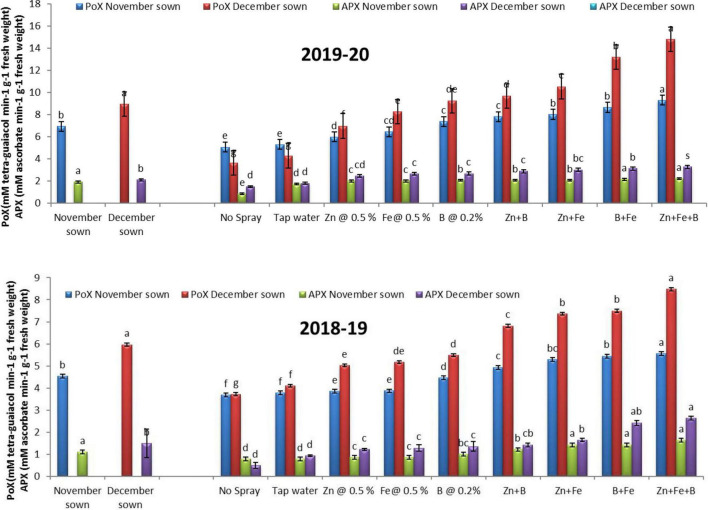
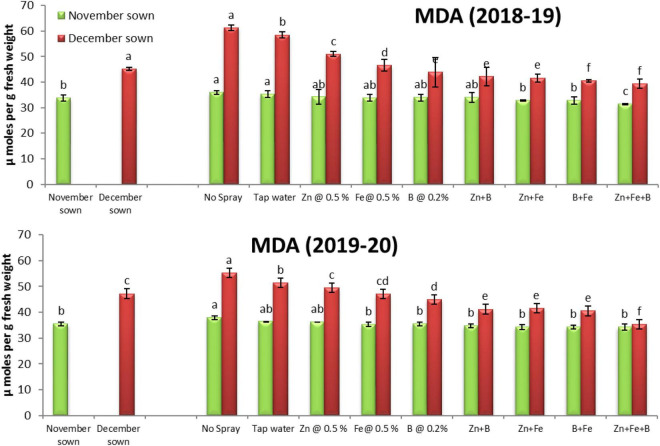
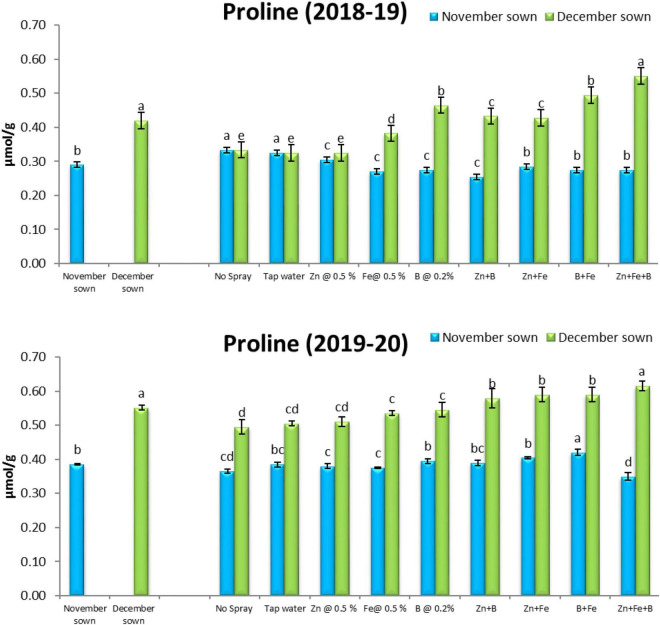
The simultaneous occurrence of high temperature and moisture stress during the reproductive stage of lentil ( Medik) constrains yield potential by disrupting the plant defense system. We studied the detrimental outcomes of heat and moisture stress on rainfed lentils under residual moisture in a field experiment conducted on clay loam soil (Aeric Haplaquept) in eastern India from 2018 to 2019 and from 2019 to 2020 in winter seasons. Lentil was sown on two dates (November and December) to expose the later sowing to higher temperatures and moisture stress. Foliar sprays of boron (0.2% B), zinc (0.5% Zn), and iron (0.5% Fe) were applied individually or in combination at the pre-flowering and pod development stages. High temperatures increased malondialdehyde (MDA) content due to membrane degradation and reduced leaf chlorophyll content, net photosynthetic rate, stomatal conductance, water potential, and yield (kg ha). The nutrient treatments affected the growth and physiology of stressed lentil plants. The B+Fe treatment outperformed the other nutrient treatments for both sowing dates, increasing peroxidase (POX) and ascorbate peroxidase (APX) activities, chlorophyll content, net photosynthetic rate, stomatal conductance, relative leaf water content (RLWC), seed filling duration, seed growth rate, and yield per hectare. The B+Fe treatment increased seed yield by 35-38% in late-sown lentils (December). In addition, the micronutrient treatments positively impacted physiological responses under heat and moisture stress with B+Fe and B+Fe+Zn alleviating heat and moisture stress-induced perturbations. Moreover, the exogenous nutrients helped in improving physiochemical attributes, such as chlorophyll content, net photosynthetic rate, stomatal conductance, water potential, seed filling duration, and seed growth rate.
小扁豆(Medik)生殖阶段高温与水分胁迫同时发生,会破坏植物防御系统,从而限制产量潜力。我们于2018年至2019年以及2019年至2020年冬季,在印度东部黏壤土(通气性湿软土)上开展田间试验,研究了在残留水分条件下,热量和水分胁迫对雨养小扁豆的有害影响。小扁豆分两个日期(11月和12月)播种,使晚播的小扁豆遭受更高温度和水分胁迫。在开花前期和结荚期分别单独或组合喷施硼(0.2% B)、锌(0.5% Zn)和铁(0.5% Fe)。高温导致膜降解,增加了丙二醛(MDA)含量,降低了叶片叶绿素含量、净光合速率、气孔导度、水势和产量(千克/公顷)。养分处理影响了受胁迫小扁豆植株的生长和生理。在两个播种日期中,B + Fe处理均优于其他养分处理,提高了过氧化物酶(POX)和抗坏血酸过氧化物酶(APX)活性、叶绿素含量、净光合速率、气孔导度、相对叶片含水量(RLWC)、种子灌浆持续时间、种子生长速率和每公顷产量。B + Fe处理使晚播小扁豆(12月)的种子产量提高了35 - 38%。此外,微量元素处理对高温和水分胁迫下的生理反应产生了积极影响,B + Fe和B + Fe + Zn缓解了高温和水分胁迫引起的扰动。此外,外源养分有助于改善理化特性,如叶绿素含量、净光合速率、气孔导度、水势、种子灌浆持续时间和种子生长速率。