Venugopalan Visha Kumari, Nath Rajib, Sengupta Kajal, Nalia Arpita, Banerjee Saon, Chandran Malamal A Sarath, Ibrahimova Ulkar, Dessoky Eldessoky S, Attia Attia O, Hassan Mohamed M, Hossain Akbar
Department of Agronomy, Bidhan Chandra Krishi Viswavidalya, Haringhata, India.
Department of Agricultural Meteorology and Physics, Bidhan Chandra Krishi Viswavidalya, Haringhata, India.
Front Plant Sci. 2021 Jul 22;12:679469. doi: 10.3389/fpls.2021.679469. eCollection 2021.
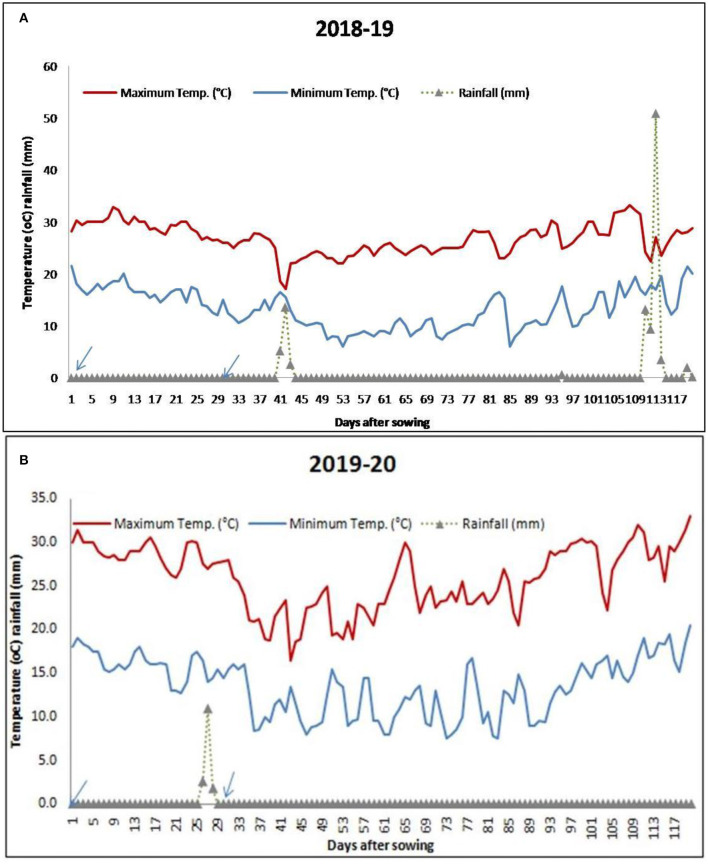
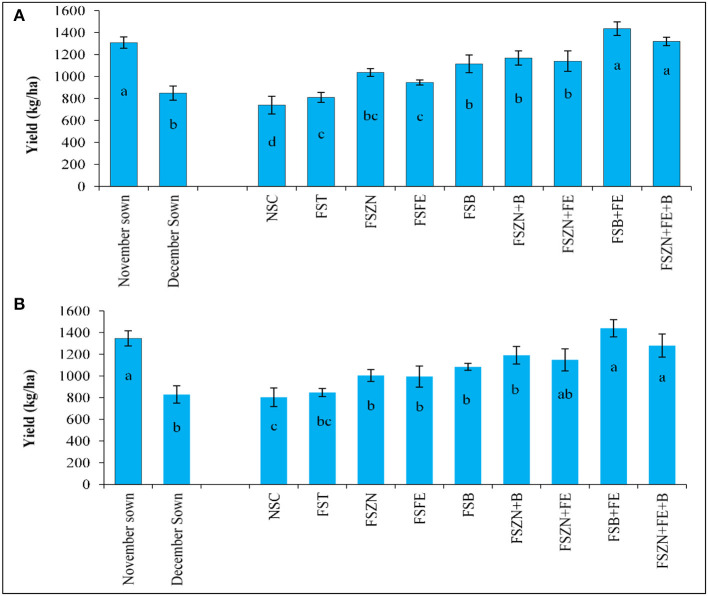
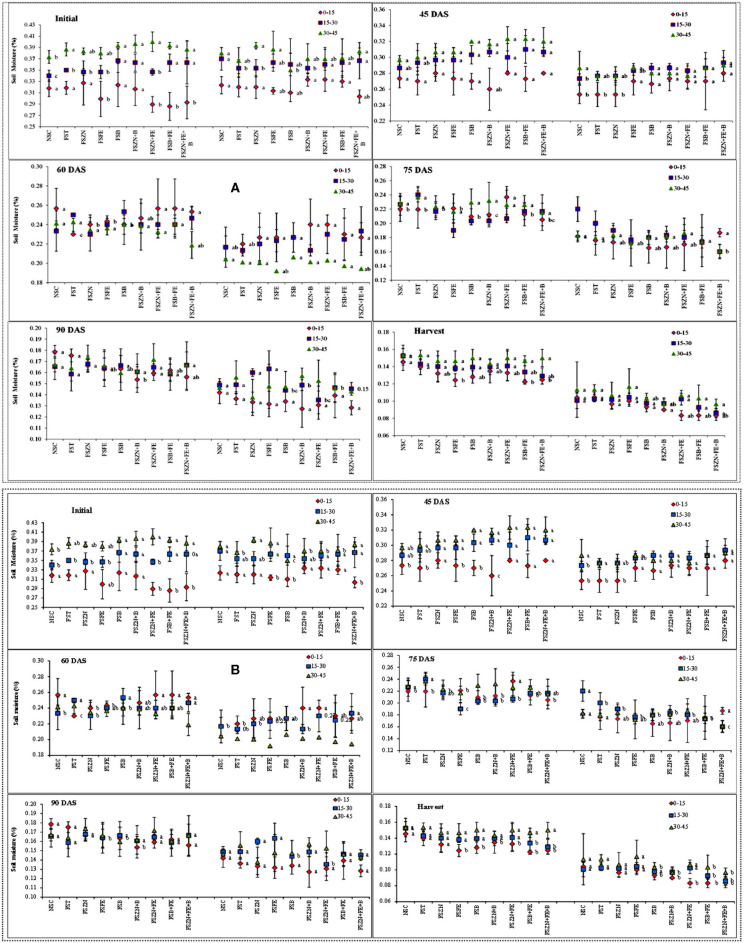
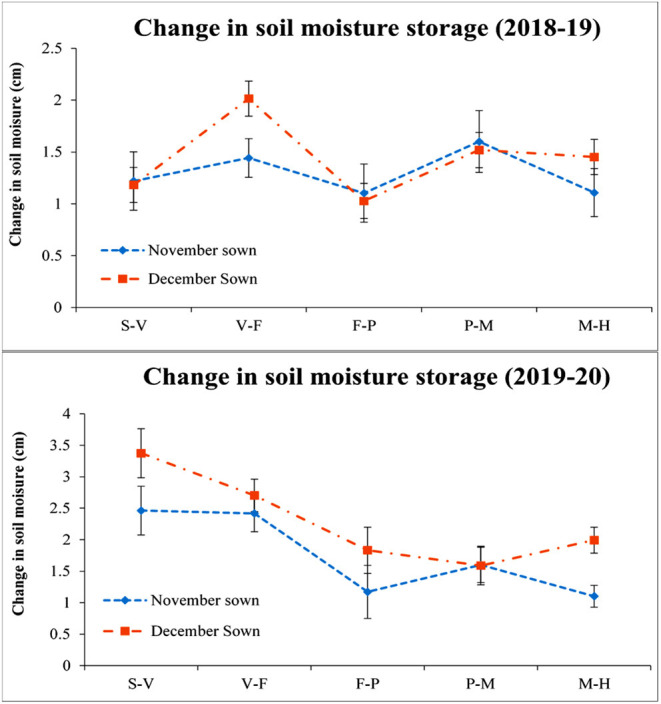
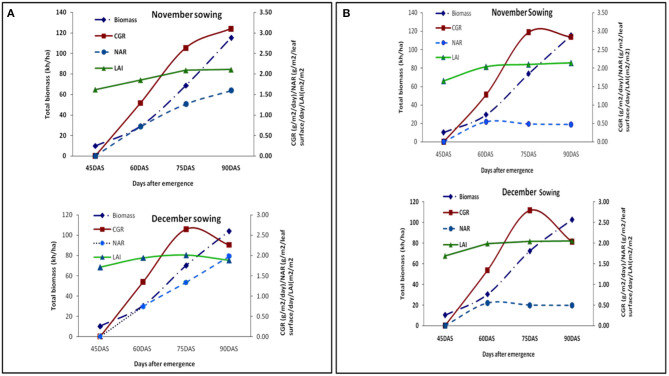
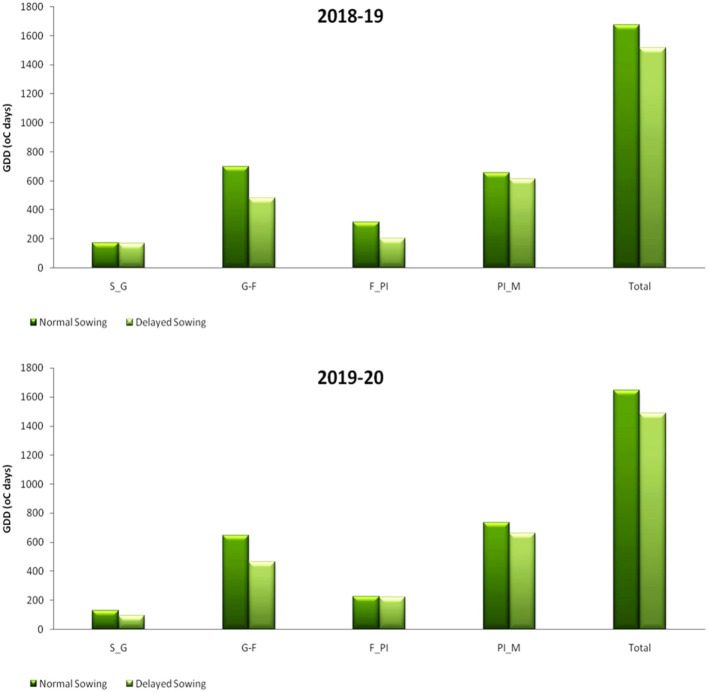
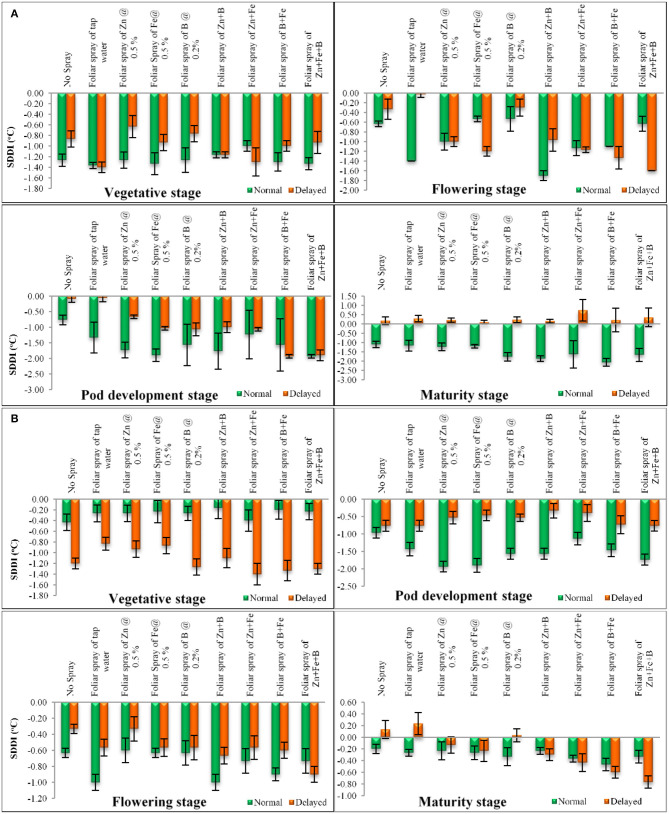
Soil moisture and air temperature stress are the two major abiotic factors limiting lentil ( Medik.) growth and productivity in the humid tropics. Field experiments were conducted during winter seasons (November to March) of 2018-2019 and 2019-2020 on clay loam soil (AericHaplaquept) of Eastern India to cultivate rainfed lentil, with residual moisture. The objective was to study the effect of different time of sowing and foliar spray of micronutrients in ameliorating the effect of heat and moisture stress lentil crop experience in its reproductive stage. The study was conducted with two different dates of sowing, November and December, as main plot treatment and micronutrients foliar spray of boron, iron, and zinc either alone or in combination as subplot treatment. No foliar spray treatment was considered as a control. The soil moisture content is depleted from 38 to 18% (sowing to harvest) during November sowing; however, in December sowing, the depletion is from 30 to 15%. The foliar spray of micronutrients helped to have a better canopy cover and thus reduced soil evaporation during the later stages of crop growth when the temperature was beyond the threshold temperature of the crop. Crop growth rate (CGR) and biomass were significantly higher ( ≤ 0.05) for November sown crop and with foliar spray of boron and iron (FSB + FE) micronutrients. In the later stages of the crop when the soil moisture started depleting with no precipitation, the canopy temperature increased compared with air temperature, leading to positive values of Stress Degree Days (SDD) index. Delay in sowing reduced the duration by 11.4 days (113.5 vs. 102.1 days), resulting in varied accumulated Growing Degree Days (GDD). FSB + FE resulted in the highest yield in both years (1,436 and 1,439 kg ha). The results of the study concluded that the optimum time of sowing and foliar spray of micronutrients may be helpful to alleviate the soil moisture and heat stress for the sustainability of lentil production in the subtropical region.
土壤湿度和气温胁迫是限制湿润热带地区小扁豆(Medik.)生长和生产力的两个主要非生物因素。于2018 - 2019年和2019 - 2020年冬季(11月至3月)在印度东部的粘壤土(潮湿热性淋溶土)上进行田间试验,种植雨养小扁豆,并利用残留水分。目的是研究不同播种时间和叶面喷施微量元素对缓解小扁豆作物在生殖阶段所经历的热胁迫和水分胁迫影响的作用。该研究以11月和12月两个不同播种日期作为主区处理,以单独或组合喷施硼、铁和锌等微量元素叶面肥作为副区处理。不进行叶面喷施处理作为对照。11月播种时,土壤含水量从播种到收获期间从38%降至18%;然而,12月播种时,含水量从30%降至15%。在作物生长后期温度超过作物阈值温度时,叶面喷施微量元素有助于形成更好的冠层覆盖,从而减少土壤蒸发。11月播种的作物以及喷施硼和铁(FSB + FE)微量元素叶面肥的作物,其作物生长速率(CGR)和生物量显著更高(≤0.05)。在作物生长后期,当土壤水分开始因无降水而减少时,冠层温度相对于气温升高,导致胁迫度日(SDD)指数为正值。播种延迟使生育期缩短11.4天(113.5天对102.1天),导致累积生长度日(GDD)有所不同。FSB + FE在两年中均获得最高产量(1436和1439千克/公顷)。研究结果表明,最佳播种时间和叶面喷施微量元素可能有助于缓解亚热带地区小扁豆生产中的土壤水分和热胁迫,以实现可持续生产。