Baurens Natacha, Briand Clémence, Giovannini-Chami Lisa, De Guillebon De Resnes Jean-Marie, Hubiche Thomas, Chiaverini Christine, Giordana Pascal, Leftheriotis Georges, Bernardor Julie
CHU Lenval, Hôpitaux Pédiatriques de Nice, Nice, France.
Unité de Dermatologie, Hôpital Archet-2, CHU de Nice, Nice, France.
Front Pediatr. 2022 Apr 7;10:849914. doi: 10.3389/fped.2022.849914. eCollection 2022.
Bier anemic spots, cyanosis, and urticaria-like eruption (BASCULE) syndrome is an underreported pediatric vascular disorder from the group of acrosyndromes. In children, these include paroxysmal acrosyndromes (Raynaud's phenomenon and chilblain-like lesions), permanent acrosyndromes (acrocyanosis), and transient acrosyndromes, in which their pathogeneses are associated with virus infections, Epstein-Barr virus, and, more recently, SARS-CoV-2, respectively.
We reported a case of BASCULE syndrome associated with postural orthostatic tachycardia syndrome (POTS) and provided a narrative review of case reports describing the BASCULE syndrome in children. Moreover, we presented the results of a prospective practice survey that we performed in the French medical community.
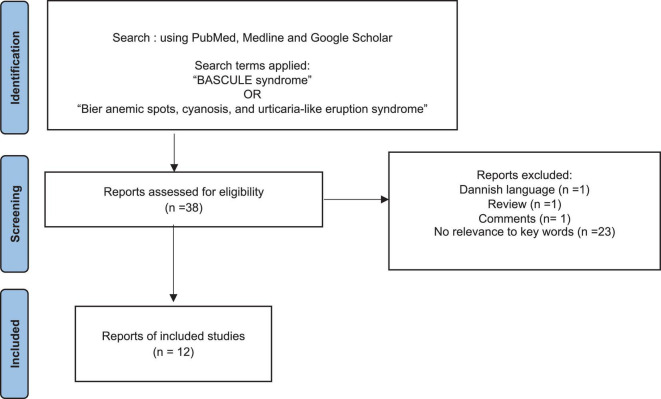
A 14-years-old boy reported pruritic erythrocyanic lesions on the lower limbs, which occurred whenever he was in a standing position and fully resolved when he laid down. He reported asthenia and cramps. He presented a typical BASCULE syndrome associated with POTS confirmed by a tilt-test. Physical and vascular examinations were within the normal range. We identified 12 case reports, describing 21 pediatric cases since 2016. Most patients were adolescents between 12 and 19 years of age or were newborns. Furthermore, 20% of cases in the literature have presented POTS or orthostatic intolerance. Our survey among 95 French physicians confirmed that BASCULE syndrome is an underdiagnosed and under recognized disease in the general pediatric practice, at least in France. Among these physicians, 65% had already encountered patients with similar symptoms, but only 30% declared that they had knowledge of the BASCULE syndrome.
The under-recognition of the clinical manifestations leads the patients to consult emergency rooms, with multiple unnecessary investigations performed. Therefore, we suggest that the diagnosis of BASCULE syndrome is based on clinical observations, without the need for laboratory tests, to avoid unnecessary health costs. We suggest physicians to perform a tilt-test when POTS is suspected.
比尔贫血斑、发绀和荨麻疹样皮疹(BASCULE)综合征是一种报道较少的儿科血管疾病,属于肢端综合征。在儿童中,这些包括阵发性肢端综合征(雷诺现象和冻疮样病变)、永久性肢端综合征(手足发绀症)和短暂性肢端综合征,其发病机制分别与病毒感染、爱泼斯坦-巴尔病毒以及最近的严重急性呼吸综合征冠状病毒2(SARS-CoV-2)有关。
我们报告了一例与体位性直立性心动过速综合征(POTS)相关的BASCULE综合征病例,并对描述儿童BASCULE综合征的病例报告进行了叙述性综述。此外,我们展示了在法国医学界进行的一项前瞻性实践调查的结果。
一名14岁男孩报告称,下肢出现瘙痒性红细胞性病变,每当他站立时就会出现,躺下后完全缓解。他还报告有乏力和抽筋症状。通过倾斜试验证实,他患有与POTS相关的典型BASCULE综合征。体格检查和血管检查均在正常范围内。我们确定了12篇病例报告,描述了自2016年以来的21例儿科病例。大多数患者为12至19岁的青少年或新生儿。此外,文献中20%的病例出现了POTS或直立不耐受。我们对95名法国医生进行的调查证实,至少在法国,BASCULE综合征在普通儿科实践中是一种诊断不足且认识不足的疾病。在这些医生中,65%已经遇到过有类似症状的患者,但只有30%宣称他们了解BASCULE综合征。
对临床表现认识不足导致患者前往急诊室就诊,并进行了多项不必要的检查。因此,我们建议BASCULE综合征的诊断基于临床观察,无需实验室检查,以避免不必要的医疗费用。我们建议医生在怀疑患有POTS时进行倾斜试验。