Wynn Rob, Nataraj Ramya, Nadaf Rubiya, Poulton Kay, Logan Alison
Royal Manchester Children's Hospital, Manchester, United Kingdom.
Paediatric Blood and Marrow Transplant Programme, Manchester, United Kingdom.
Front Cell Dev Biol. 2022 Apr 6;10:836594. doi: 10.3389/fcell.2022.836594. eCollection 2022.
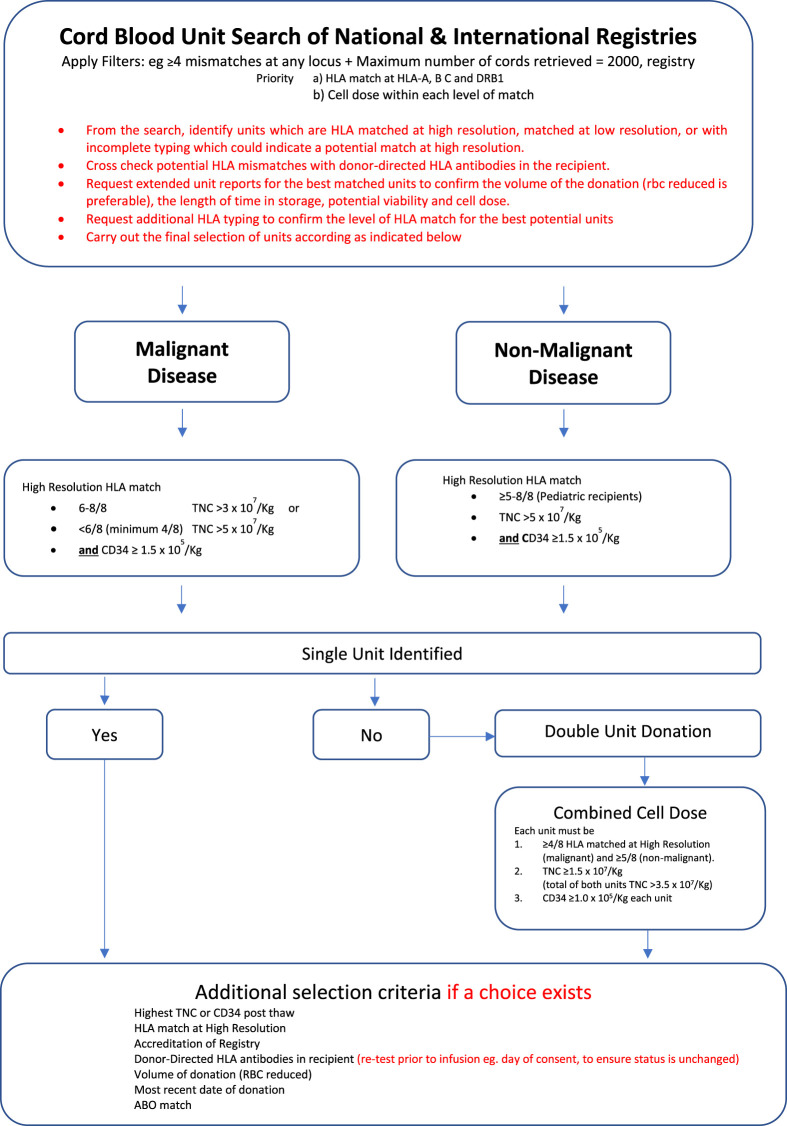
Umbilical Cord blood is an intuitively attractive stem cell source, but its use has declined since it is associated with an increased procedure-related morbidity and transplant related mortality. Some of this reflects that cord blood transplants are more often HLA-mismatched compared to other unrelated donor transplants. The ability to transplant in such a setting, indeed without high rates of chronic Graft versus Host Disease (GVHD), constitutes an advantage compared to other unrelated donor cell sources and there are other advantages specifically associated with cord blood as a donor cell source. These advantages must be weighed against its disadvantage, and we have utilised cord blood preferentially as a donor cell source in certain clinical situations in paediatric medicine. In non-malignant diseases, outcomes in metabolic disease are critically dependent on age at transplant and the enzyme delivered by that transplant, and in cord blood transplantation then the time to transplant can be minimised and the engrafted recipients have higher chimerism that delivers higher enzyme levels. In malignant diseases, studies have described reduced relapse rate and better GVHD-free survival, and so we have prioritised cord as a donor cell source where the risk of relapse is highest, and the effects of higher transplant related mortality is most clearly offset by the reduced relapse rates.
脐带血是一种直观上颇具吸引力的干细胞来源,但自其与手术相关的发病率增加和移植相关死亡率升高有关联以来,其使用量有所下降。部分原因在于,与其他非亲缘供体移植相比,脐带血移植的人类白细胞抗原(HLA)配型不符情况更为常见。在这种情况下进行移植,且确实没有高比例的慢性移植物抗宿主病(GVHD),这与其他非亲缘供体细胞来源相比是一个优势,并且脐带血作为供体细胞来源还有其他特定优势。必须权衡这些优势与劣势,我们在儿科医学的某些临床情况下优先将脐带血用作供体细胞来源。在非恶性疾病中,代谢性疾病的治疗结果严重依赖于移植时的年龄以及移植所提供的酶,而在脐带血移植中,移植时间可以降至最短,且植入的受者具有更高的嵌合率,从而能提供更高的酶水平。在恶性疾病中,研究表明复发率降低且无GVHD生存率更高,因此我们将脐带血作为供体细胞来源的优先级设定在复发风险最高的情况,且更高的移植相关死亡率的影响最能被复发率降低明显抵消的情况。