Kim Sun Mi, Min Kyung Joon, Han Doug Hyun
Department of Psychiatry, Chung-Ang University College of Medicine, Seoul, Korea.
Clin Psychopharmacol Neurosci. 2022 May 31;20(2):259-270. doi: 10.9758/cpn.2022.20.2.259.
This study aimed to evaluate whether somatic symptoms in adolescents with attention deficit hyperactivity disorder (ADHD) are associated with a dissociative pattern of functional connectivity (FC) within the default mode network (DMN) and whether methylphenidate administration can improve clinical and somatic symptoms. We also evaluated whether the improvement of somatic symptoms is associated with increased FC within the DMN in response to methylphenidate treatment.
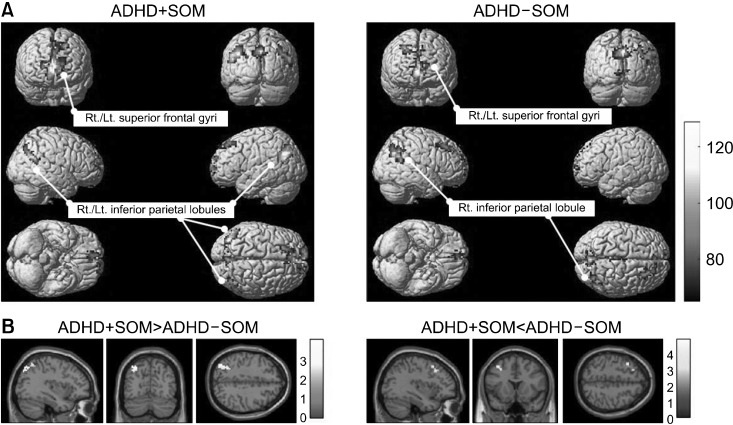
Fifteen male adolescents with somatic symptoms of ADHD and 15 male adolescents with ADHD without somatic symptoms were included. At baseline and after 6 months of methylphenidate treatment, all adolescents were asked to complete questionnaires for the Korean version of the Dupaul's ADHD rating scale, the symptom checklist-90- revised-somatization subscales, the Beck Depression Inventory, and the Beck Anxiety Inventory. Additionally, a resting- state functional magnetic resonance imaging scan was conducted.
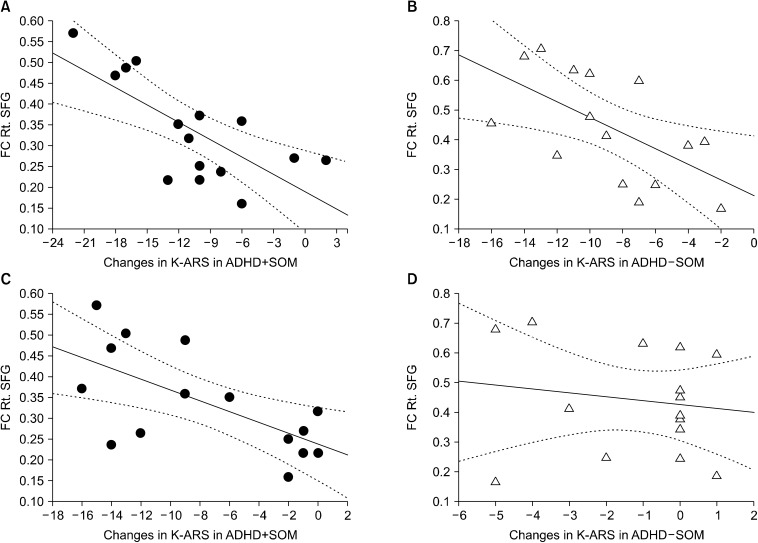
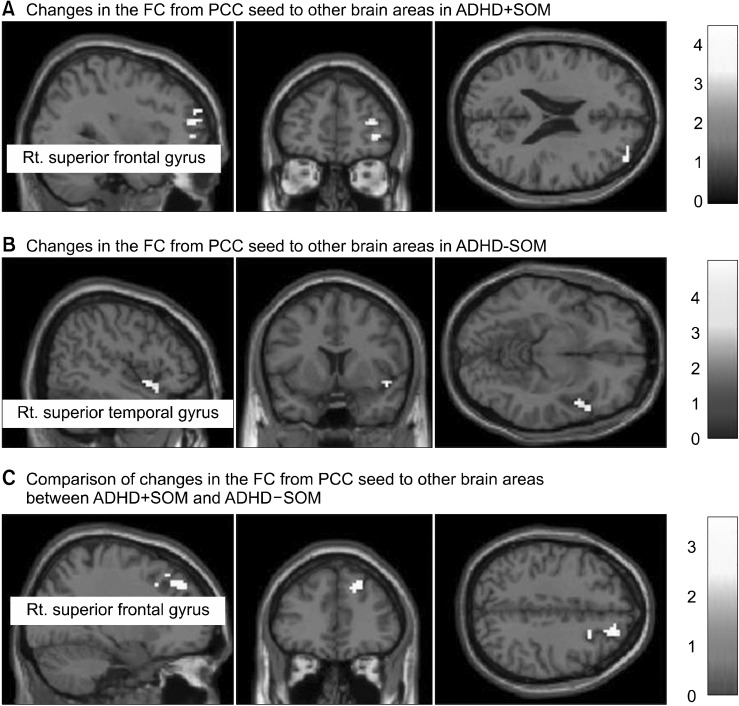
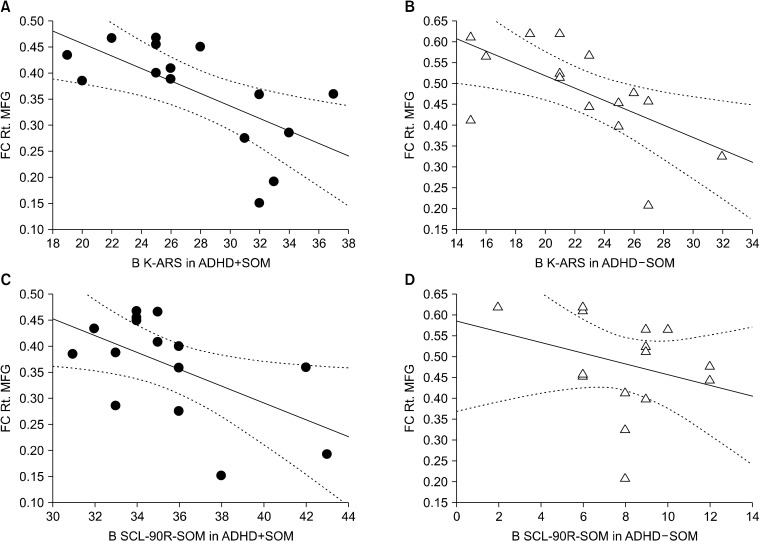
Methylphenidate treatment improved clinical and somatic symptoms in adolescents with ADHD. In addition, it increased brain FC within the DMN from the posterior cingulate cortex (posterior DMN) to the middle prefrontal cortex (anterior DMN). The improvement of somatic symptoms was associated with FC within the DMN from the posterior cingulate cortex to the middle prefrontal cortex in ADHD adolescents with somatic symptoms.
Methylphenidate increased brain FC between the anterior and posterior DMN. The improvement of somatic symptoms in adolescents with ADHD was associated with FC within the DMN. The DMN in adolescents with ADHD seems to be associated with the severity of the clinical and somatic symptoms of ADHD.
本研究旨在评估注意缺陷多动障碍(ADHD)青少年的躯体症状是否与默认模式网络(DMN)内功能连接(FC)的解离模式相关,以及哌甲酯给药是否能改善临床和躯体症状。我们还评估了躯体症状的改善是否与哌甲酯治疗后DMN内FC的增加相关。
纳入15名有ADHD躯体症状的男性青少年和15名无ADHD躯体症状的男性青少年。在基线和哌甲酯治疗6个月后,所有青少年均被要求完成韩国版的杜保罗ADHD评定量表、症状自评量表90修订版躯体化分量表、贝克抑郁量表和贝克焦虑量表的问卷调查。此外,还进行了静息态功能磁共振成像扫描。
哌甲酯治疗改善了ADHD青少年的临床和躯体症状。此外,它增加了从后扣带回皮质(后DMN)到中前额叶皮质(前DMN)的DMN内脑FC。有躯体症状的ADHD青少年躯体症状的改善与从后扣带回皮质到中前额叶皮质的DMN内FC相关。
哌甲酯增加了前、后DMN之间的脑FC。ADHD青少年躯体症状的改善与DMN内的FC相关。ADHD青少年的DMN似乎与ADHD临床和躯体症状的严重程度相关。