Department of Cell Biology, Johns Hopkins University School of Medicine, Baltimore, United States.
Division of Developmental Biology, Eunice Kennedy Shriver National Institute of Child Health and Human Development, National Institutes of Health, Bethesda, United States.
Elife. 2022 Apr 25;11:e70810. doi: 10.7554/eLife.70810.
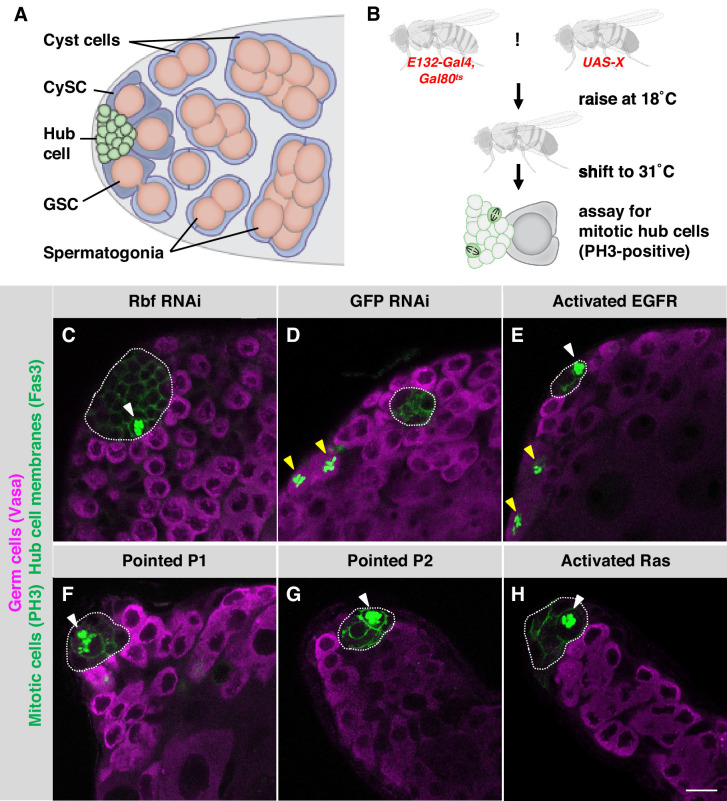
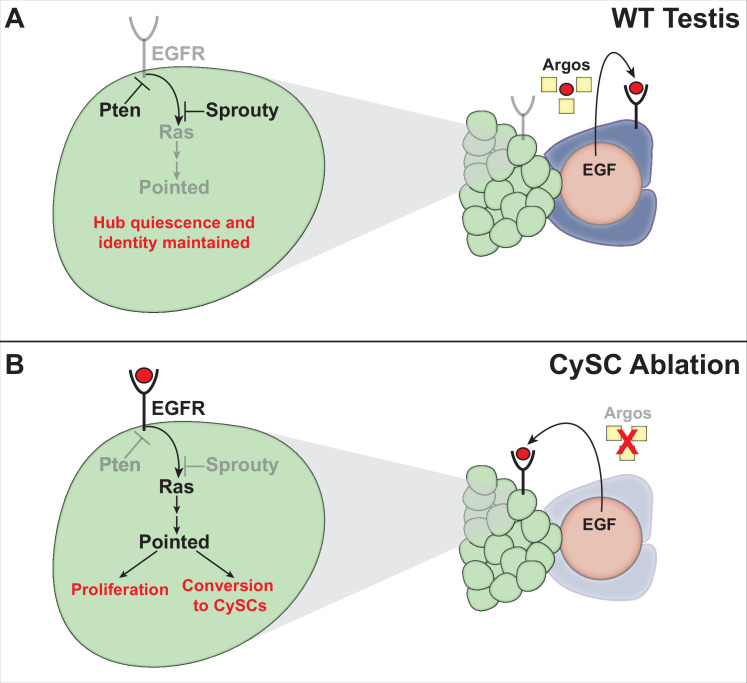
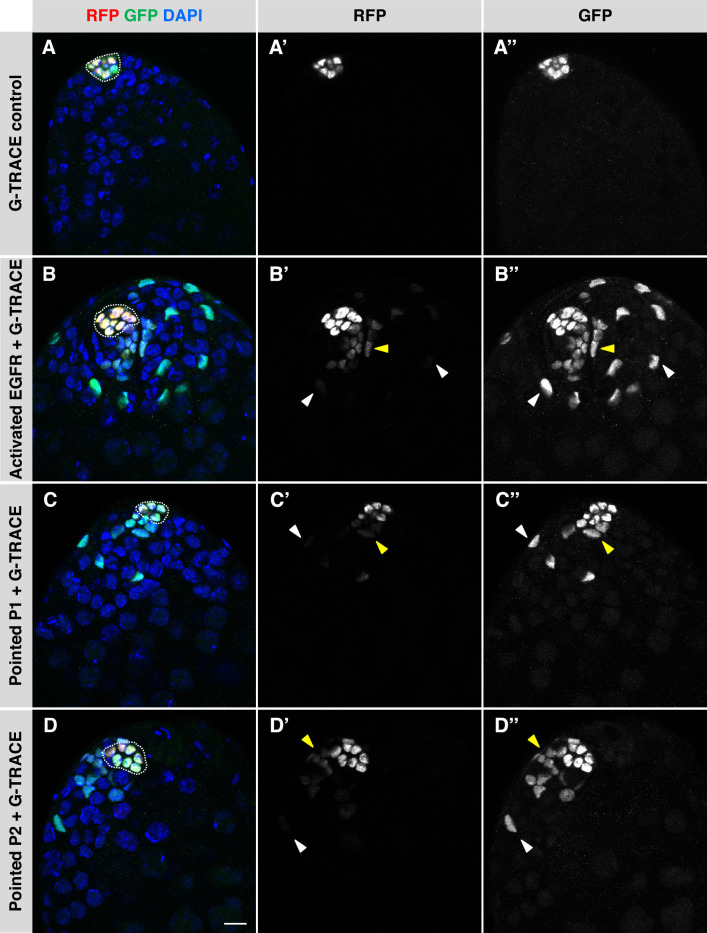
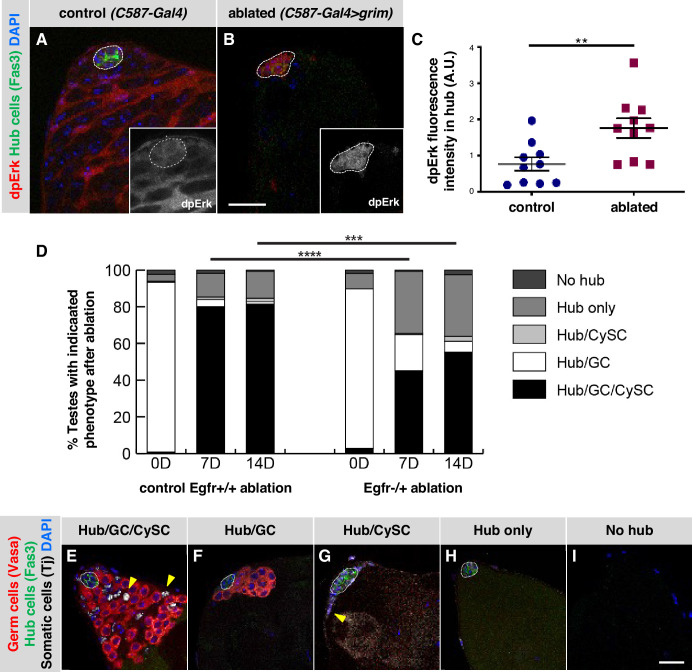
Adult stem cells are maintained in niches, specialized microenvironments that regulate their self-renewal and differentiation. In the adult testis stem cell niche, somatic hub cells produce signals that regulate adjacent germline stem cells (GSCs) and somatic cyst stem cells (CySCs). Hub cells are normally quiescent, but after complete genetic ablation of CySCs, they can proliferate and transdifferentiate into new CySCs. Here we find that Epidermal growth factor receptor (EGFR) signaling is upregulated in hub cells after CySC ablation and that the ability of testes to recover from ablation is inhibited by reduced EGFR signaling. In addition, activation of the EGFR pathway in hub cells is sufficient to induce their proliferation and transdifferentiation into CySCs. We propose that EGFR signaling, which is normally required in adult cyst cells, is actively inhibited in adult hub cells to maintain their fate but is repurposed to drive stem cell regeneration after CySC ablation.
成体干细胞存在于特定的微环境中,即龛位,这些龛位可以调节干细胞的自我更新和分化。在成年睾丸干细胞龛位中,体干细胞的巢细胞产生信号,调节邻近的生殖干细胞(GSCs)和体干细胞(CySCs)。巢细胞通常处于静止状态,但在 CySCs 完全遗传消融后,它们可以增殖并转分化为新的 CySCs。在这里,我们发现 CySCs 消融后巢细胞中的表皮生长因子受体(EGFR)信号上调,并且 EGFR 信号的减少抑制了睾丸从消融中恢复的能力。此外,激活巢细胞中的 EGFR 途径足以诱导它们增殖并转分化为 CySCs。我们提出,在成年囊细胞中正常需要的 EGFR 信号在成年巢细胞中被主动抑制,以维持其命运,但在 CySCs 消融后被重新用于驱动干细胞再生。