Department of General Surgery & Guangdong Provincial Key Laboratory of Precision Medicine for Gastrointestinal Tumor, Nanfang Hospital, The First School of Clinical Medicine, Southern Medical University, Guangzhou, Guangdong, China.
Cancer Med. 2022 Nov;11(22):4146-4156. doi: 10.1002/cam4.4766. Epub 2022 Apr 25.
Transaxillary endoscopic thyroidectomy has been introduced to achieve better cosmetic outcomes. However, the benefits of this technology on the patients' health-related quality of life (HRQoL) remain unclear. We aimed to investigate whether transaxillary endoscopic lobectomy is comparable to conventional open lobectomy in terms of QOL and cosmetic results in order to provide more evidence for establishing appropriate clinical decisions.
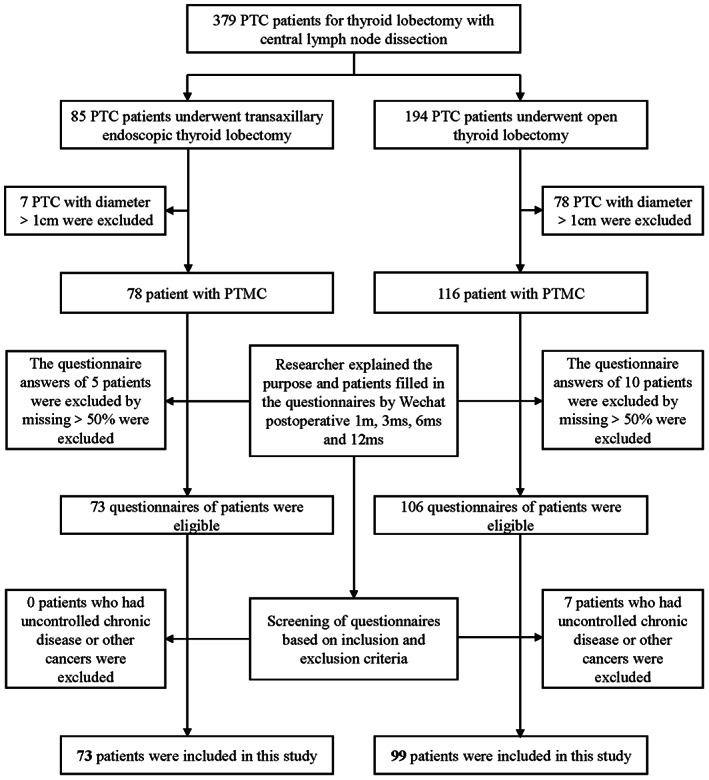
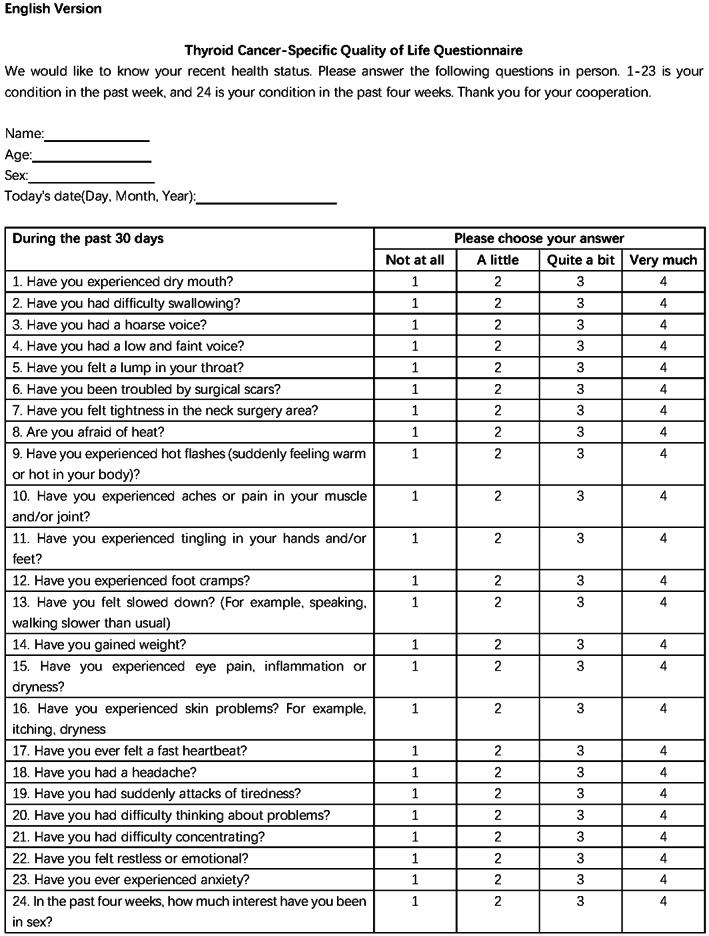
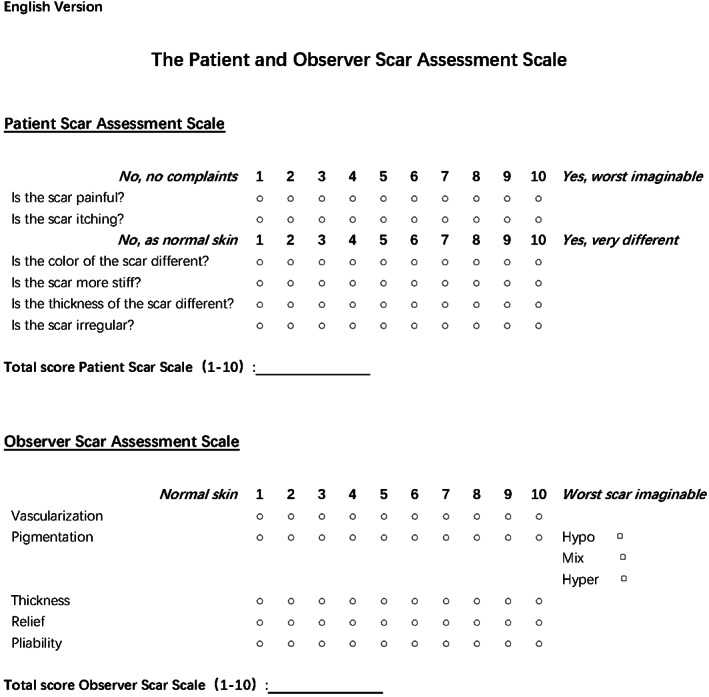
Between August 2019 and May 2020, transaxillary endoscopic lobectomy and conventional open lobectomy were performed in 73 and 99 patients with papillary thyroid microcarcinoma, respectively. HRQoL was assessed at 1, 3, 6, and 12 months after surgery using the Thyroid Cancer-Specific Quality of Life Questionnaire. The cosmetic outcomes were assessed 12 months after surgery using the Patient and Observer Scar Assessment Scale (POSAS).
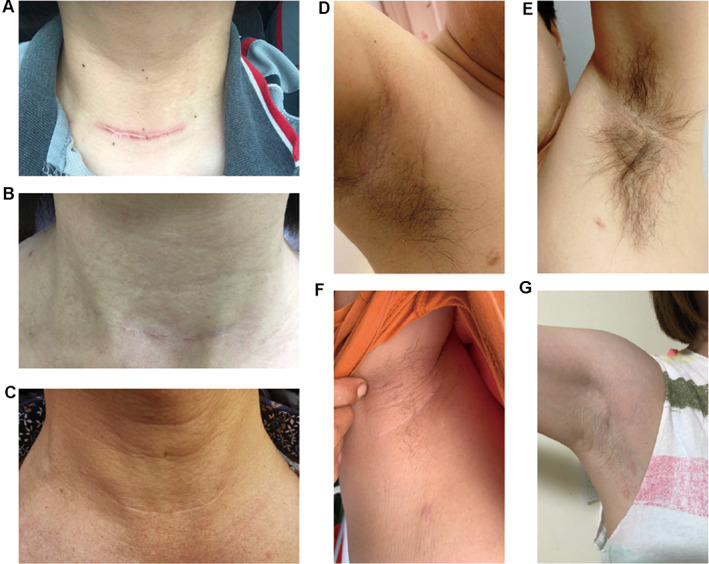
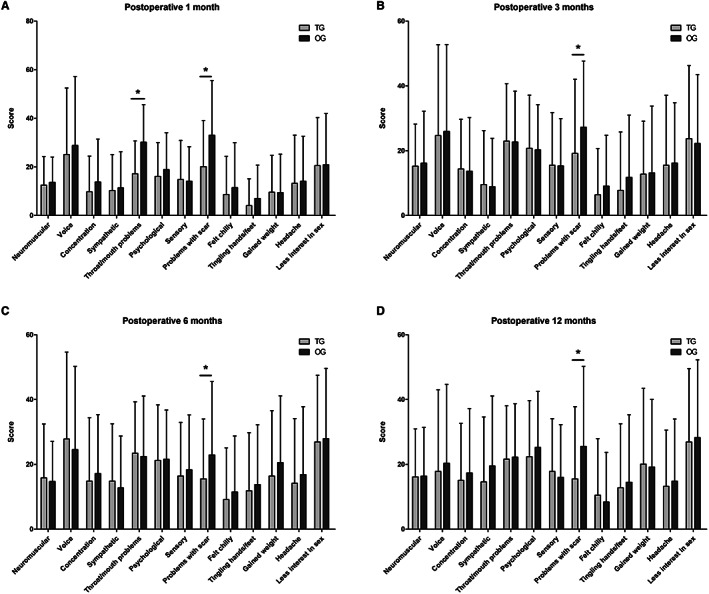
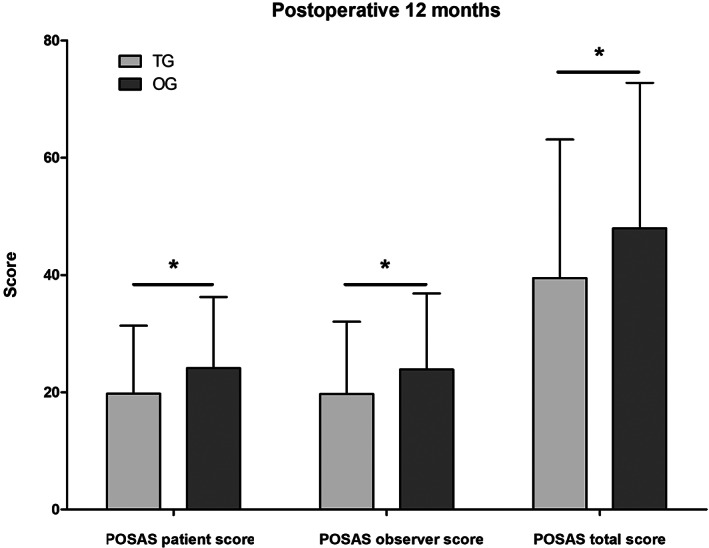
No significant difference was observed in the surgical results between the two groups. However, the data showed that the average operative time and postoperative hospital stay of the transaxillary group were longer than those of the open group (p < 0.001). Both groups showed similar changes in the QOL scores over time. However, the transaxillary group had fewer complaints of the throat or oral problems at 1 month postoperatively than the open group (p < 0.001). During the follow-up, the cosmetic results of scars in the transaxillary group were significantly better than those in the open group (p < 0.05). Patients who underwent transaxillary endoscopic lobectomy had higher overall satisfaction with their scar appearance, determined using POSAS, at 12 months postoperatively.
The current findings suggest that transaxillary endoscopic lobectomy may offer better cosmetic and HRQoL outcomes.
经腋窝内镜甲状腺切除术的引入是为了获得更好的美容效果。然而,该技术对患者健康相关生活质量(HRQoL)的益处尚不清楚。我们旨在研究经腋窝内镜叶切除术与传统开放叶切除术在 QOL 和美容结果方面是否可比,以便为制定适当的临床决策提供更多证据。
2019 年 8 月至 2020 年 5 月,分别对 73 例和 99 例甲状腺微小乳头状癌患者进行经腋窝内镜叶切除术和传统开放叶切除术。使用甲状腺癌特异性生活质量问卷在术后 1、3、6 和 12 个月评估 HRQoL。术后 12 个月使用患者和观察者疤痕评估量表(POSAS)评估美容效果。
两组手术结果无显著差异。然而,数据显示经腋窝组的平均手术时间和术后住院时间长于开放组(p<0.001)。两组的 QOL 评分随时间均有相似变化。然而,经腋窝组在术后 1 个月时比开放组报告的喉咙或口腔问题更少(p<0.001)。在随访期间,经腋窝组的疤痕美容效果明显优于开放组(p<0.05)。经腋窝内镜叶切除术患者对术后 12 个月的疤痕外观总体满意度更高,采用 POSAS 评估。
目前的研究结果表明,经腋窝内镜叶切除术可能提供更好的美容和 HRQoL 结果。