Department of Chemistry, Incheon Natoinal University and Research Institute of Basic Sciences, Incheon, 22012, Republic of Korea.
Digital Bio R&D Center, Mediazen, Seoul, 07789, Republic of Korea.
Chem Asian J. 2022 Jul 15;17(14):e202200203. doi: 10.1002/asia.202200203. Epub 2022 May 30.
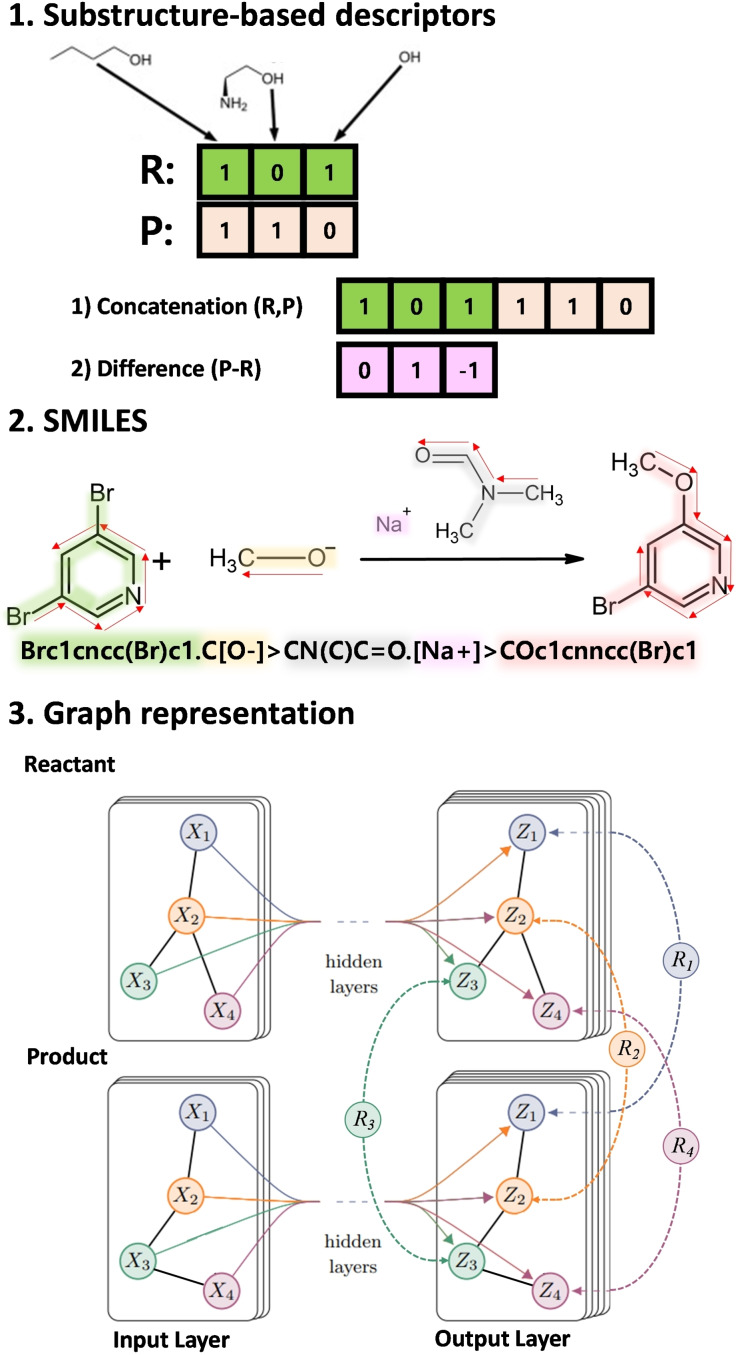
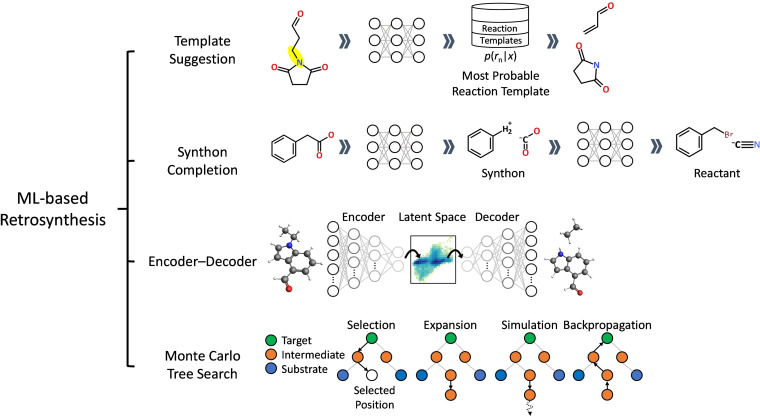
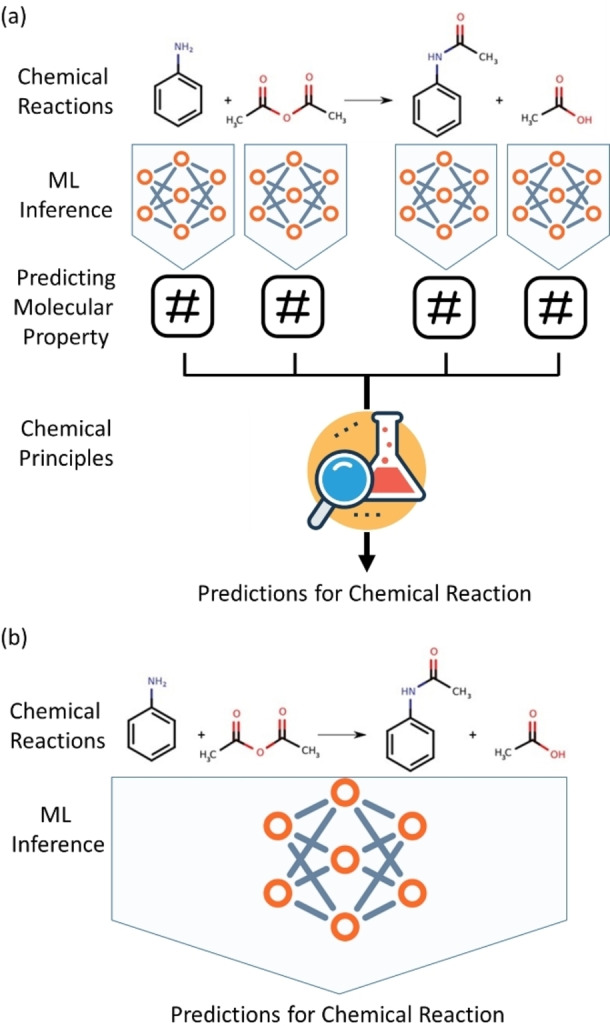
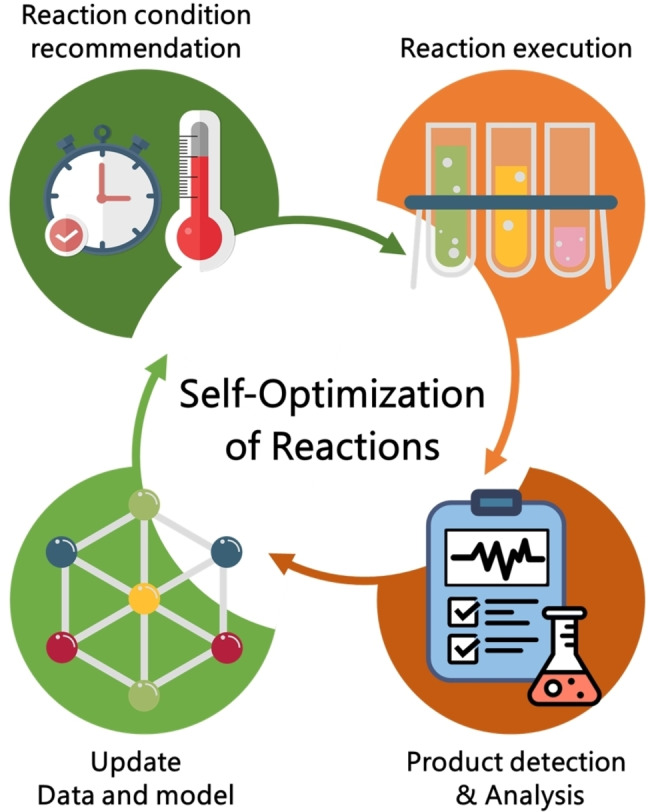
Machine learning (ML) approaches have enabled rapid and efficient molecular property predictions as well as the design of new novel materials. In addition to great success for molecular problems, ML techniques are applied to various chemical reaction problems that require huge costs to solve with the existing experimental and simulation methods. In this review, starting with basic representations of chemical reactions, we summarized recent achievements of ML studies on two different problems; predicting reaction properties and synthetic routes. The various ML models are used to predict physical properties related to chemical reaction properties (e. g. thermodynamic changes, activation barriers, and reaction rates). Furthermore, the predictions of reactivity, self-optimization of reaction, and designing retrosynthetic reaction paths are also tackled by ML approaches. Herein we illustrate various ML strategies utilized in the various context of chemical reaction studies.
机器学习 (ML) 方法能够快速有效地预测分子性质,并设计新型材料。除了在分子问题上取得巨大成功外,ML 技术还应用于各种化学反应问题,这些问题需要用现有的实验和模拟方法来解决,成本巨大。在这篇综述中,我们从化学反应的基本表示开始,总结了 ML 研究在两个不同问题上的最新成果;预测反应性质和合成路线。各种 ML 模型被用于预测与化学反应性质相关的物理性质(例如热力学变化、活化能垒和反应速率)。此外,ML 方法还可以预测反应性、反应的自我优化以及设计逆合成反应路径。在这里,我们说明了在化学反应研究的不同背景下使用的各种 ML 策略。