VA Boston Healthcare System and Harvard Medical School, Dept. of Psychiatry, West Roxbury, MA, 02132, USA.
Stonehill College, Department of Psychology, Easton, MA, 02357, USA.
Nat Commun. 2022 Apr 26;13(1):2246. doi: 10.1038/s41467-022-29852-x.
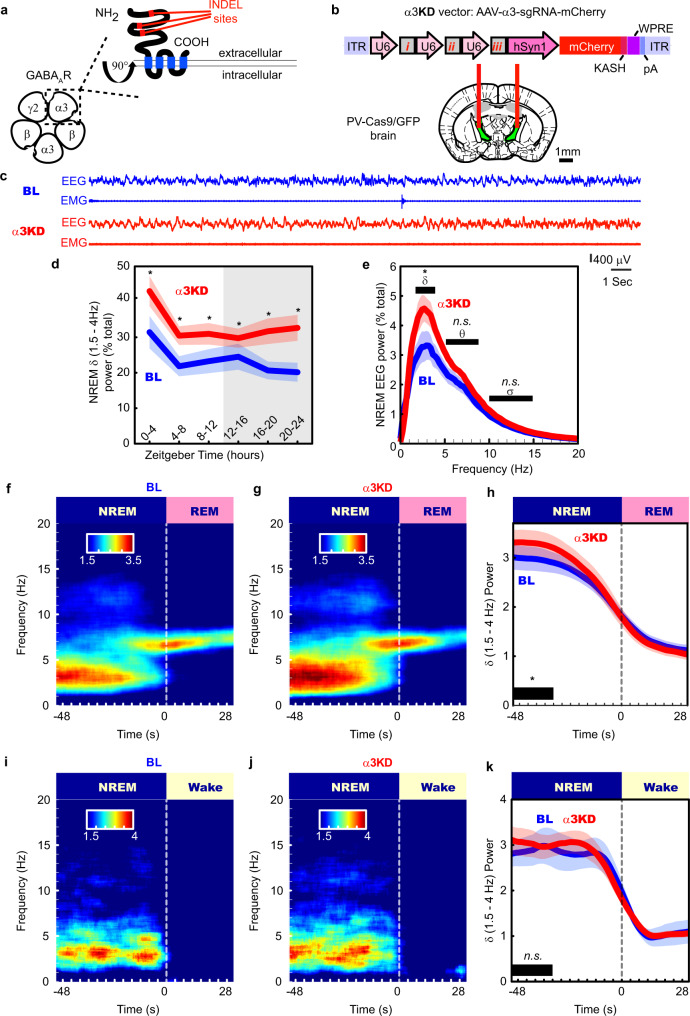
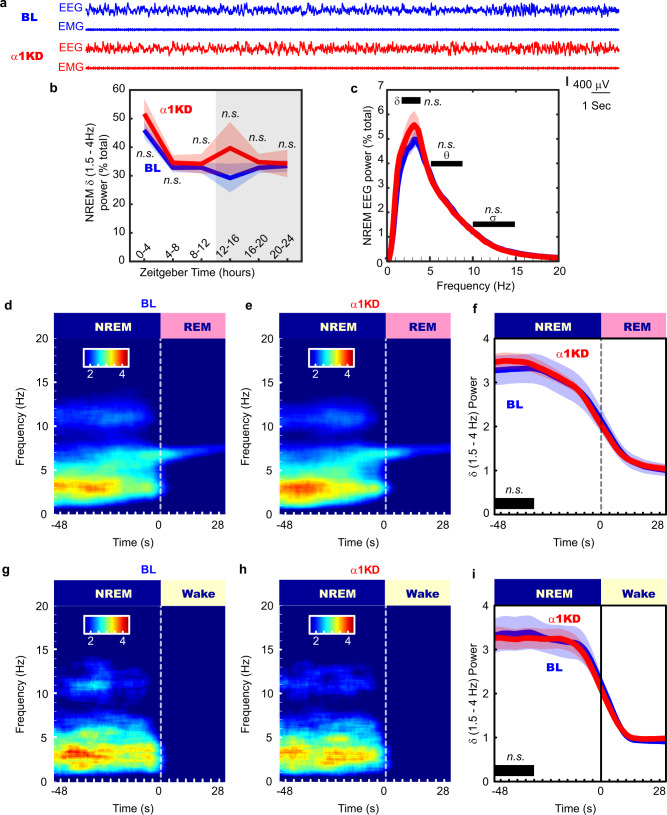
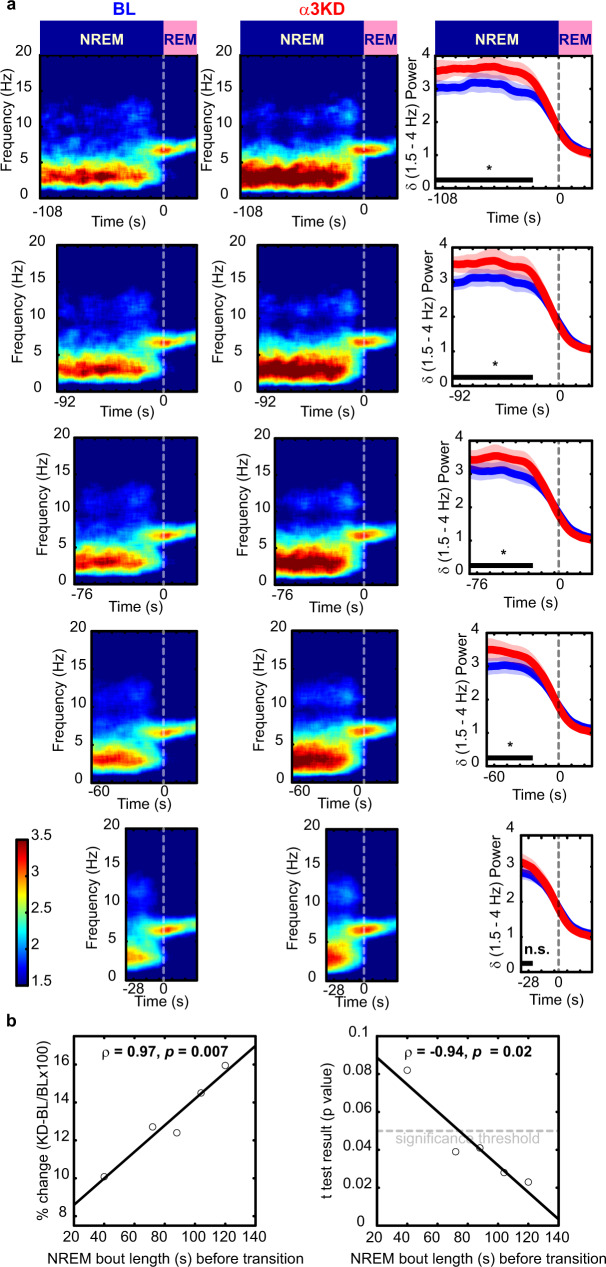
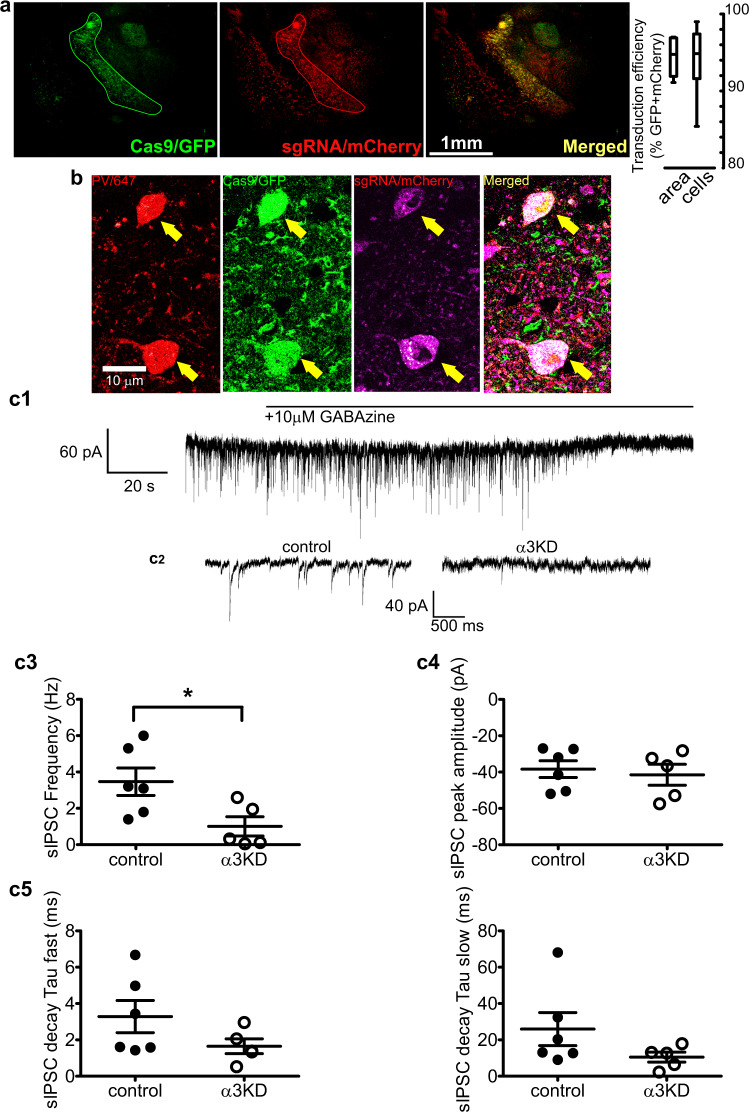
Identification of mechanisms which increase deep sleep could lead to novel treatments which promote the restorative effects of sleep. Here, we show that knockdown of the α3 GABA-receptor subunit from parvalbumin neurons in the thalamic reticular nucleus using CRISPR-Cas9 gene editing increased the thalamocortical delta (1.5-4 Hz) oscillations which are implicated in many health-promoting effects of sleep. Inhibitory synaptic currents in thalamic reticular parvalbumin neurons were strongly reduced in vitro. Further analysis revealed that delta power in long NREM bouts prior to NREM-REM transitions was preferentially affected by deletion of α3 subunits. Our results identify a role for GABA receptors on thalamic reticular nucleus neurons and suggest antagonism of α3 subunits as a strategy to enhance delta activity during sleep.
鉴定能够增加深度睡眠的机制可能会产生新的治疗方法,以促进睡眠的恢复作用。在这里,我们表明,使用 CRISPR-Cas9 基因编辑从丘脑网状核中的 Parvalbumin 神经元敲低α3 GABA 受体亚基会增加与睡眠的许多促进健康的作用相关的丘脑皮质 delta(1.5-4 Hz)振荡。在体外,丘脑网状 Parvalbumin 神经元的抑制性突触电流被强烈降低。进一步的分析表明,在 NREM-REM 转换之前的长 NREM 突发中,delta 功率优先受到α3 亚基缺失的影响。我们的研究结果确定了 GABA 受体在丘脑网状核神经元中的作用,并表明拮抗α3 亚基作为增强睡眠期间 delta 活动的策略。