Shahid Mudassar, Hussain Afzal, Khan Azmat Ali, Alanazi Amer M, Alaofi Ahmed L, Alam Mahboob, Ramzan Mohhammad
Department of Pharmaceutics, College of Pharmacy, King Saud University, P.O. Box 2457, Riyadh 11451, Saudi Arabia.
Pharmaceutical Biotechnology Laboratory, Department of Pharmaceutical Chemistry, College of Pharmacy, King Saud University, P.O. Box 2457, Riyadh 11451, Saudi Arabia.
ACS Omega. 2022 Apr 6;7(15):13343-13353. doi: 10.1021/acsomega.2c01075. eCollection 2022 Apr 19.
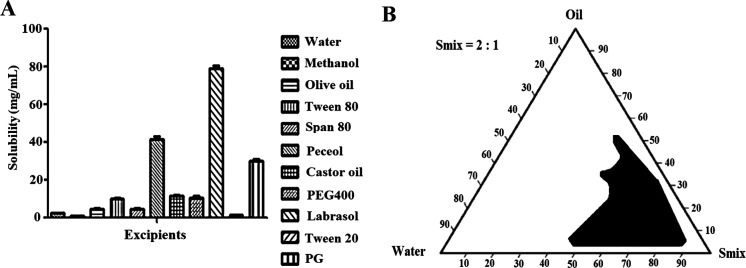
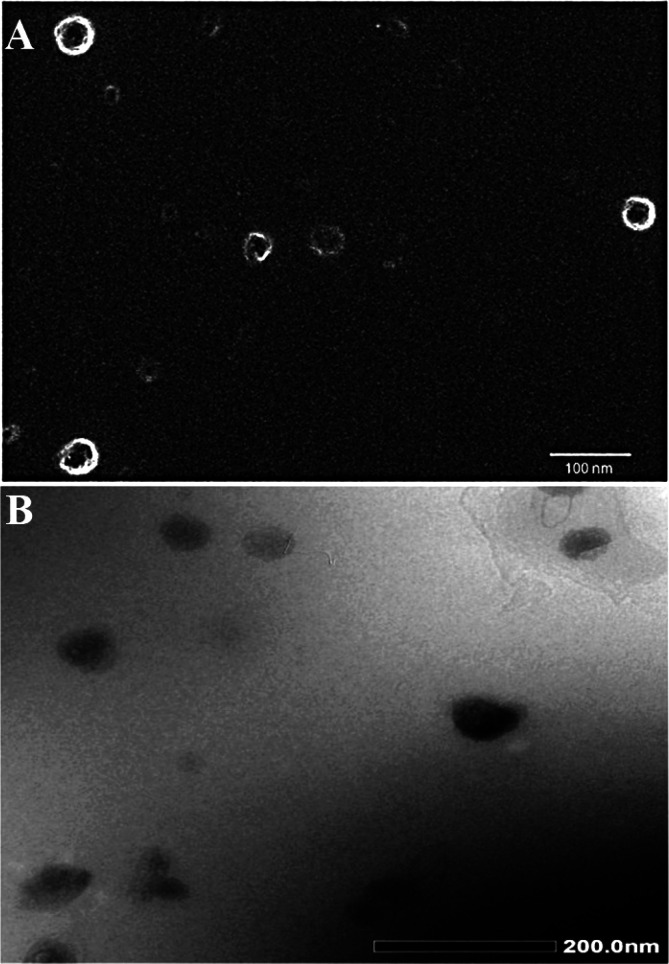
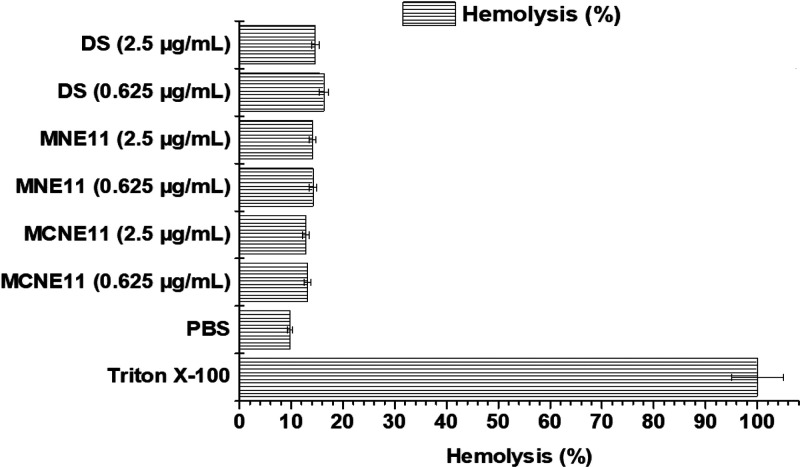
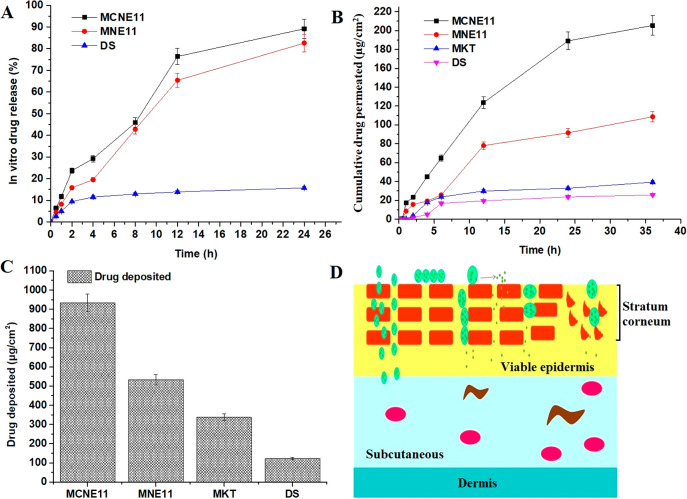
This study aimed to deliver a cationic nanoemulsion carrying miconazole nitrate (MCN) to control fungal infections using excipients for synergism. Peceol (oil) and labrasol (surfactant) were selected based on maximum solubility and zone of inhibition values against and . Optimized MCNE11 was evaluated [size, zeta potential, % entrapment efficiency (%EE), % transmittance, viscosity, refractive index, extrudability, polydispersity (PDI), morphology, and pH]. An drug release study was conducted for comparison between DS (drug suspension) and MNE11. hemolysis was studied at two different concentrations (0.625 and 2.5 μg/mL). Permeation profiles were generated using rat skin. A Draize test was conducted using rabbit to negate irritability issues. Finally, a stability test of MCNE11 was conducted for 12 months. The results showed that MCNE11 (cationic) was the most optimized in term of size, %EE, and PDI. The drug release from MCNE11 was higher compared to DS but comparable to MNE11 (anionic), suggesting no impact of the imposed cationic charge on the release behavior. Moreover, permeation parameters of MCNE11 were significantly ( < 0.05) greater than MNE11, which may be attributed to the combined impact of size (low), surfactant (for reversible changes), and electrostatic interaction (nanoglobules-skin surface). Thus, stable MCN11 possessing high %EE (89.8%), low size (145 nm), maximum flux (5.7 ± 0.1 μg/cm/h), high drug deposition (932.7 ± 41.6 μg/cm), optimal viscosity (44.17 ± 0.8 cP), low PDI (0.21), optimal zeta potential (+28.1 mV), and low hemolysis can be promising alternatives to conventional cream to control resistant and recurring types of fungal infections.
本研究旨在制备一种负载硝酸咪康唑(MCN)的阳离子纳米乳剂,使用辅料协同作用来控制真菌感染。基于对[具体菌种1]和[具体菌种2]的最大溶解度和抑菌圈值,选择了Peceol(油相)和Labrasol(表面活性剂)。对优化后的MCNE11进行了评估[粒径、zeta电位、包封率(%EE)、透光率、粘度、折射率、可挤出性、多分散性(PDI)、形态和pH值]。进行了药物释放研究,以比较药物混悬液(DS)和MNE11。在两种不同浓度(0.625和2.5μg/mL)下研究了溶血情况。使用大鼠皮肤生成渗透曲线。使用兔子进行了Draize试验以排除刺激性问题。最后,对MCNE11进行了为期12个月的稳定性试验。结果表明,MCNE11(阳离子型)在粒径、%EE和PDI方面是最优化的。与DS相比,MCNE11的药物释放更高,但与MNE11(阴离子型)相当,表明施加的阳离子电荷对释放行为没有影响。此外,MCNE11的渗透参数显著(P<0.05)高于MNE11,这可能归因于粒径(小)、表面活性剂(可逆变化)和静电相互作用(纳米球-皮肤表面)的综合影响。因此,稳定的MCN11具有高%EE(89.8%)、低粒径(145nm)、最大通量(5.7±0.1μg/cm²/h)、高药物沉积(932.7±41.6μg/cm²)、最佳粘度(44.17±0.8cP)、低PDI(0.21)、最佳zeta电位(+28.1mV)和低溶血率,有望成为控制耐药性和复发性真菌感染的传统乳膏的替代物。