Lipsky Peter E, Vollenhoven Ronald van, Dörner Thomas, Werth Victoria P, Merrill Joan T, Furie Richard, Petronijevic Milan, Velasco Zamora Benito, Majdan Maria, Irazoque-Palazuelos Fedra, Terbrueggen Robert, Delev Nikolay, Weiswasser Michael, Korish Shimon, Stern Mark, Hersey Sarah, Ye Ying, Gaudy Allison, Liu Zhaohui, Gagnon Robert, Tang Shaojun, Schafer Peter H
RILITE Foundation and AMPEL BioSolutions, Charlottesville, Virginia, USA
Amsterdam University Medical Centers, Amsterdam, The Netherlands.
Ann Rheum Dis. 2022 Jul 12;81(8):1136-1142. doi: 10.1136/annrheumdis-2022-222212.
Iberdomide is a high-affinity cereblon ligand that promotes proteasomal degradation of transcription factors Ikaros () and Aiolos (). Pharmacodynamics and pharmacokinetics of oral iberdomide were evaluated in a phase 2b study of patients with active systemic lupus erythematosus (SLE).
Adults with autoantibody-positive SLE were randomised to placebo (n=83) or once daily iberdomide 0.15 mg (n=42), 0.3 mg (n=82) or 0.45 mg (n=81). Pharmacodynamic changes in whole blood leucocytes were measured by flow cytometry, regulatory T cells (Tregs) by epigenetic assay, plasma cytokines by ultrasensitive cytokine assay and gene expression by Modular Immune Profiling.
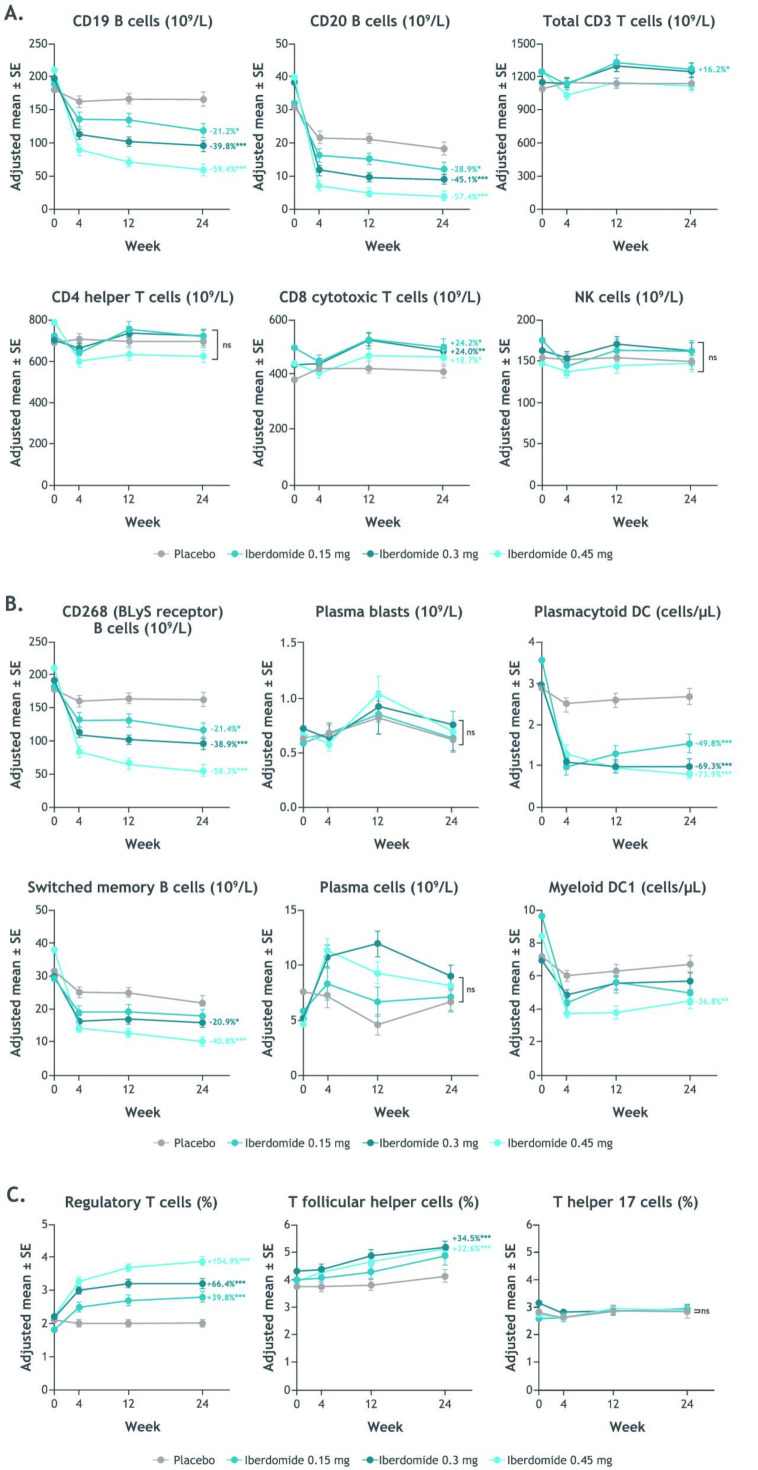
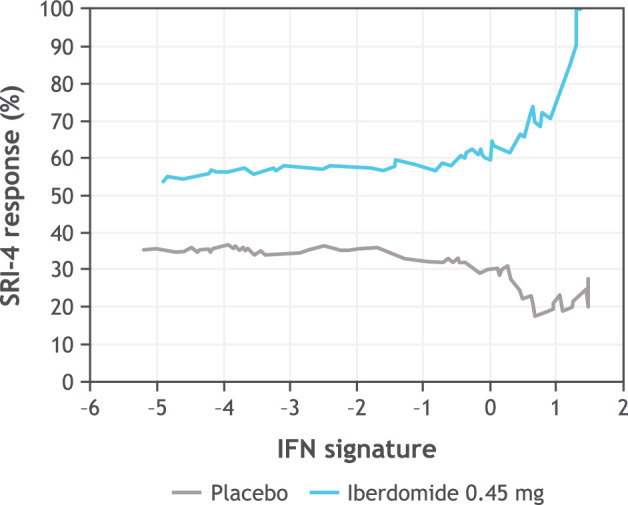
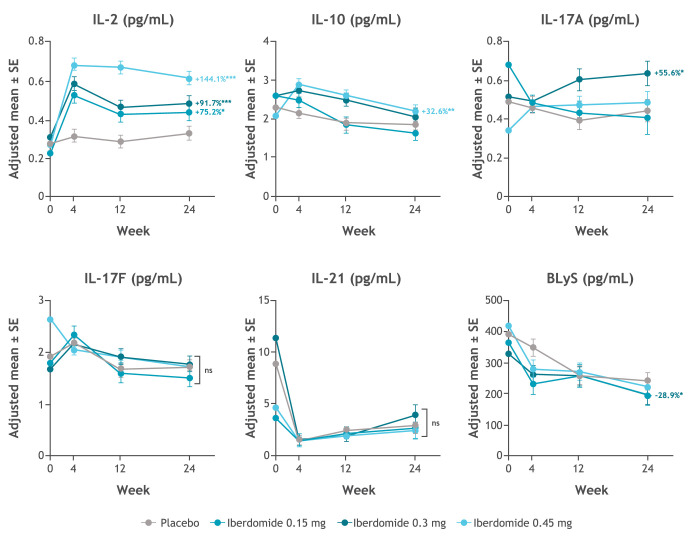
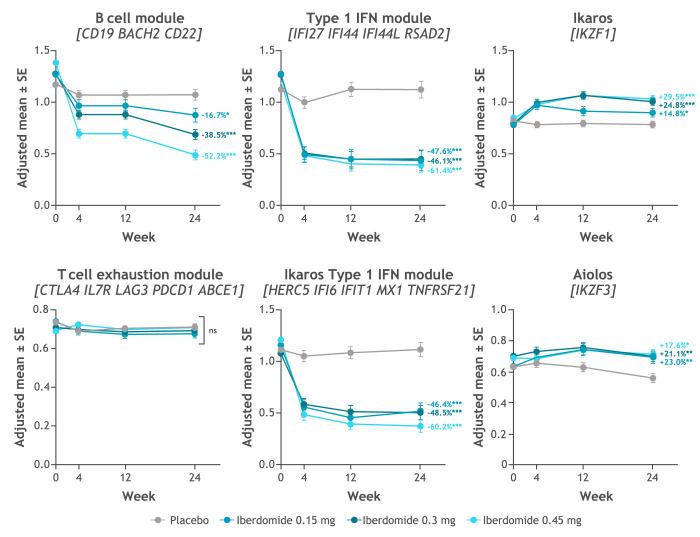
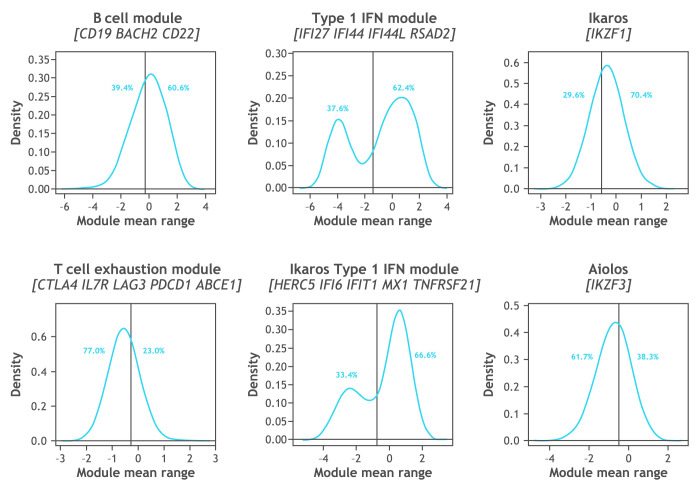
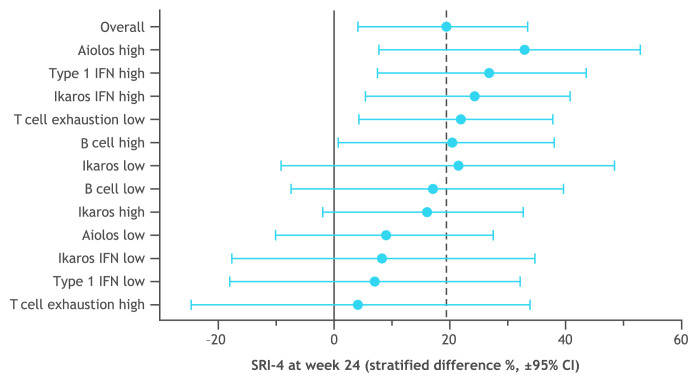
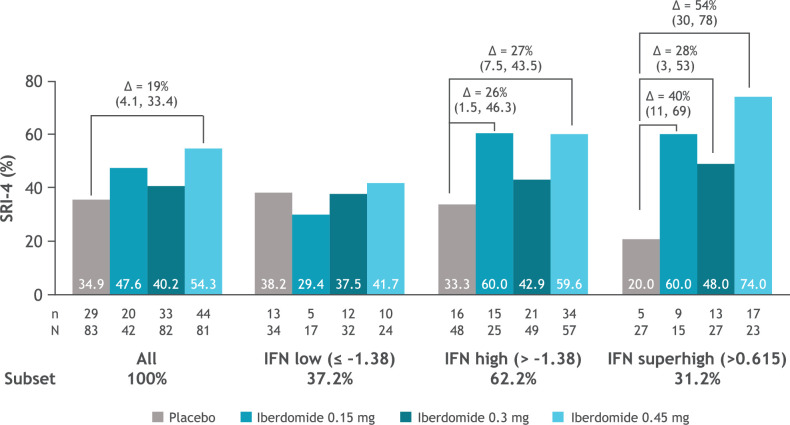
Iberdomide exhibited linear pharmacokinetics and dose-dependently modulated leucocytes and cytokines. Compared with placebo at week 24, iberdomide 0.45 mg significantly (p<0.001) reduced B cells, including those expressing CD268 (TNFRSF13C) (-58.3%), and plasmacytoid dendritic cells (-73.9%), and increased Tregs (+104.9%) and interleukin 2 (IL-2) (+144.1%). Clinical efficacy was previously reported in patients with high expression and high type I interferon (IFN) signature at baseline and confirmed here in those with an especially high IFN signature. Iberdomide decreased the type I IFN gene signature only in patients with high expression at baseline (-81.5%; p<0.001) but decreased other gene signatures in all patients.
Iberdomide significantly reduced activity of type I IFN and B cell pathways, and increased IL-2 and Tregs, suggesting a selective rebalancing of immune abnormalities in SLE. Clinical efficacy corresponded to reduction of the type I IFN gene signature.
NCT03161483.
艾伯多米德是一种高亲和力的脑啡肽配体,可促进转录因子伊卡洛斯(Ikaros)和爱奥洛斯(Aiolos)的蛋白酶体降解。在一项针对活动性系统性红斑狼疮(SLE)患者的2b期研究中评估了口服艾伯多米德的药效学和药代动力学。
自身抗体阳性的SLE成年患者被随机分为安慰剂组(n = 83)或每日一次服用0.15 mg艾伯多米德组(n = 42)、0.3 mg艾伯多米德组(n = 82)或0.45 mg艾伯多米德组(n = 81)。通过流式细胞术检测全血白细胞的药效学变化,通过表观遗传学检测调节性T细胞(Tregs),通过超敏细胞因子检测法检测血浆细胞因子,并通过模块化免疫谱分析检测基因表达。
艾伯多米德表现出线性药代动力学,并对白细胞和细胞因子进行剂量依赖性调节。与第24周时的安慰剂相比,0.45 mg艾伯多米德显著(p<0.001)减少了B细胞,包括表达CD268(TNFRSF13C)的B细胞(-58.3%)和浆细胞样树突状细胞(-73.9%),并增加了Tregs(+104.9%)和白细胞介素2(IL-2)(+144.1%)。先前已报道基线时Ikaros高表达和I型干扰素(IFN)特征高的患者具有临床疗效,在此对具有特别高IFN特征的患者进行了确认。艾伯多米德仅在基线时Ikaros高表达的患者中降低了I型IFN基因特征(-81.5%;p<0.001),但在所有患者中均降低了其他基因特征。
艾伯多米德显著降低了I型IFN和B细胞途径的活性,并增加了IL-2和Tregs,表明SLE免疫异常得到了选择性的重新平衡。临床疗效与I型IFN基因特征的降低相对应。
NCT03161483。