School of Human Movements and Nutrition Sciences, University of Queensland, Brisbane, QLD, Australia.
Nutrition & Dietetics, Toowoomba Hospital, Darling Downs Health, Toowoomba, QLD, Australia.
Support Care Cancer. 2022 Sep;30(9):7191-7204. doi: 10.1007/s00520-022-07056-9. Epub 2022 Apr 27.
Human papillomavirus (HPV) is now the primary cause of oropharyngeal head and neck cancer (OPC) worldwide; yet limited research has examined the effect of HPV-positive status (OPC+) on nutrition outcomes. This study aims to determine the impact of HPV status on nutritional outcomes for adult patients with OPC undergoing any treatment modality.
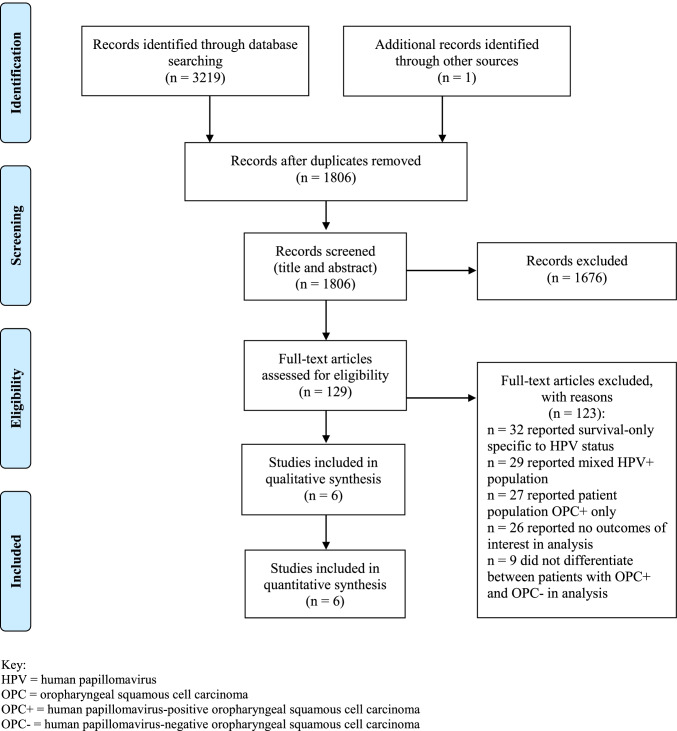
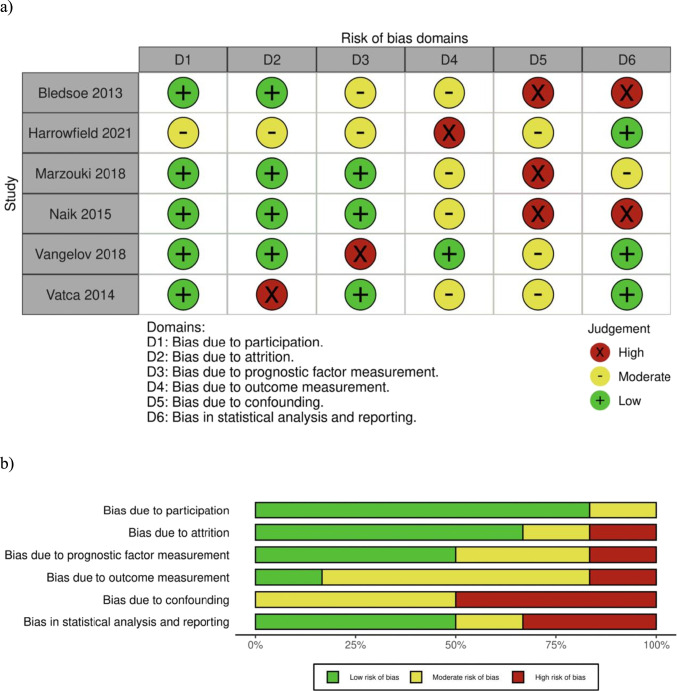
A systematic literature review was conducted up to and including July 2021 of PubMed, Embase, CENTRAL, CINAHL, and Web of Science to identify studies conducted in adults (>18 years) with known OPC reporting on any outcome(s) related to nutrition, according to HPV status (OPC+ versus OPC-). Bias was assessed using QUIPS tool, with certainty of evidence assessed using GRADE system.
Six studies (total n = 635) all at moderate-high risk of bias were included. Three studies reported on weight change (n = 255), three feeding tube dependency (n = 380), three feeding tube timing of placement (prophylactic or reactive) and/or utilisation (n = 255), two nutritional (energy and/or protein) intake (n = 230), and one nutritional status (n = 83). Patients with OPC+ may experience greater weight loss, may have higher utilisation of reactive feeding tubes (both GRADE low certainty, downgraded due to serious bias and imprecision), and may have lower feeding tube dependency rates (GRADE low certainty, downgraded due to serious bias and inconsistency) versus OPC- . It is uncertain whether nutritional intake and nutritional status differed between populations (GRADE very low certainty, downgraded due to serious bias and very serious imprecision).
Further, high-quality research is needed to understand optimal nutritional care practices for patients with OPC + to achieve positive health outcomes into survivorship.
人乳头瘤病毒(HPV)现已成为全球口咽头颈部癌症(OPC)的主要病因;然而,有限的研究已经探讨了 HPV 阳性状态(OPC+)对营养结果的影响。本研究旨在确定 HPV 状态对接受任何治疗方式的 OPC 成年患者营养结果的影响。
对 PubMed、Embase、CENTRAL、CINAHL 和 Web of Science 进行了系统的文献回顾,截至 2021 年 7 月,检索了关于任何与营养相关的结局(根据 HPV 状态(OPC+与 OPC-))在已知患有 OPC 的成人(>18 岁)中进行的研究。使用 QUIPS 工具评估偏倚,使用 GRADE 系统评估证据确定性。
共纳入 6 项研究(总 n=635),均存在中度至高度偏倚风险。3 项研究报告了体重变化(n=255),3 项研究报告了喂养管依赖(n=380),3 项研究报告了喂养管放置(预防性或反应性)和/或使用的时间(n=255),2 项研究报告了营养(能量和/或蛋白质)摄入(n=230),1 项研究报告了营养状况(n=83)。与 OPC-相比,OPC+患者可能经历更大的体重减轻,可能更高的反应性喂养管使用(均为 GRADE 低确定性,因严重偏倚和不精确而降级),并且可能更低的喂养管依赖率(GRADE 低确定性,因严重偏倚和不一致而降级)。尚不确定营养摄入和营养状况在人群之间是否存在差异(GRADE 非常低确定性,因严重偏倚和非常严重不精确而降级)。
需要进一步进行高质量的研究,以了解 OPC+患者的最佳营养护理实践,以实现生存期间的积极健康结果。