Numata Genri, Takimoto Eiki
Department of Cardiovascular Medicine, The University of Tokyo Hospital, Tokyo, Japan.
Department of Advanced Translational Research and Medicine in Management of Pulmonary Hypertension, The University of Tokyo Hospital, Tokyo, Japan.
Front Pharmacol. 2022 Apr 11;13:792798. doi: 10.3389/fphar.2022.792798. eCollection 2022.
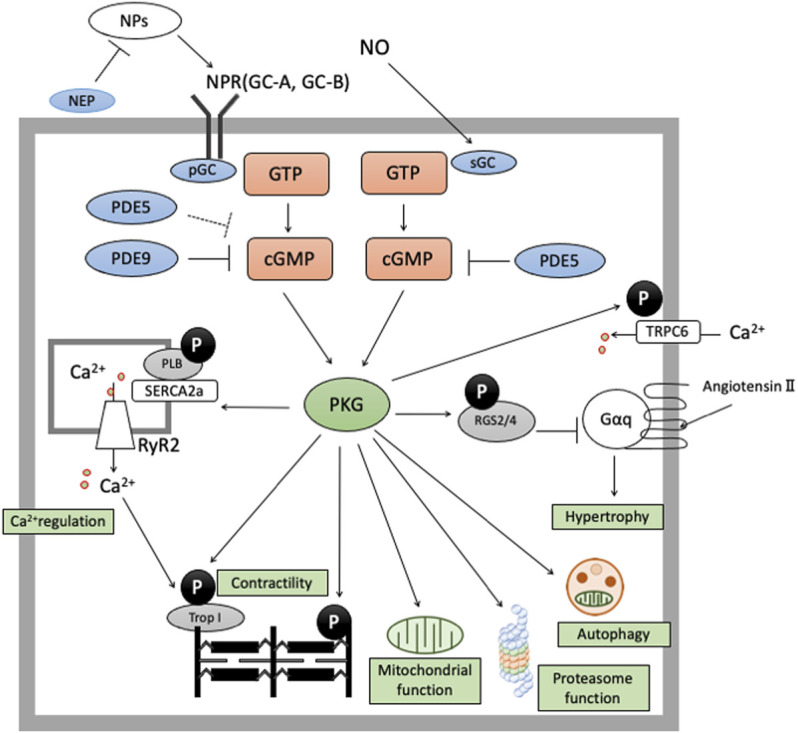
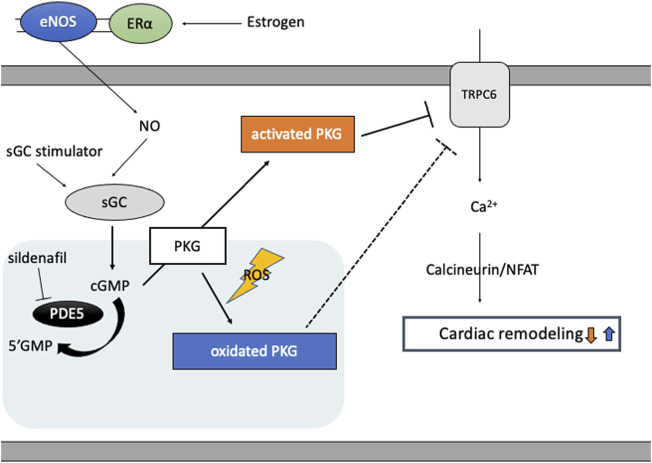
Cyclic guanosine monophosphate (cGMP), produced by guanylate cyclase (GC), activates protein kinase G (PKG) and regulates cardiac remodeling. cGMP/PKG signal is activated by two intrinsic pathways: nitric oxide (NO)-soluble GC and natriuretic peptide (NP)-particulate GC (pGC) pathways. Activation of these pathways has emerged as a potent therapeutic strategy to treat patients with heart failure, given cGMP-PKG signaling is impaired in heart failure with reduced ejection fraction (HFrEF) and preserved ejection fraction (HFpEF). Large scale clinical trials in patients with HFrEF have shown positive results with agents that activate cGMP-PKG pathways. In patients with HFpEF, however, benefits were observed only in a subgroup of patients. Further investigation for cGMP-PKG pathway is needed to develop better targeting strategies for HFpEF. This review outlines cGMP-PKG pathway and its modulation in heart failure.
由鸟苷酸环化酶(GC)产生的环磷酸鸟苷(cGMP)可激活蛋白激酶G(PKG)并调节心脏重塑。cGMP/PKG信号通过两条内在途径激活:一氧化氮(NO)-可溶性GC途径和利钠肽(NP)-颗粒性GC(pGC)途径。鉴于射血分数降低的心力衰竭(HFrEF)和射血分数保留的心力衰竭(HFpEF)患者中cGMP-PKG信号受损,激活这些途径已成为治疗心力衰竭患者的有效治疗策略。在HFrEF患者中进行的大规模临床试验表明,激活cGMP-PKG途径的药物取得了阳性结果。然而,在HFpEF患者中,仅在部分亚组患者中观察到了益处。需要对cGMP-PKG途径进行进一步研究,以开发针对HFpEF的更好靶向策略。本综述概述了cGMP-PKG途径及其在心力衰竭中的调节作用。