Zhang Zexin, Lin Siqi, Liu Zifeng, Han Jun, Li Jing, Yu Yi
The First Clinical Medical College of Guangzhou University of Chinese Medicine, Guangzhou 510405, China.
The Second Clinical Medical College of Guangzhou University of Chinese Medicine, Guangzhou 510405, China.
Evid Based Complement Alternat Med. 2022 Apr 18;2022:7998664. doi: 10.1155/2022/7998664. eCollection 2022.
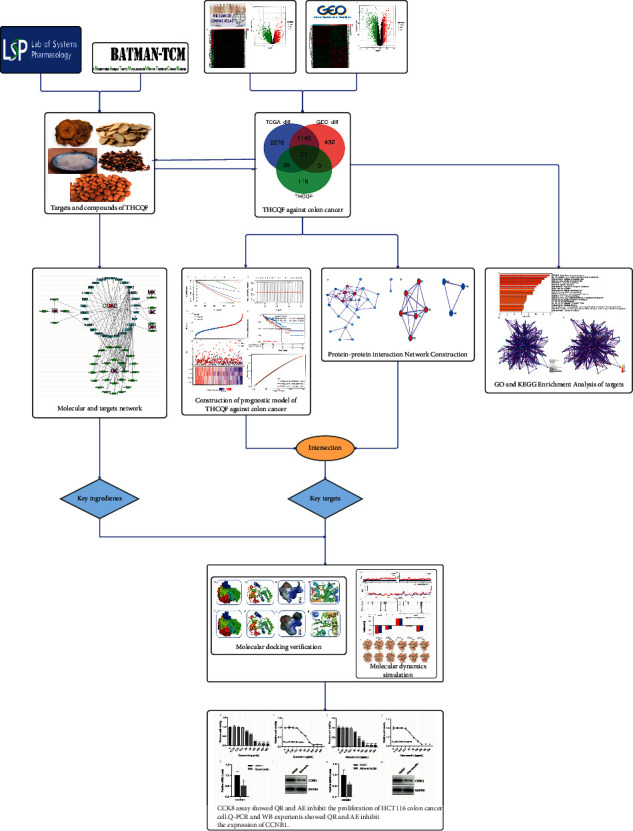
Tao-He-Cheng-Qi Formula (THCQF) is a traditional Chinese medicine that has been proven to have antitumor effects. The aim of this study was to elucidate the molecular targets and mechanisms of THCQF against colon cancer and construct a prognostic model based on network pharmacology, bioinformatics analysis, and in vitro experiments.
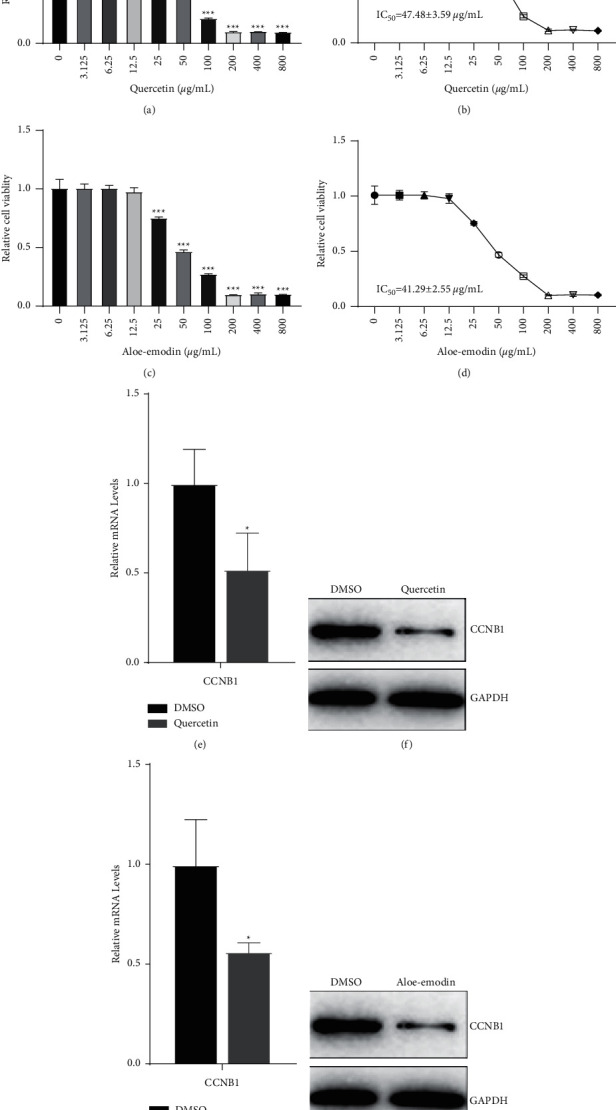
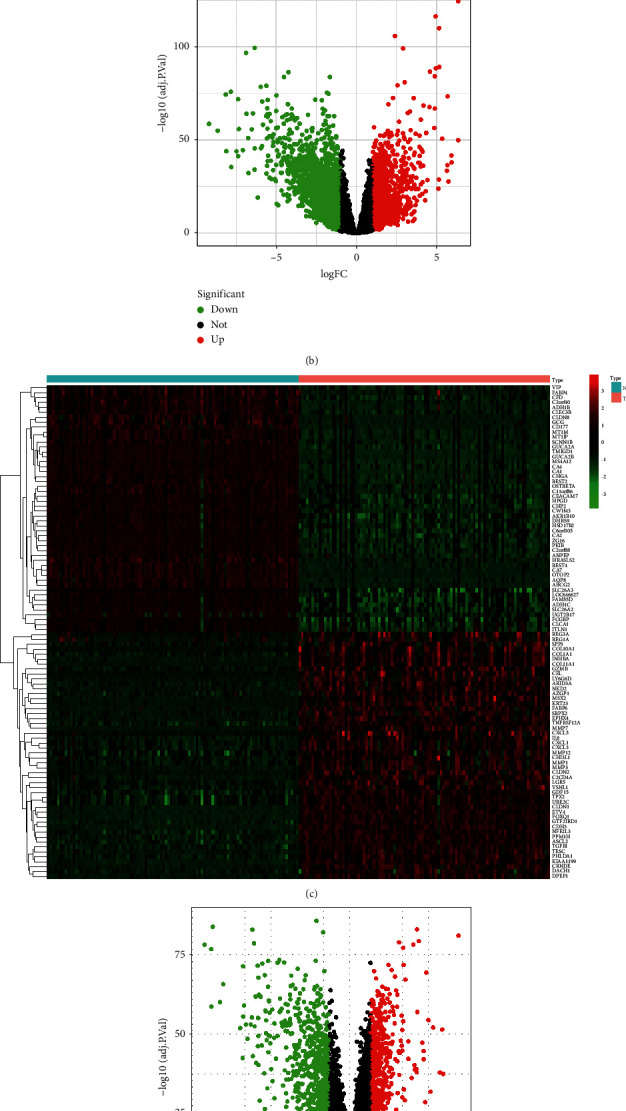
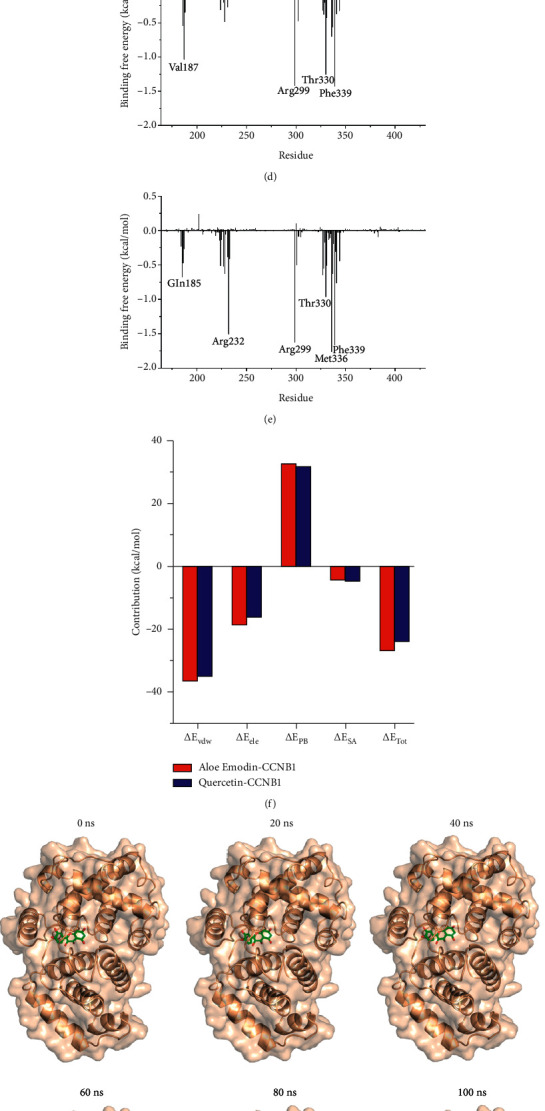
Potential THCQF compounds and targets were retrieved from the Traditional Chinese Medicine Systems Pharmacology and Bioinformatics Analysis Tool for Molecular Mechanism of Traditional Chinese Medicine databases. Differentially expressed genes for colon cancer were screened in The Cancer Genome Atlas and Gene Expression Omnibus databases. The anticolon cancer mechanisms of THCQF were explored using Gene Ontology (GO) and Kyoto Encyclopedia of Genes and Genomes (KEGG) enrichment analyses. Molecular docking simulations and molecular dynamics analysis were used to evaluate the binding between target proteins and active compounds. Finally, the identified compounds were used to treat colon cancer cells from the HCT116 cell line, and expression of mRNA and protein after relevant posttreatment were tested using real-time polymerase chain reaction and western blotting.
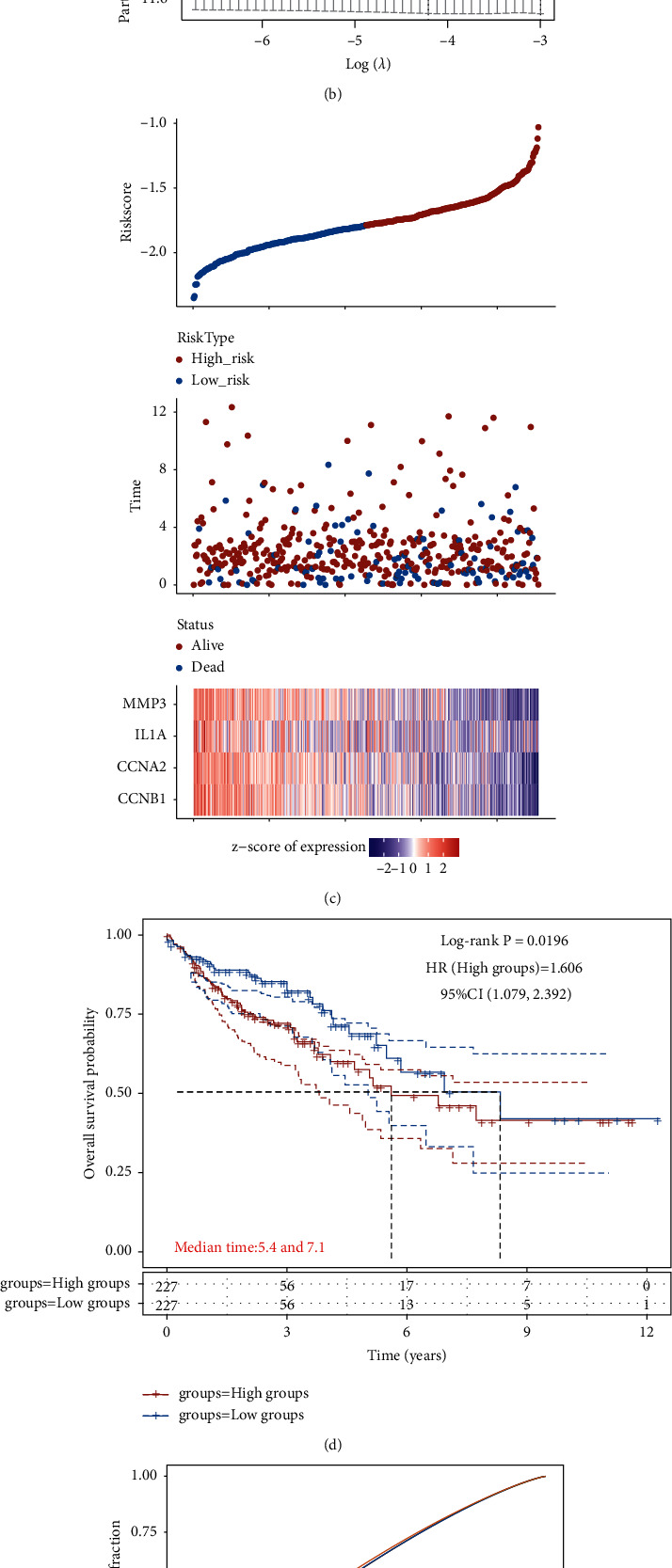
A total of 27 anticolon cancer targets of THCQF were selected, among which four genes (, , , and ) were shown to effectively predict patient outcomes in a prognostic colon cancer model. GO and KEGG enrichment analyses indicated that the activity against colon cancer of THCQF was associated with the interleukin (IL)-4 and IL-3 signaling pathways. Two compounds in THCQF, aloe emodin (AE) and quercetin (QR), were shown to efficiently bind to cyclin B1, the protein encoded by . Finally, incubation of HCT116 cells with AE and QR significantly decreased mRNA expression and cyclin B1 levels.
Taken together, the results indicate that AE and QR are the pivotal active compounds of THCQF, and is the main molecular target through which THCQF exerts its anticolon cancer effects. The study findings provide insight for studies investigating the anticancer effects of other traditional Chinese medicines.
桃核承气汤是一种已被证明具有抗肿瘤作用的中药。本研究旨在阐明桃核承气汤抗结肠癌的分子靶点和机制,并基于网络药理学、生物信息学分析和体外实验构建预后模型。
从中药系统药理学和中药分子机制生物信息学分析工具数据库中检索桃核承气汤的潜在化合物和靶点。在癌症基因组图谱和基因表达综合数据库中筛选结肠癌的差异表达基因。利用基因本体(GO)和京都基因与基因组百科全书(KEGG)富集分析探索桃核承气汤的抗结肠癌机制。采用分子对接模拟和分子动力学分析评估靶蛋白与活性化合物之间的结合。最后,用鉴定出的化合物处理HCT116细胞系的结肠癌细胞,并通过实时聚合酶链反应和蛋白质印迹法检测相关处理后mRNA和蛋白质的表达。
共筛选出27个桃核承气汤的抗结肠癌靶点,其中4个基因(、、和)在预后结肠癌模型中显示能有效预测患者预后。GO和KEGG富集分析表明,桃核承气汤对结肠癌的活性与白细胞介素(IL)-4和IL-3信号通路相关。桃核承气汤中的两种化合物,芦荟大黄素(AE)和槲皮素(QR),显示能有效结合由编码的细胞周期蛋白B1。最后,用AE和QR孵育HCT116细胞显著降低了mRNA表达和细胞周期蛋白B1水平。
综上所述,结果表明AE和QR是桃核承气汤的关键活性化合物,是桃核承气汤发挥抗结肠癌作用的主要分子靶点。本研究结果为研究其他中药的抗癌作用提供了思路。