Khan Abbas, Gui Jianjun, Ahmad Waqar, Haq Inamul, Shahid Marukh, Khan Awais Ahmed, Shah Abdullah, Khan Arsala, Ali Liaqat, Anwar Zeeshan, Safdar Muhammad, Abubaker Jehad, Uddin N Nizam, Cao Liqiang, Wei Dong-Qing, Mohammad Anwar
Department of Bioinformatics and Biological Statistics, School of Life Sciences and Biotechnology, Shanghai Jiao Tong University Shanghai 200240 P. R. China
Department of Emergency, Shiyan People's Hospital Bao'an District Shenzhen China.
RSC Adv. 2021 Sep 9;11(48):30132-30147. doi: 10.1039/d1ra04694b. eCollection 2021 Sep 6.
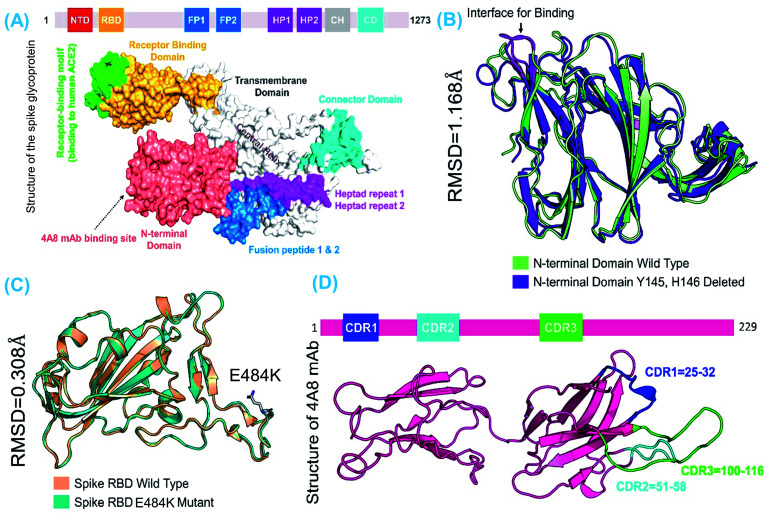
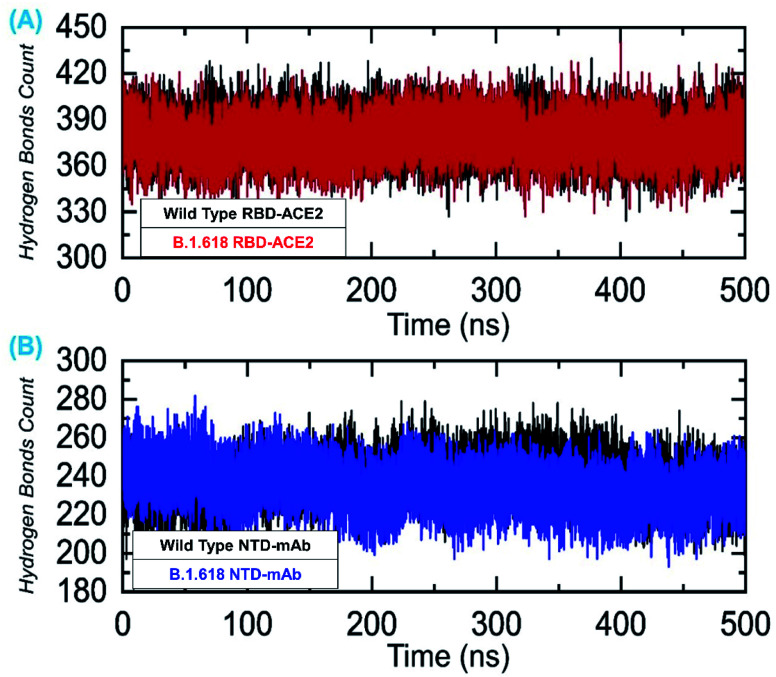
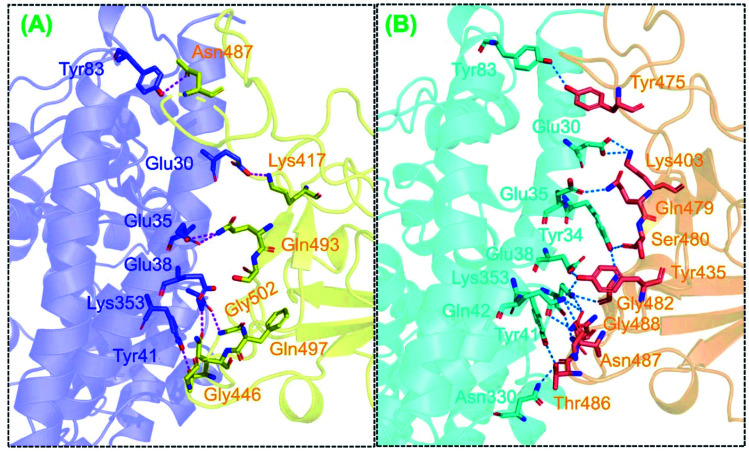
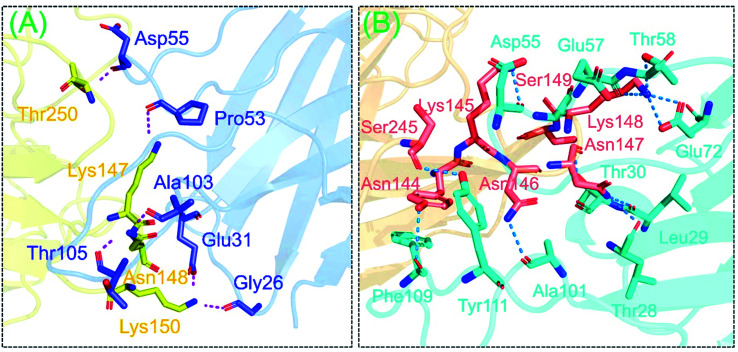
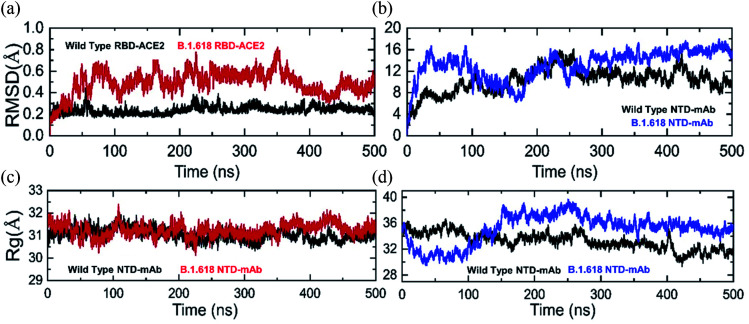
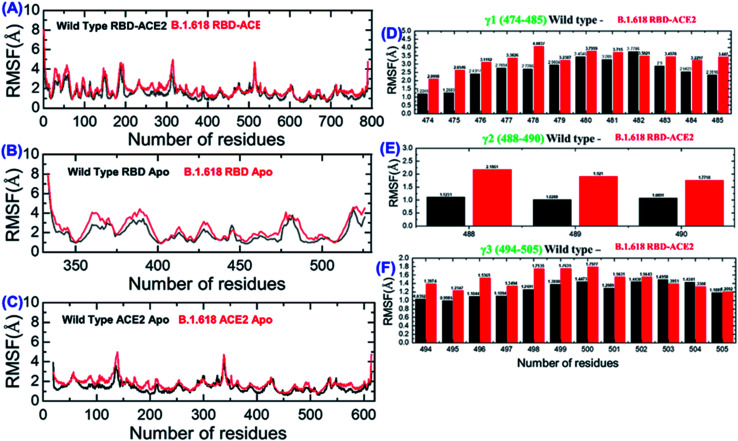
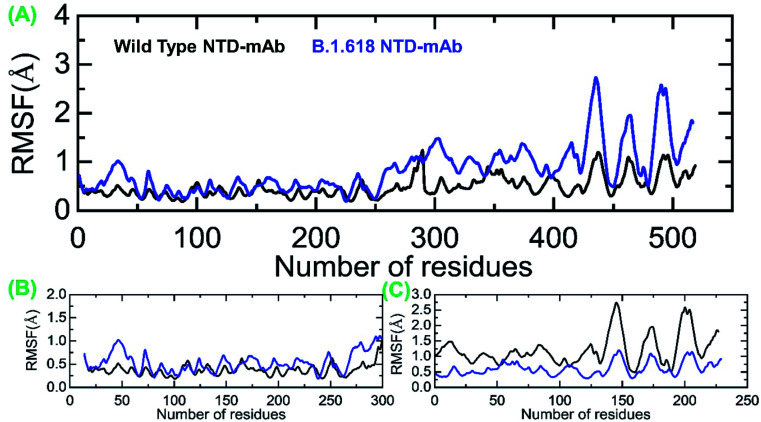
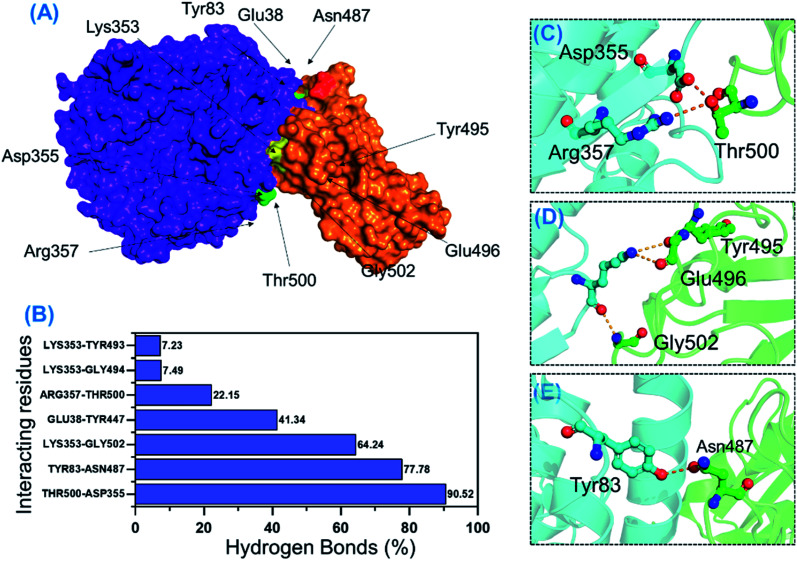
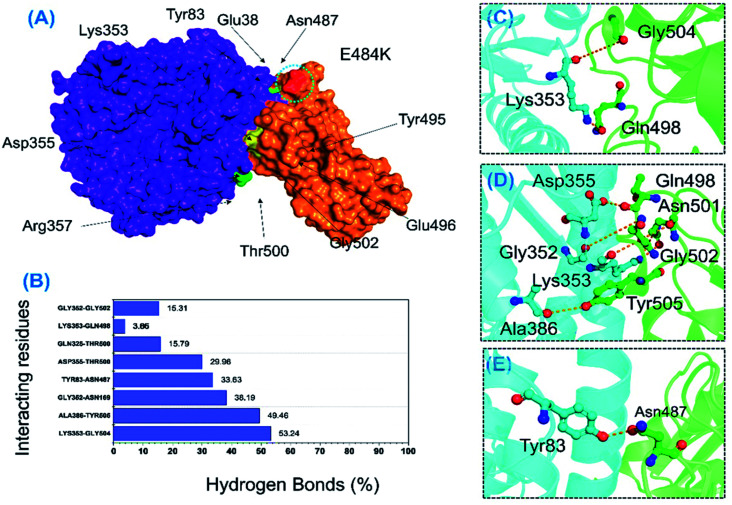
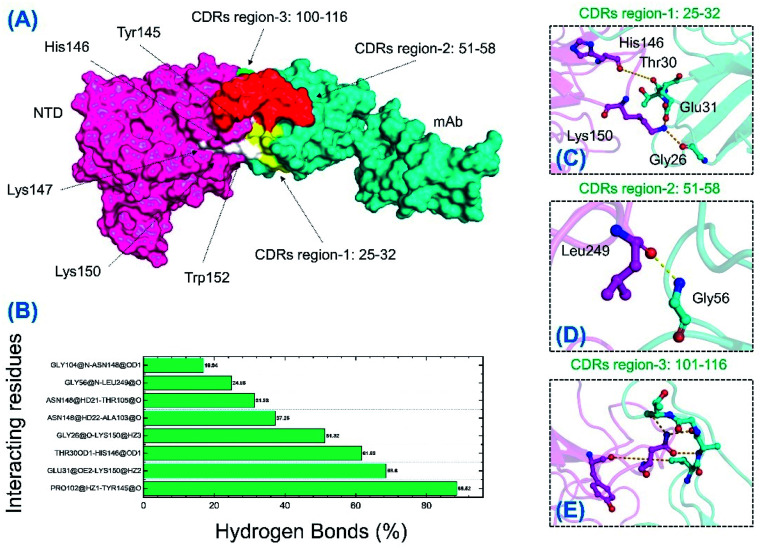
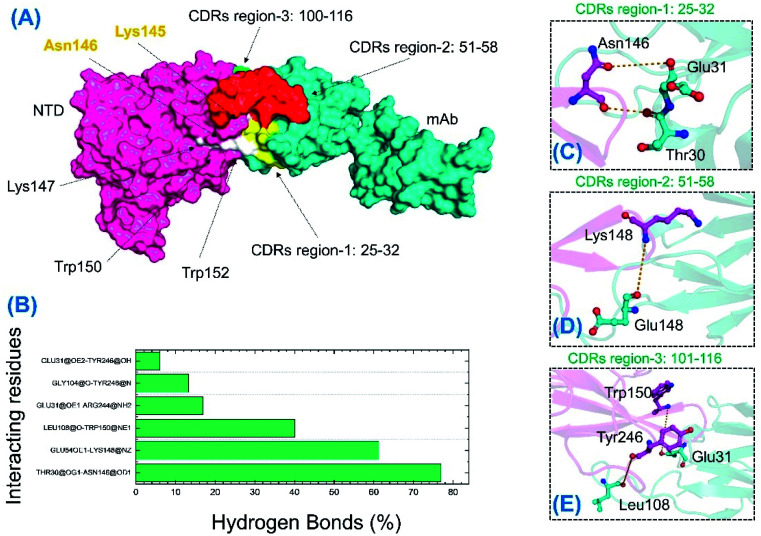
Continuing reports of new SARS-CoV-2 variants have caused worldwide concern and created a challenging situation for clinicians. The recently reported variant B.1.618, which possesses the E484K mutation specific to the receptor-binding domain (RBD), as well as two deletions of Tyr145 and His146 at the N-terminal binding domain (NTD) of the spike protein, must be studied in depth to devise new therapeutic options. Structural variants reported in the RBD and NTD may play essential roles in the increased pathogenicity of this SARS-CoV-2 new variant. We explored the binding differences and structural-dynamic features of the B.1.618 variant using structural and biomolecular simulation approaches. Our results revealed that the E484K mutation in the RBD slightly altered the binding affinity through affecting the hydrogen bonding network. We also observed that the flexibility of three important loops in the RBD required for binding was increased, which may improve the conformational optimization and consequently binding of the new variant. Furthermore, we found that deletions of Tyr145 and His146 at the NTD reduced the binding affinity of the monoclonal antibody (mAb) 4A8, and that the hydrogen bonding network was significantly affected consequently. This data show that the new B.1.618 variant is an antibody-escaping variant with slightly altered ACE2-RBD affinity. Moreover, we provide insights into the binding and structural-dynamics changes resulting from novel mutations in the RBD and NTD. Our results suggest the need for further and studies that will facilitate the development of possible therapies for new variants such as B.1.618.
关于新型严重急性呼吸综合征冠状病毒2(SARS-CoV-2)变体的持续报道引发了全球关注,并给临床医生带来了具有挑战性的局面。最近报道的B.1.618变体,其受体结合域(RBD)具有特异性的E484K突变,以及刺突蛋白N端结合域(NTD)的Tyr145和His146两个缺失,必须进行深入研究以设计新的治疗方案。RBD和NTD中报道的结构变体可能在这种SARS-CoV-2新变体致病性增加中起重要作用。我们使用结构和生物分子模拟方法探索了B.1.618变体的结合差异和结构动力学特征。我们的结果表明,RBD中的E484K突变通过影响氢键网络略微改变了结合亲和力。我们还观察到,结合所需的RBD中三个重要环的灵活性增加,这可能改善构象优化并因此提高新变体的结合能力。此外,我们发现NTD处Tyr145和His146的缺失降低了单克隆抗体(mAb)4A8的结合亲和力,并且氢键网络因此受到显著影响。这些数据表明,新的B.1.618变体是一种抗体逃逸变体,其ACE2-RBD亲和力略有改变。此外,我们深入了解了RBD和NTD中新突变导致的结合和结构动力学变化。我们的结果表明需要进一步的研究,这将有助于开发针对B.1.618等新变体的可能疗法。