Wu Jing, Xue Ran, Wu Muchen, Yin Xuehong, Xie Bangxiang, Meng Qinghua
Department of Liver Disease, Beijing You-An Hospital, Capital Medical University, Beijing 100069, China.
Key Laboratory of Carcinogenesis and Translational Research (Ministry of Education), Department of Gastrointestinal Oncology, Peking University Cancer Hospital & Institute, Beijing 100036, China.
Oxid Med Cell Longev. 2022 Apr 16;2022:4505513. doi: 10.1155/2022/4505513. eCollection 2022.
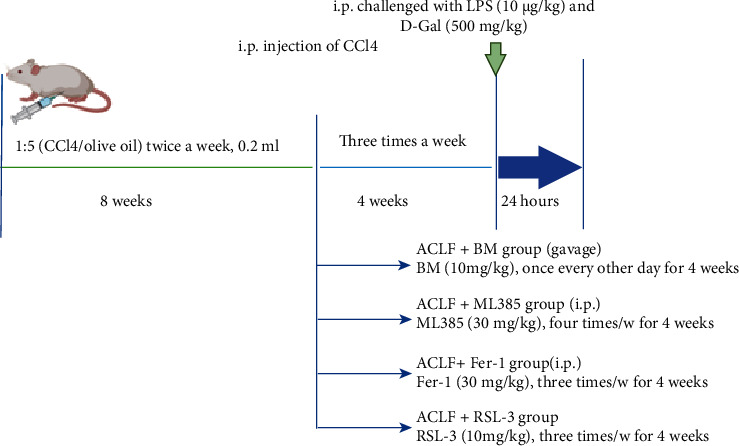
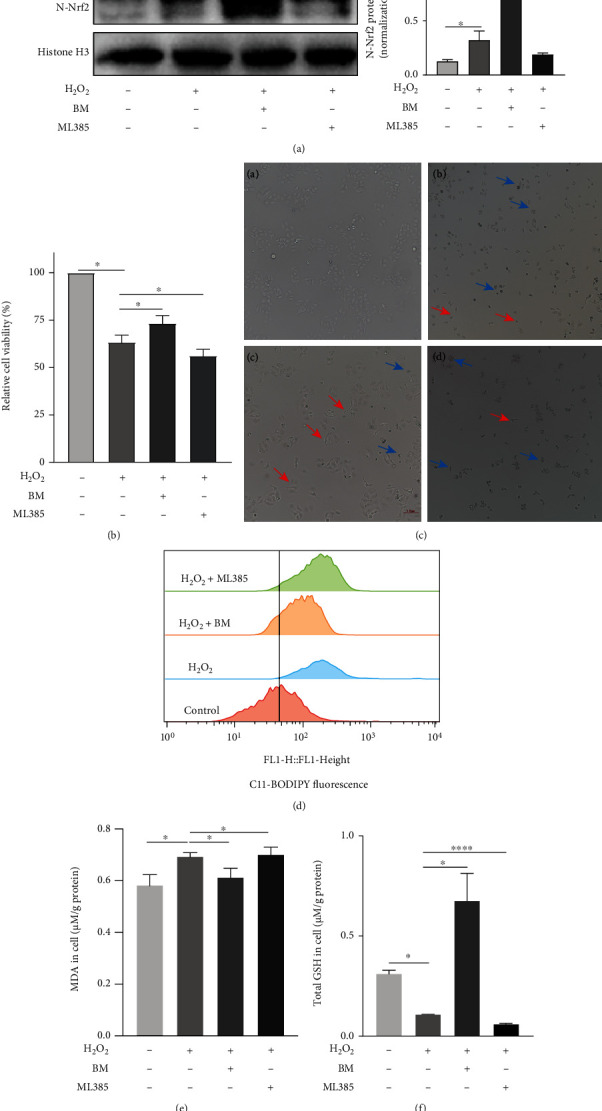
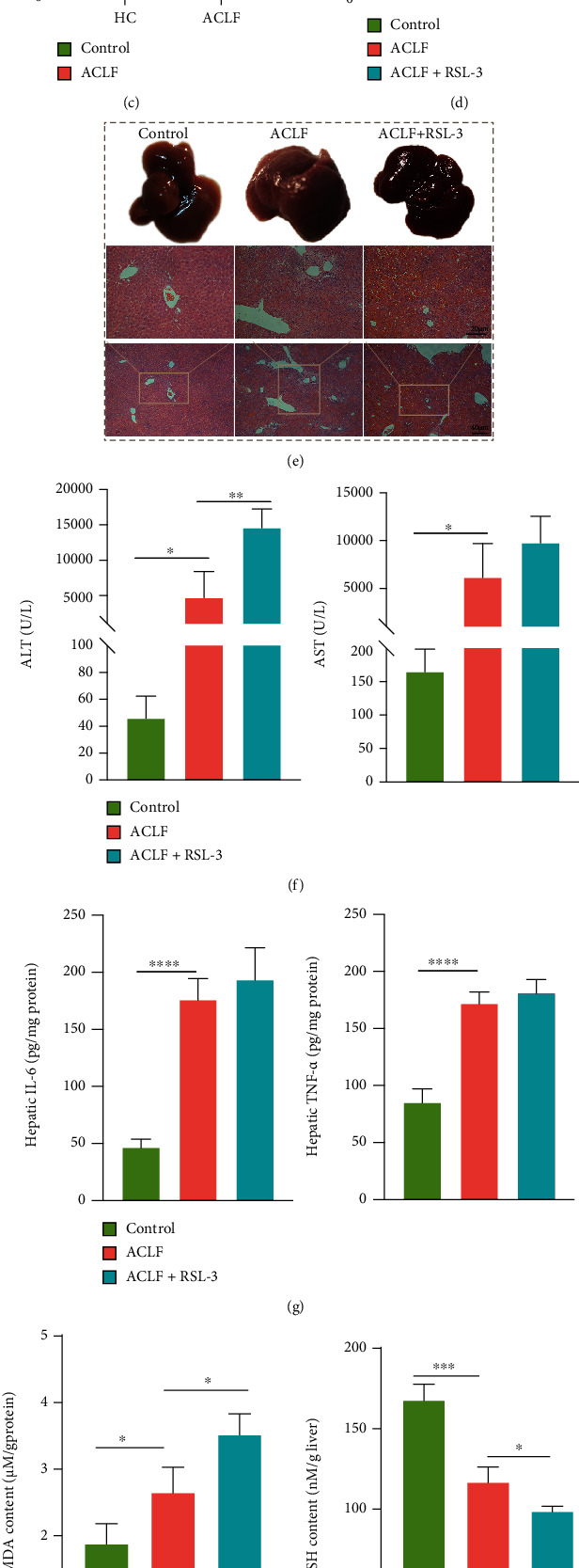
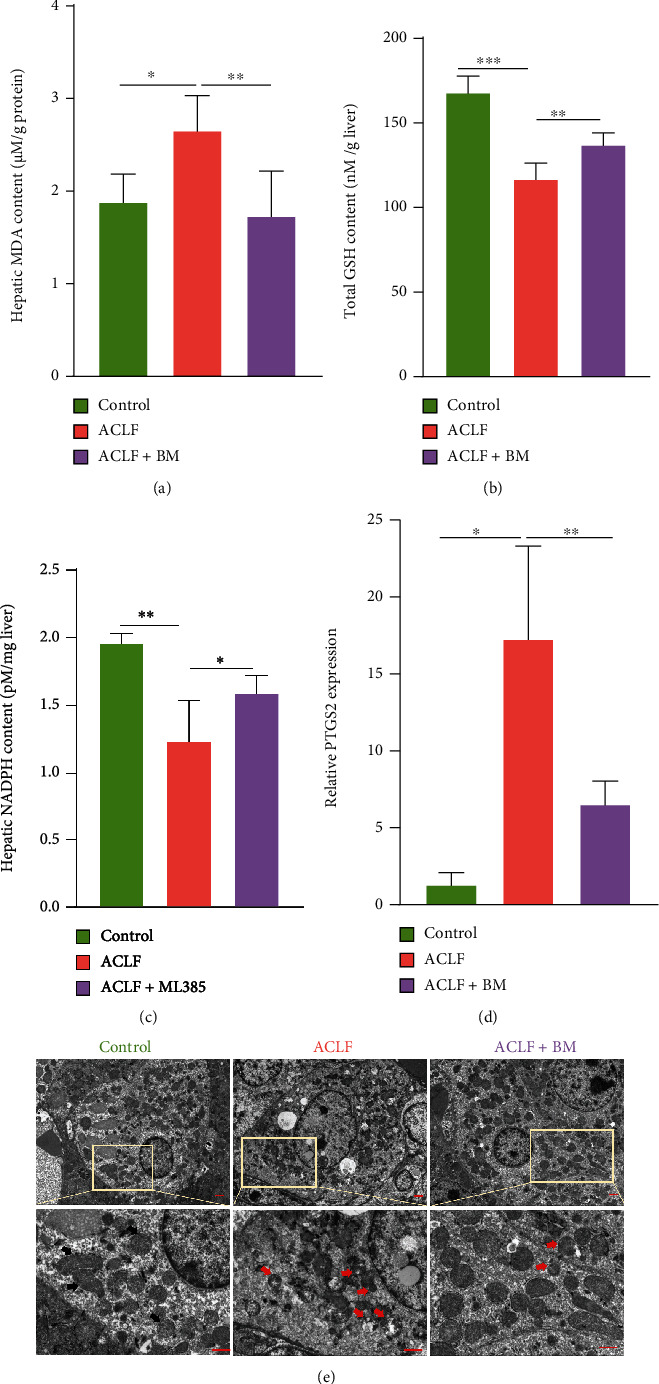
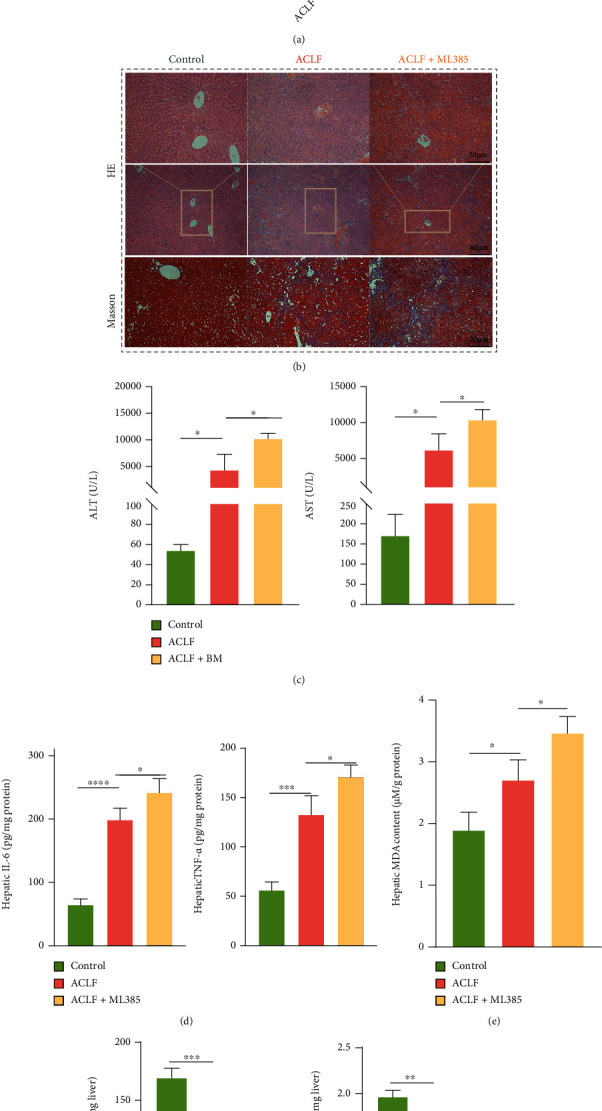
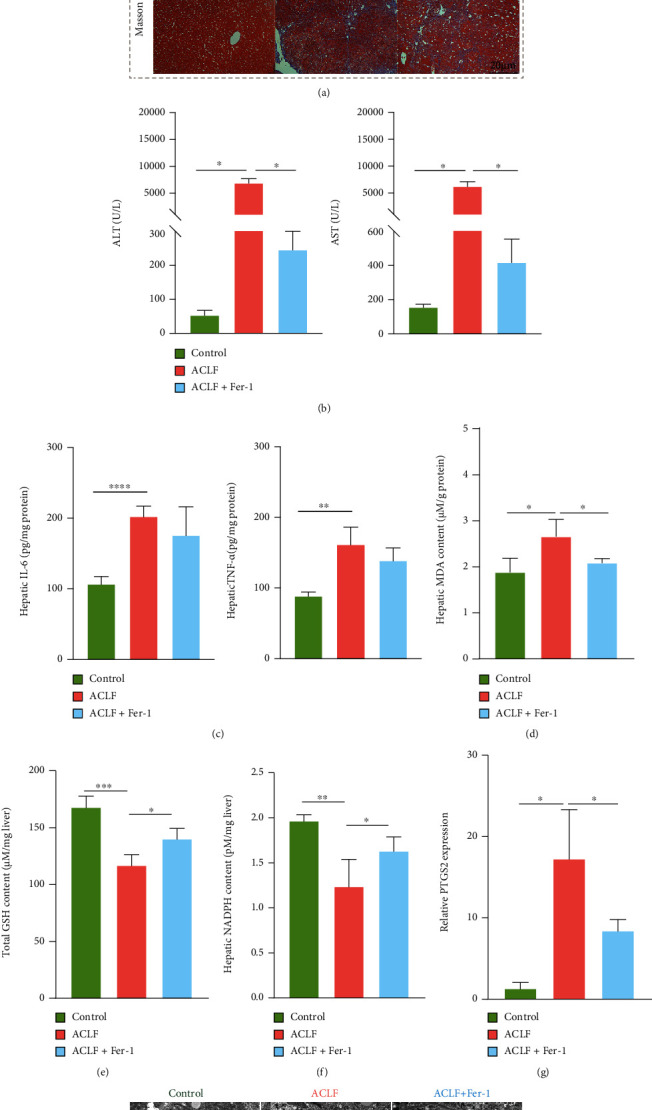
Although massive hepatocyte cell death and oxidative stress constitute major events of acute-on-chronic liver failure (ACLF), the relationship of ferroptosis with ACLF has yet to be explored. Nuclear factor erythroid 2-related factor 2 (Nrf2) is a key regulator of ferroptosis. However, if Nrf2 modulates ACLF through ferroptosis remains unknown. Here, the liver tissues of ACLF patients were collected and murine models of ACLF using carbon tetrachloride, D-galactosamine, and lipopolysaccharide as well as an HO-induced hepatocyte injury model were established. Upon ACLF, livers exhibited key features of ferroptosis, including lipid peroxidation (increase in malondialdehyde whereas a decrease in glutathione and nicotinamide adenine dinucleotide phosphate), and increased mRNA expression of prostaglandin-endoperoxide synthase-2 (PTGS2). Ferroptosis inducer RSL-3 treatment aggravated liver damage, while ferroptosis inhibitor Ferrostatin-1 administration alleviated ACLF severity, manifesting with improved liver histopathological lesions and reduced serum ALT and AST. Compared with normal liver tissue, Nrf2 was upregulated in ACLF patients and murine models. Pharmacological activation of Nrf2 (Bardoxolone Methyl) attenuated liver damage, prevented lipid peroxidation, upregulated PTGS2 mRNA expression, and improved ferroptosis-specific mitochondrial morphology in vivo. In contrast, Nrf2 inhibitor ML385 exacerbated lipid peroxidation and liver injury. Collectively, Nrf2 plays a protective role in ACLF progression through repressing ferroptosis, which provides promising therapeutic cues for ACLF.
尽管大量肝细胞死亡和氧化应激是慢加急性肝衰竭(ACLF)的主要事件,但铁死亡与ACLF的关系尚待探索。核因子红细胞2相关因子2(Nrf2)是铁死亡的关键调节因子。然而,Nrf2是否通过铁死亡调节ACLF仍不清楚。在此,收集了ACLF患者的肝组织,并建立了使用四氯化碳、D-半乳糖胺和脂多糖的ACLF小鼠模型以及HO诱导的肝细胞损伤模型。在ACLF发生时,肝脏表现出铁死亡的关键特征,包括脂质过氧化(丙二醛增加而谷胱甘肽和烟酰胺腺嘌呤二核苷酸磷酸减少)以及前列腺素内过氧化物合酶-2(PTGS2)的mRNA表达增加。铁死亡诱导剂RSL-3处理加重了肝损伤,而铁死亡抑制剂Ferrostatin-1给药减轻了ACLF的严重程度,表现为肝组织病理学损伤改善以及血清ALT和AST降低。与正常肝组织相比,ACLF患者和小鼠模型中的Nrf2上调。Nrf2的药理学激活(巴多昔芬甲酯)减轻了肝损伤,防止了脂质过氧化,上调了PTGS2 mRNA表达,并在体内改善了铁死亡特异性的线粒体形态。相反,Nrf2抑制剂ML385加剧了脂质过氧化和肝损伤。总体而言,Nrf2通过抑制铁死亡在ACLF进展中发挥保护作用,这为ACLF提供了有前景的治疗线索。