Department of Developmental Neurobiology, St. Jude Children's Research Hospital, Memphis, TN 38105, USA; Department of Oncology, St. Jude Children's Research Hospital, Memphis, TN 38105, USA.
Department of Computational Biology, St. Jude Children's Research Hospital, Memphis, TN 38105, USA.
Dev Cell. 2022 May 23;57(10):1226-1240.e8. doi: 10.1016/j.devcel.2022.04.003. Epub 2022 Apr 27.
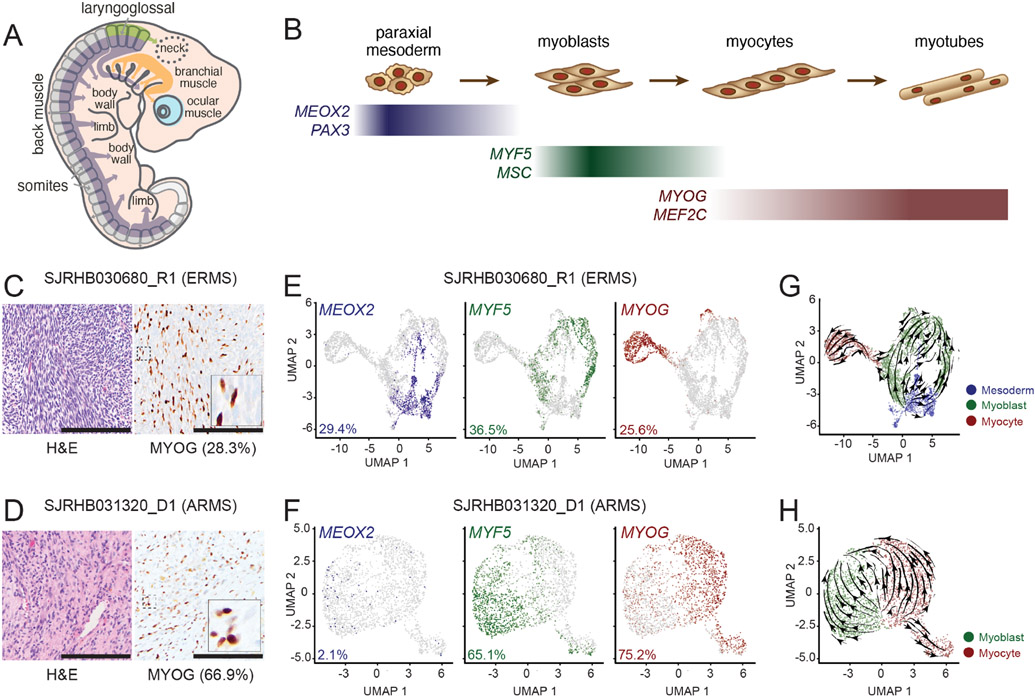
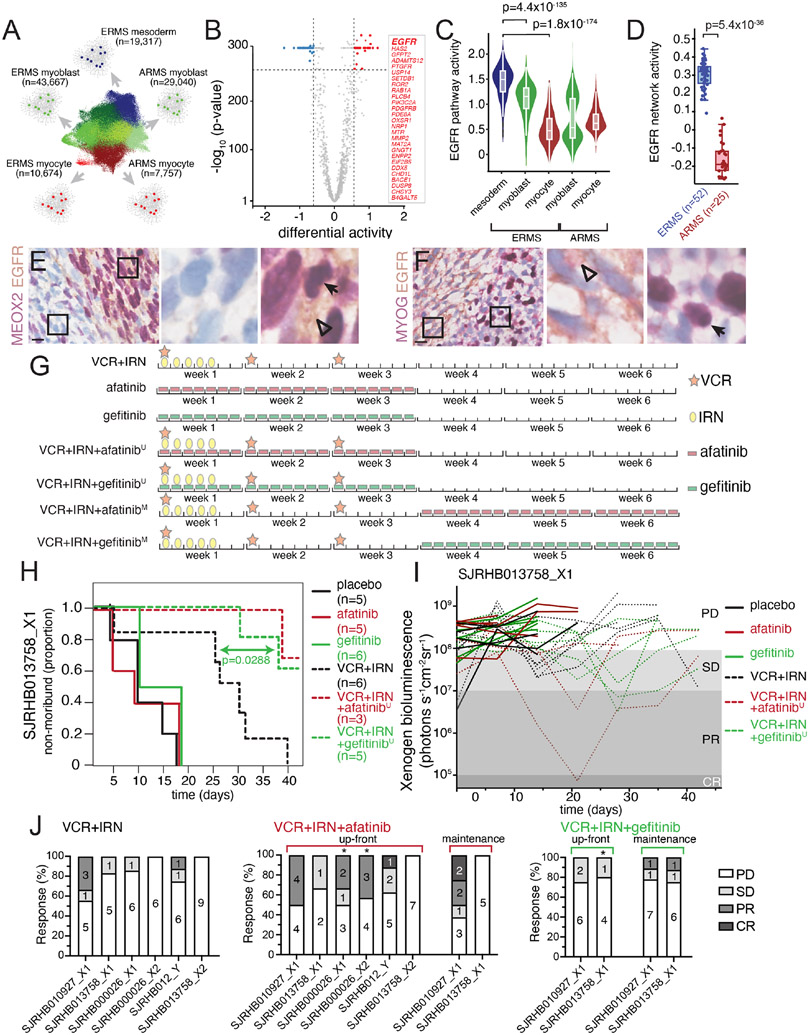
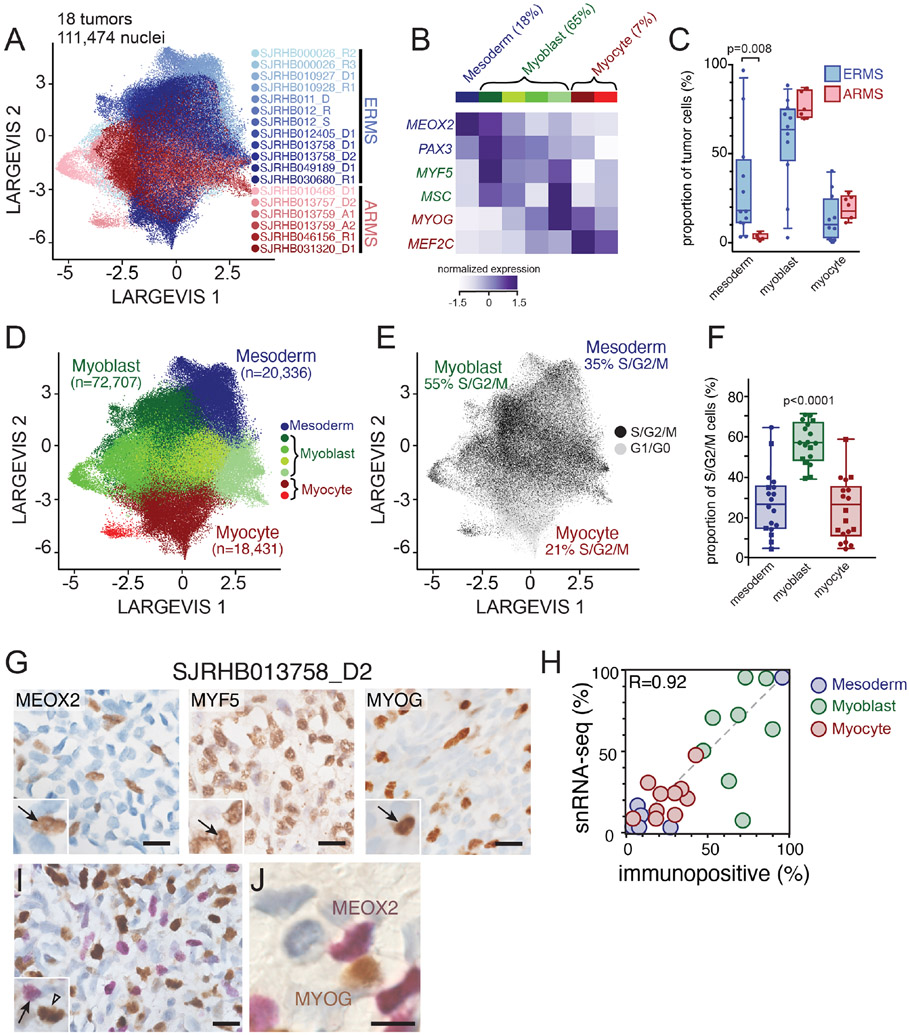
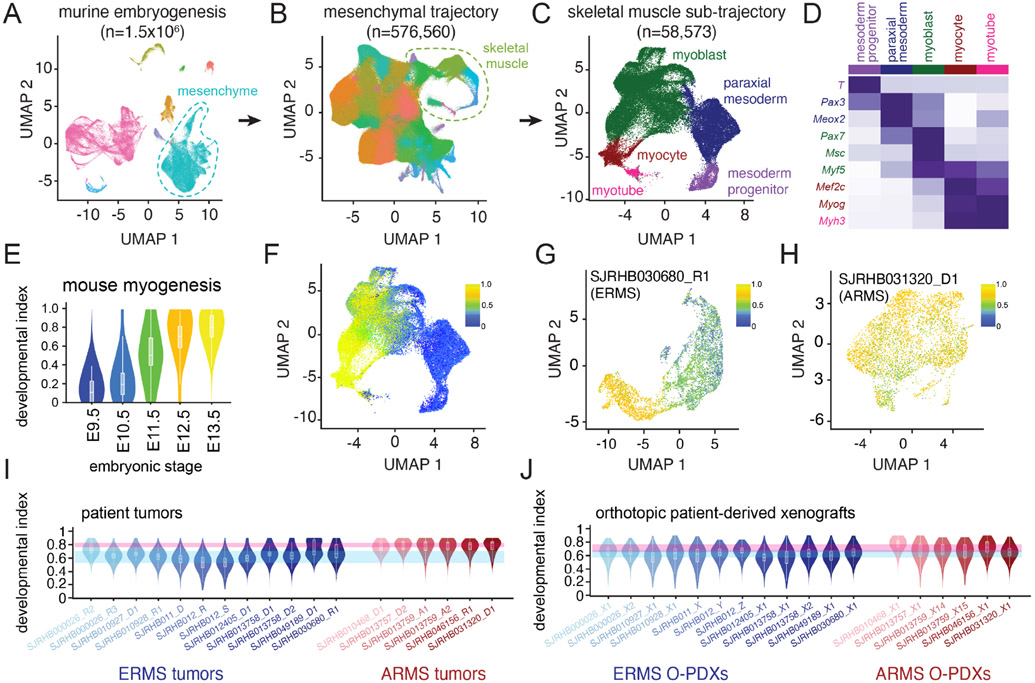
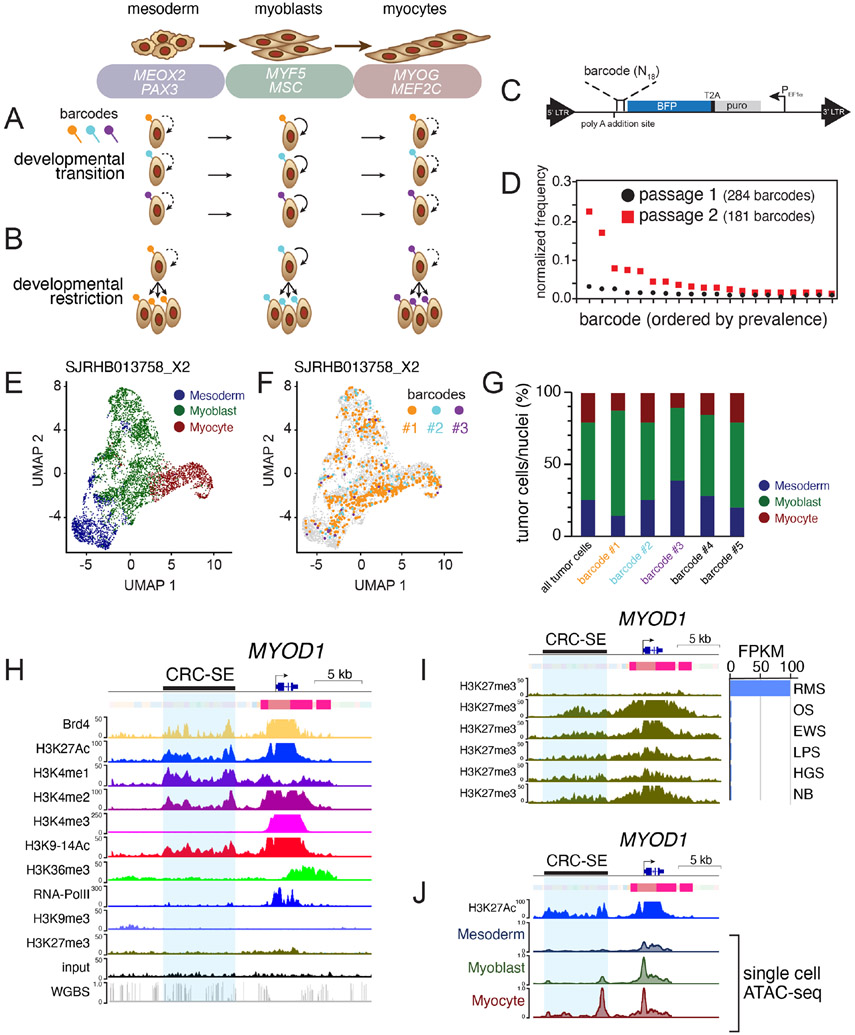
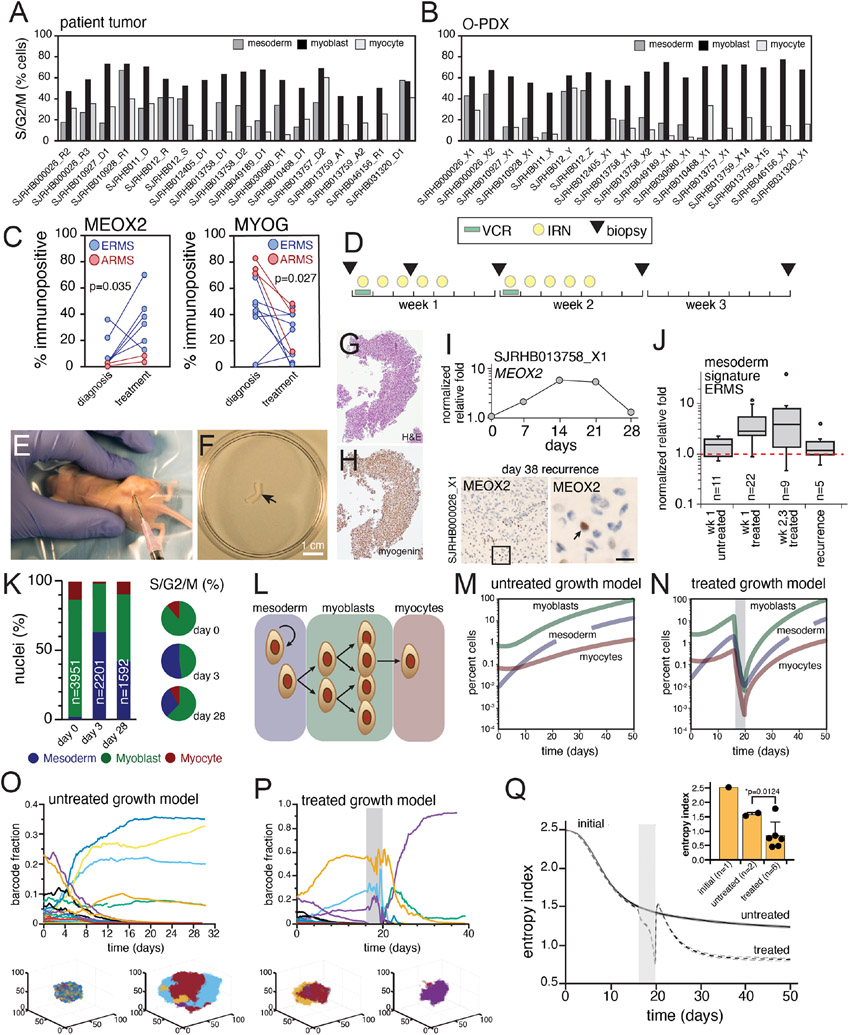
Rhabdomyosarcoma (RMS) is a pediatric cancer with features of skeletal muscle; patients with unresectable or metastatic RMS fare poorly due to high rates of disease recurrence. Here, we use single-cell and single-nucleus RNA sequencing to show that RMS tumors recapitulate the spectrum of embryonal myogenesis. Using matched patient samples from a clinical trial and orthotopic patient-derived xenografts (O-PDXs), we show that chemotherapy eliminates the most proliferative component with features of myoblasts within embryonal RMS; after treatment, the immature population with features of paraxial mesoderm expands to reconstitute the developmental hierarchy of the original tumor. We discovered that this paraxial mesoderm population is dependent on EGFR signaling and is sensitive to EGFR inhibitors. Taken together, these data serve as a proof of concept that targeting each developmental state in embryonal RMS is an effective strategy for improving outcomes by preventing disease recurrence.
横纹肌肉瘤(RMS)是一种具有骨骼肌特征的儿科癌症;由于疾病复发率高,无法切除或转移的 RMS 患者预后不良。在这里,我们使用单细胞和单核 RNA 测序来表明 RMS 肿瘤再现了胚胎肌发生的范围。使用来自临床试验的匹配患者样本和原位患者来源的异种移植物(O-PDXs),我们表明化疗消除了胚胎 RMS 中具有成肌细胞特征的最具增殖性的成分;治疗后,具有轴旁中胚层特征的不成熟群体扩展以重新构成原始肿瘤的发育层次结构。我们发现,这个轴旁中胚层群体依赖于 EGFR 信号,并对 EGFR 抑制剂敏感。总之,这些数据为靶向胚胎 RMS 中的每个发育状态是通过防止疾病复发来提高疗效的有效策略提供了概念验证。