Charles River Discovery Research Services Gemany GmbH, Charles River Laboratories Inc, Freiburg, Germany.
Institute of Imaging and Computer Vision, RWTH Aachen University, Aachen, Germany.
J Immunother Cancer. 2022 Apr;10(4). doi: 10.1136/jitc-2021-004412.
The field of cancer immunology is rapidly moving towards innovative therapeutic strategies, resulting in the need for robust and predictive preclinical platforms reflecting the immunological response to cancer. Well characterized preclinical models are essential for the development of predictive biomarkers in the oncology as well as the immune-oncology space. In the current study, gold standard preclinical models are being refined and combined with novel image analysis tools to meet those requirements.
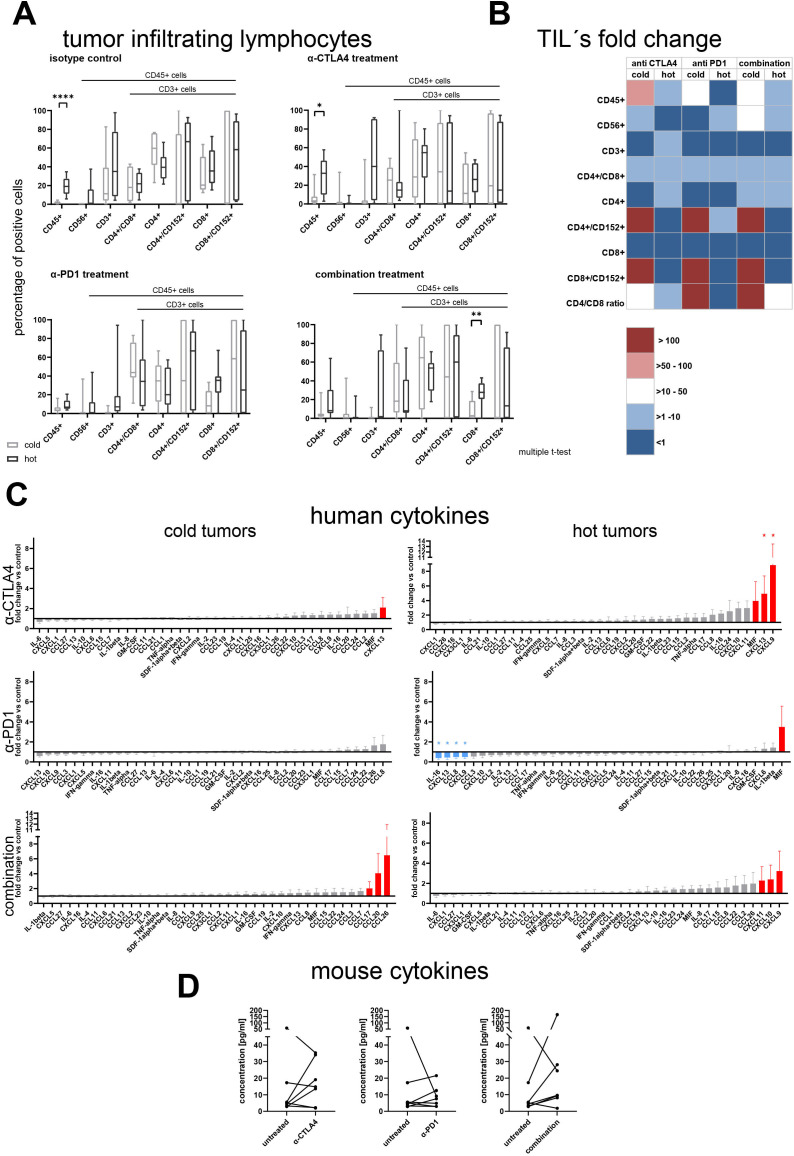
A panel of 14 non-small cell lung cancer patient-derived xenograft models (NSCLC PDX) was propagated in humanized NOD/Shi-scid/IL-2Rnull mice. The models were comprehensively characterized for relevant phenotypic and molecular features, including flow cytometry, immunohistochemistry, histology, whole exome sequencing and cytokine secretion.
Models reflecting hot (>5% tumor-infiltrating lymphocytes/TILs) as opposed to cold tumors (<5% TILs) significantly differed regarding their cytokine profiles, molecular genetic aberrations, stroma content, and programmed cell death ligand-1 status. Treatment experiments including anti cytotoxic T-lymphocyte-associated protein 4, anti-programmed cell death 1 or the combination thereof across all 14 models in the single mouse trial format showed distinctive tumor growth response and spatial immune cell patterns as monitored by computerized analysis of digitized whole-slide images. Image analysis provided for the first time qualitative evaluation of the extent to which PDX models retain the histological features from their original human donors.
Deep phenotyping of PDX models in a humanized setting by combinations of computational pathology, immunohistochemistry, flow cytometry and proteomics enables the exhaustive analysis of innovative preclinical models and paves the way towards the development of translational biomarkers for immuno-oncology drugs.
癌症免疫学领域正在迅速向创新的治疗策略发展,因此需要强大且可预测的临床前平台来反映癌症的免疫反应。特征明确的临床前模型对于肿瘤学和免疫肿瘤学领域的预测性生物标志物的开发至关重要。在目前的研究中,正在对黄金标准的临床前模型进行改进,并结合新的图像分析工具来满足这些需求。
我们对 14 种非小细胞肺癌患者来源的异种移植模型(NSCLC PDX)进行了传代,这些模型在人源化 NOD/Shi-scid/IL-2Rnull 小鼠中进行繁殖。我们对这些模型进行了全面的特征分析,包括流式细胞术、免疫组织化学、组织学、全外显子测序和细胞因子分泌。
与冷肿瘤(<5%TILs)相比,反映热肿瘤(>5%TILs)的模型在细胞因子谱、分子遗传异常、基质含量和程序性细胞死亡配体-1 状态方面存在显著差异。在单细胞试验格式下,我们对所有 14 种模型进行了包括抗细胞毒性 T 淋巴细胞相关蛋白 4、抗程序性细胞死亡 1 或两者联合治疗的实验,结果表明,通过计算机对数字化全切片图像进行分析,肿瘤生长反应和空间免疫细胞模式存在明显差异。图像分析首次对 PDX 模型从其原始人类供体中保留组织学特征的程度进行了定性评估。
通过计算病理学、免疫组织化学、流式细胞术和蛋白质组学的组合对 PDX 模型进行深入表型分析,使我们能够对创新的临床前模型进行全面分析,并为免疫肿瘤学药物的转化生物标志物的开发铺平道路。