Melbourne Dementia Research Centre, Florey Institute of Neuroscience and Mental Health, The University of Melbourne, Parkville, VIC, 3052, Australia.
Department of Neurology and State Key Laboratory of Biotherapy, National Clinical Research Center for Geriatrics, West China Hospital, Sichuan University, Chengdu, Sichuan, 610041, China.
Mol Psychiatry. 2024 Feb;29(2):211-220. doi: 10.1038/s41380-022-01568-w. Epub 2022 Apr 28.
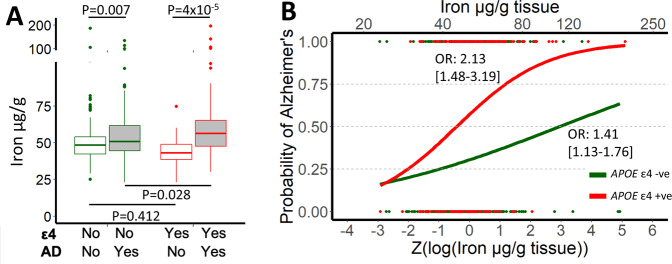
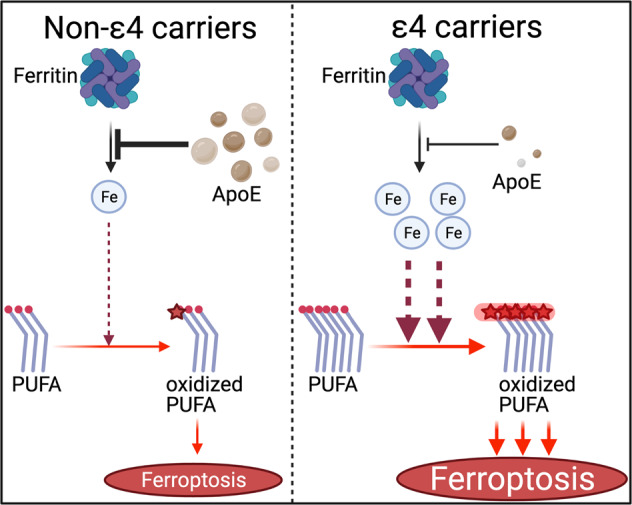
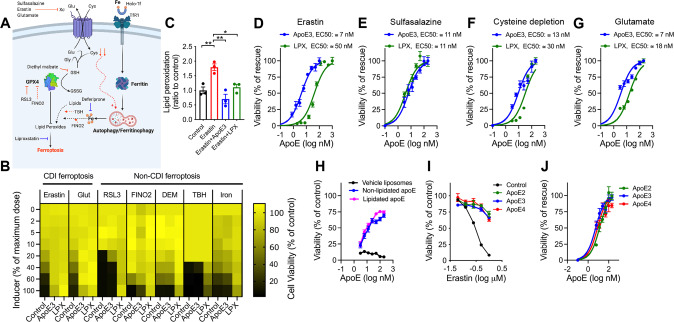
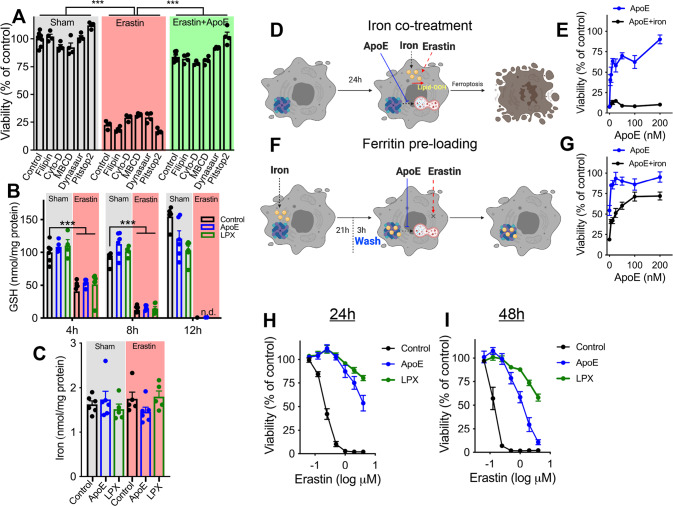
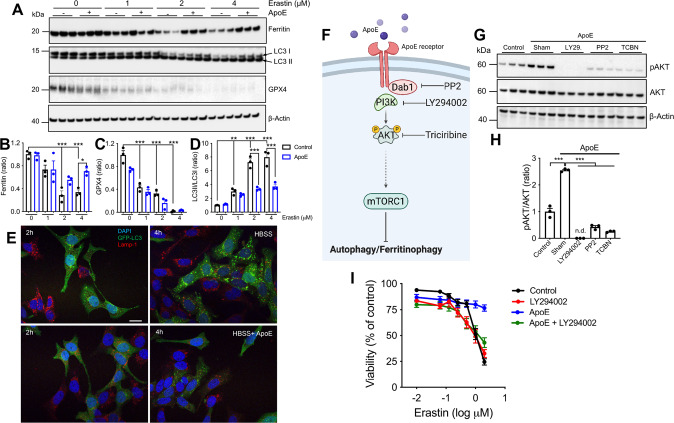
Allelic variation to the APOE gene confers the greatest genetic risk for sporadic Alzheimer's disease (AD). Independent of genotype, low abundance of apolipoprotein E (apoE), is characteristic of AD CSF, and predicts cognitive decline. The mechanisms underlying the genotype and apoE level risks are uncertain. Recent fluid and imaging biomarker studies have revealed an unexpected link between apoE and brain iron, which also forecasts disease progression, possibly through ferroptosis, an iron-dependent regulated cell death pathway. Here, we report that apoE is a potent inhibitor of ferroptosis (EC ≈ 10 nM; N27 neurons). We demonstrate that apoE signals to activate the PI3K/AKT pathway that then inhibits the autophagic degradation of ferritin (ferritinophagy), thus averting iron-dependent lipid peroxidation. Using postmortem inferior temporal brain cortex tissue from deceased subjects from the Rush Memory and Aging Project (MAP) (N = 608), we found that the association of iron with pathologically confirmed clinical Alzheimer's disease was stronger among those with the adverse APOE-ε4 allele. While protection against ferroptosis did not differ between apoE isoforms in vitro, other features of ε4 carriers, such as low abundance of apoE protein and higher levels of polyunsaturated fatty acids (which fuel ferroptosis) could mediate the ε4 allele's heighted risk of AD. These data support ferroptosis as a putative pathway to explain the major genetic risk associated with late onset AD.
载脂蛋白 E 基因的等位基因变异赋予散发性阿尔茨海默病(AD)最大的遗传风险。独立于基因型,载脂蛋白 E(apoE)的低丰度是 AD CSF 的特征,并预测认知能力下降。基因型和 apoE 水平风险的机制尚不确定。最近的液体和成像生物标志物研究揭示了 apoE 与大脑铁之间出人意料的联系,这也预示着疾病的进展,可能通过铁依赖性调节细胞死亡途径铁死亡来实现。在这里,我们报告 apoE 是铁死亡的有效抑制剂(EC≈10nM;N27 神经元)。我们证明 apoE 信号激活 PI3K/AKT 途径,然后抑制铁蛋白(铁蛋白)的自噬降解,从而避免铁依赖性脂质过氧化。使用来自 Rush 记忆和衰老项目 (MAP) 的已故受试者的死后颞下回脑皮质组织(N=608),我们发现铁与经病理证实的临床阿尔茨海默病之间的关联在具有不利 APOE-ε4 等位基因的人群中更强。虽然体外 apoE 同工型之间的铁死亡保护作用没有差异,但 ε4 携带者的其他特征,如 apoE 蛋白的低丰度和多不饱和脂肪酸(助长铁死亡)的水平较高,可能介导 ε4 等位基因 AD 的风险增加。这些数据支持铁死亡作为一种潜在的途径来解释与晚发性 AD 相关的主要遗传风险。