Liver Cancer Translational Research Laboratory, Institut d'Investigacions Biomèdiques August Pi i Sunyer (IDIBAPS), Hospital Clínic, Universitat de Barcelona, Barcelona, Spain.
Mount Sinai Liver Cancer Program (Divisions of Liver Diseases, Department of Hematology/Oncology, Department of Medicine), Tisch Cancer Institute, Icahn School of Medicine at Mount Sinai, New York, NY, USA.
Nat Cancer. 2022 Apr;3(4):386-401. doi: 10.1038/s43018-022-00357-2. Epub 2022 Apr 28.
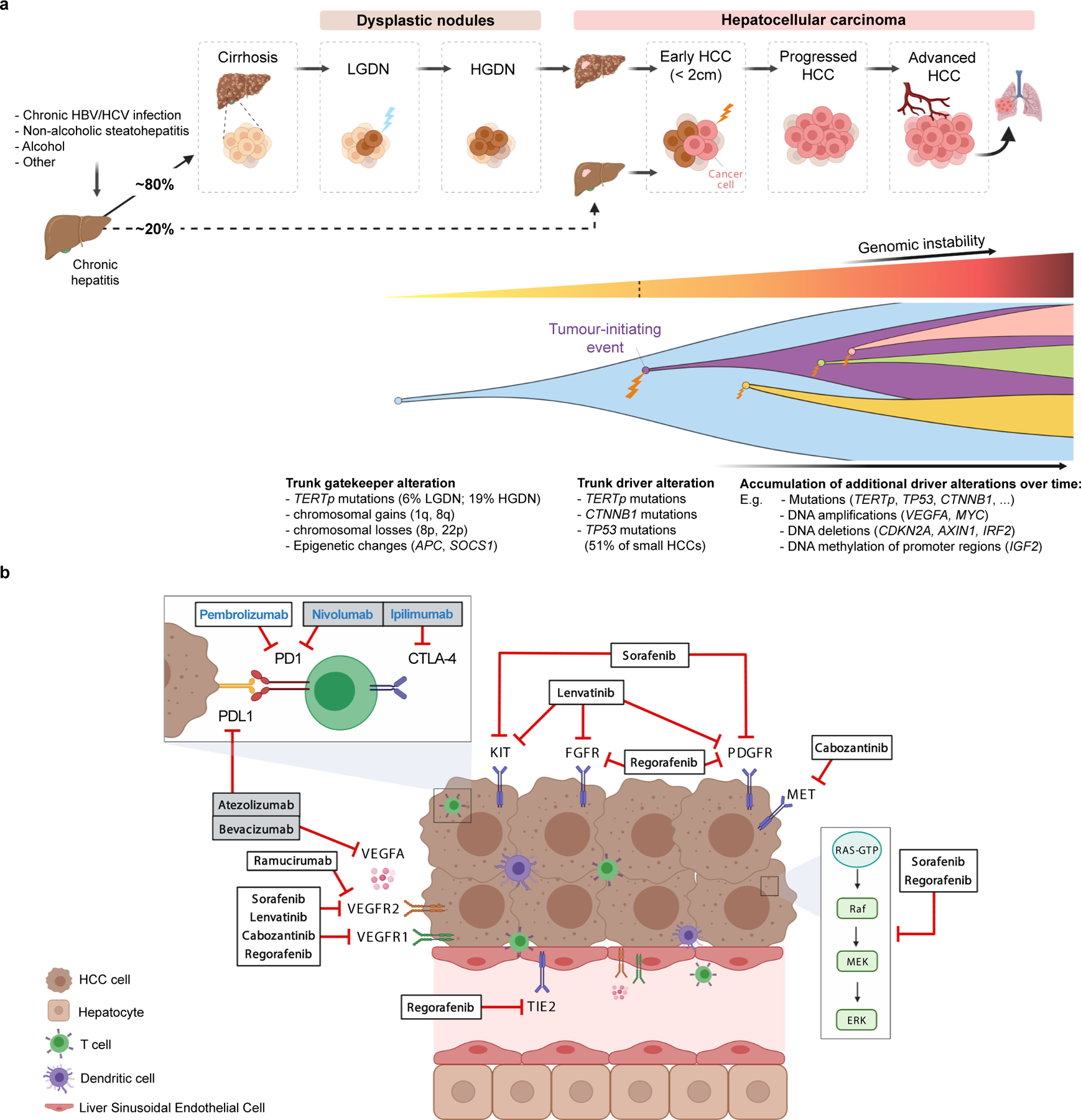
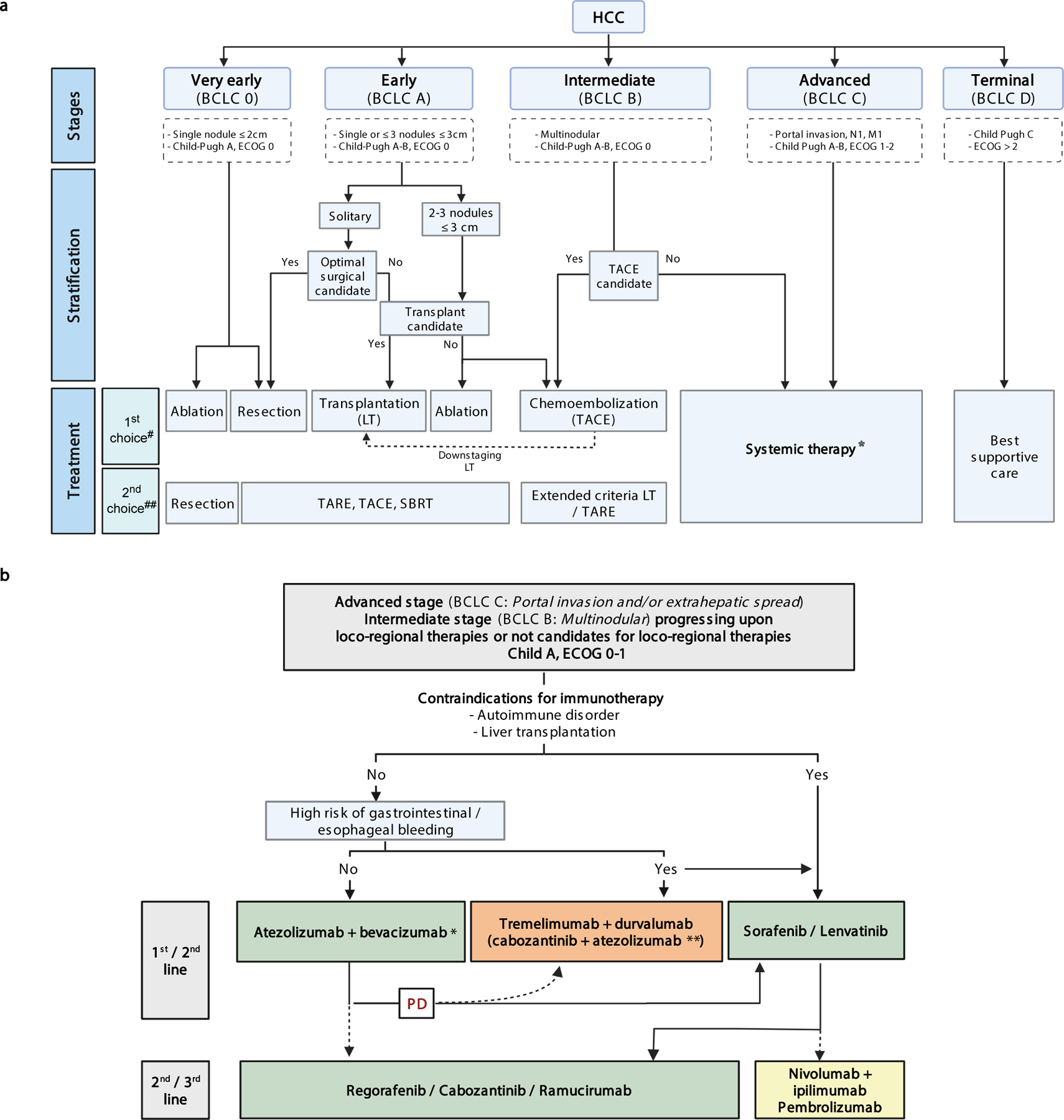
Hepatocellular carcinoma (HCC) remains one of the most prevalent and deadliest cancers. The poor outcome associated with HCC is dramatically changing due to the advent of effective systemic therapies. Here we discuss the molecular pathogenesis of HCC, molecular classes and determinants of heterogeneity. In addition, effective single-agent and combination systemic therapies involving immunotherapies as standard of care are analyzed. Finally, we propose a flowchart of sequential therapies, explore mechanisms of resistance and address the need for predictive biomarkers.
肝细胞癌(HCC)仍然是最常见和最致命的癌症之一。由于有效的系统治疗方法的出现,与 HCC 相关的不良预后正在发生显著变化。在这里,我们讨论了 HCC 的分子发病机制、分子类型和异质性决定因素。此外,还分析了涉及免疫疗法的有效单药和联合系统治疗作为标准治疗。最后,我们提出了一个序贯治疗流程图,探讨了耐药机制,并解决了对预测生物标志物的需求。