School of Computing Sciences, University of East Anglia, Norwich Research Park, Norwich, NR47TJ, UK.
US Department of Energy Joint Genome Institute, 1 Cyclotron Road, Berkeley, CA, 94720, USA.
Microbiome. 2022 Apr 28;10(1):67. doi: 10.1186/s40168-022-01254-7.
Phytoplankton communities significantly contribute to global biogeochemical cycles of elements and underpin marine food webs. Although their uncultured genomic diversity has been estimated by planetary-scale metagenome sequencing and subsequent reconstruction of metagenome-assembled genomes (MAGs), this approach has yet to be applied for complex phytoplankton microbiomes from polar and non-polar oceans consisting of microbial eukaryotes and their associated prokaryotes.
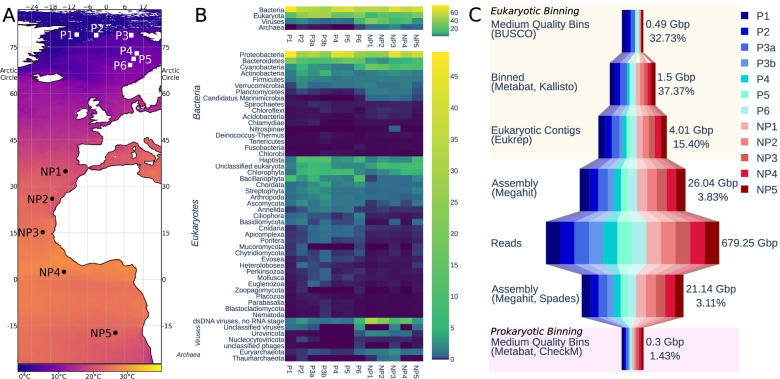
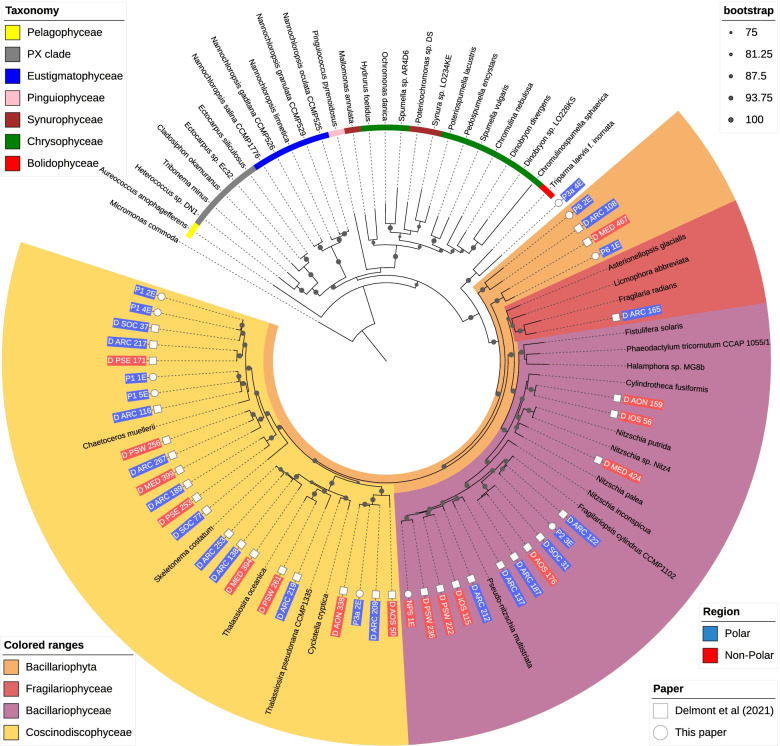
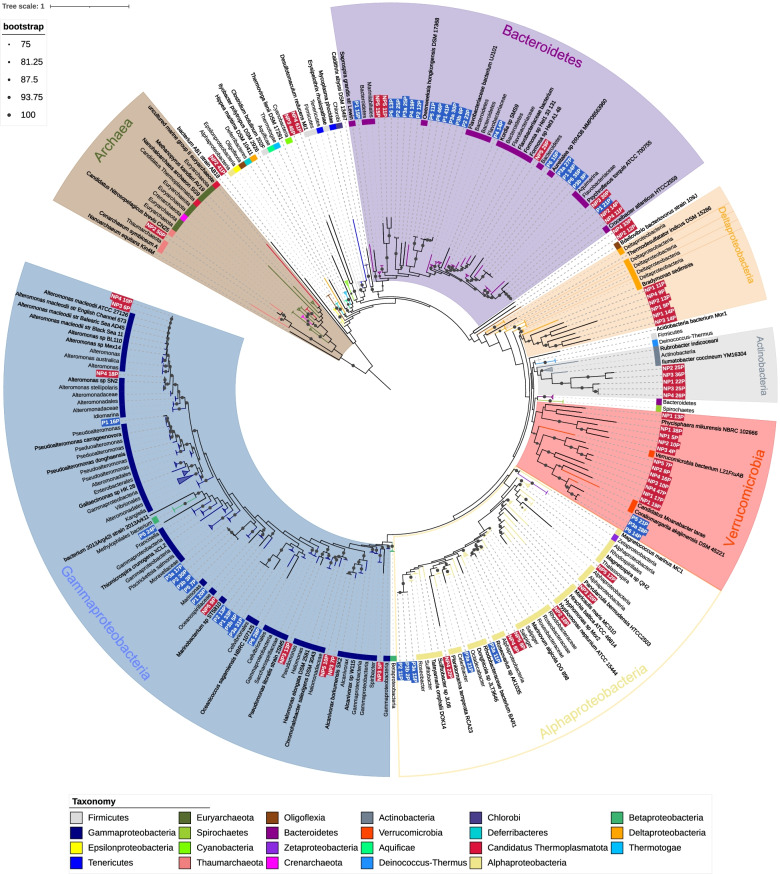
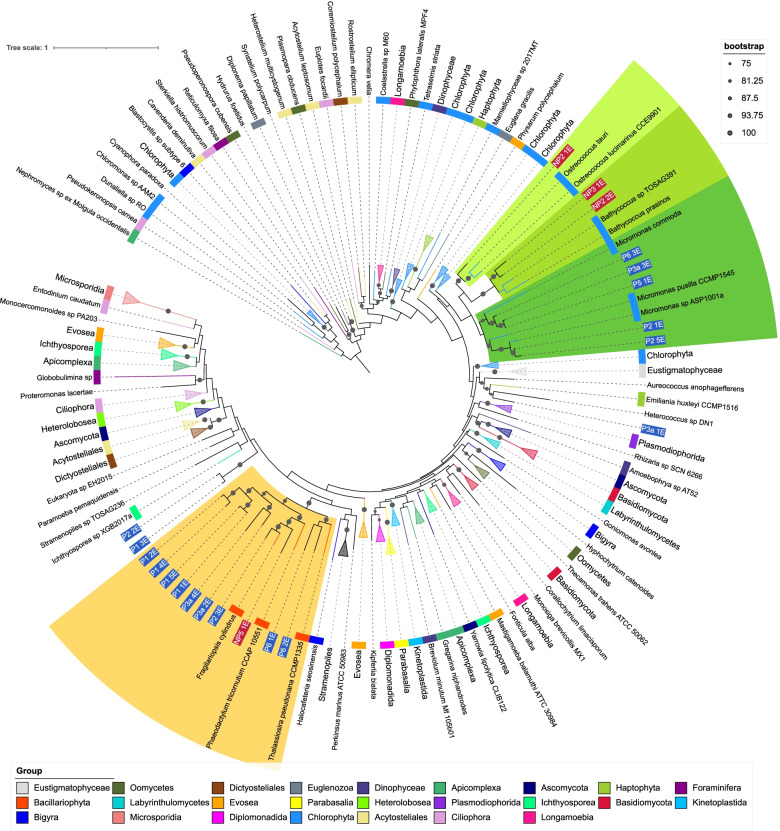
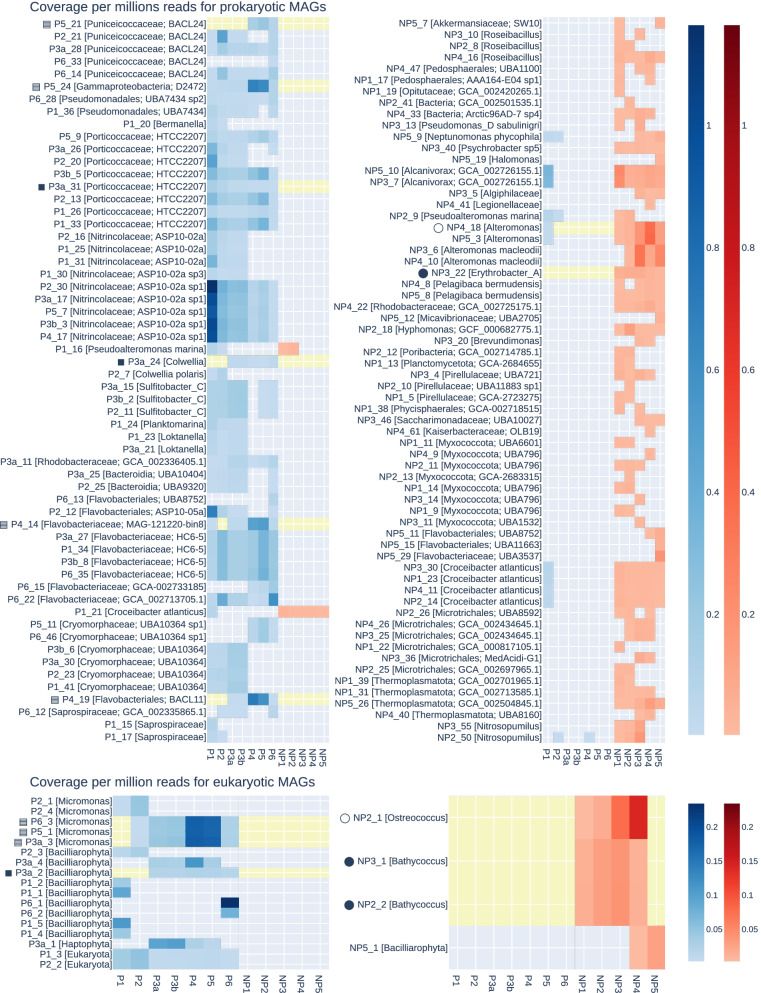
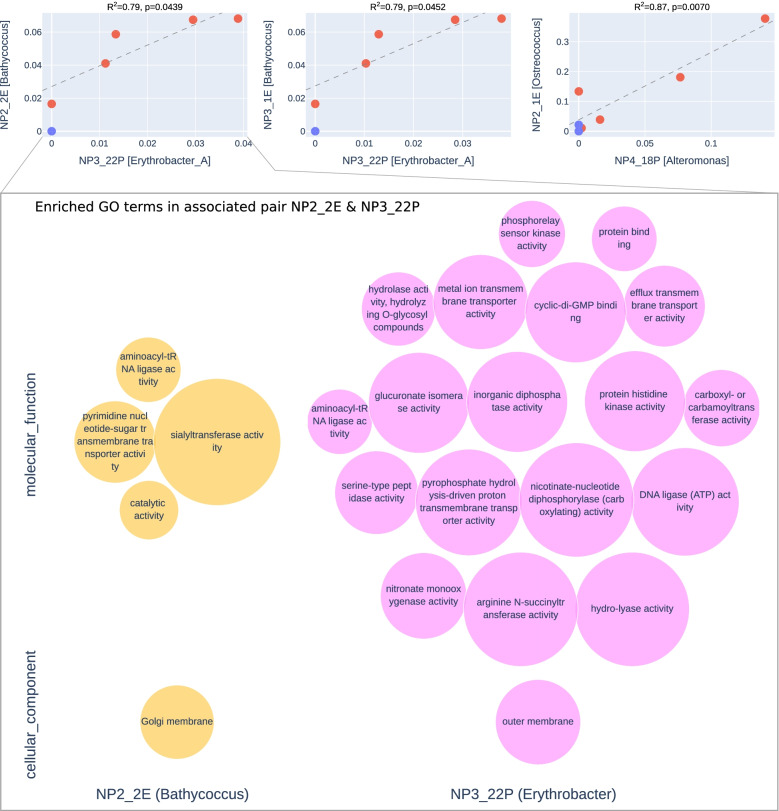
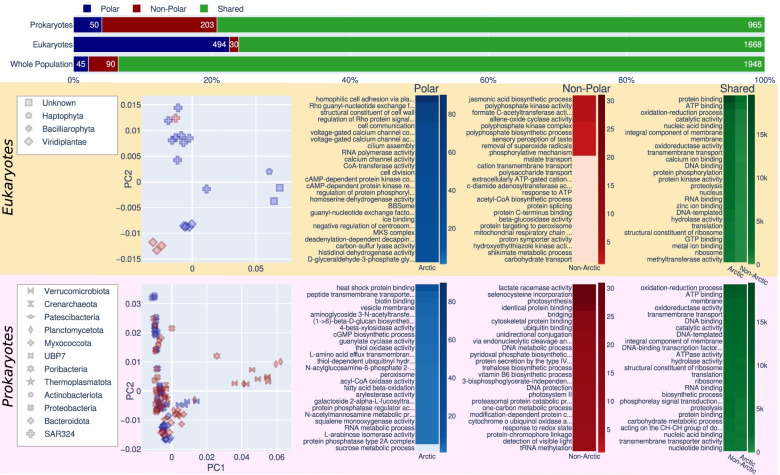
Here, we have assembled MAGs from chlorophyll a maximum layers in the surface of the Arctic and Atlantic Oceans enriched for species associations (microbiomes) with a focus on pico- and nanophytoplankton and their associated heterotrophic prokaryotes. From 679 Gbp and estimated 50 million genes in total, we recovered 143 MAGs of medium to high quality. Although there was a strict demarcation between Arctic and Atlantic MAGs, adjacent sampling stations in each ocean had 51-88% MAGs in common with most species associations between Prasinophytes and Proteobacteria. Phylogenetic placement revealed eukaryotic MAGs to be more diverse in the Arctic whereas prokaryotic MAGs were more diverse in the Atlantic Ocean. Approximately 70% of protein families were shared between Arctic and Atlantic MAGs for both prokaryotes and eukaryotes. However, eukaryotic MAGs had more protein families unique to the Arctic whereas prokaryotic MAGs had more families unique to the Atlantic.
Our study provides a genomic context to complex phytoplankton microbiomes to reveal that their community structure was likely driven by significant differences in environmental conditions between the polar Arctic and warm surface waters of the tropical and subtropical Atlantic Ocean. Video Abstract.
浮游植物群落对元素的全球生物地球化学循环有重要贡献,是海洋食物网的基础。尽管通过行星尺度的宏基因组测序和随后的宏基因组组装基因组(MAG)重建已经估计了它们未培养的基因组多样性,但这种方法尚未应用于由微生物真核生物及其相关原核生物组成的极地和非极地海洋的复杂浮游植物微生物组。
在这里,我们从富含与小和纳米浮游植物及其相关异养原核生物有关的物种关联(微生物组)的北极和大西洋海洋表面叶绿素 a 最大值层中组装了 MAG。从 679 Gbp 和总共估计的 5000 万个基因中,我们回收了 143 个中等到高质量的 MAG。尽管北极和大西洋 MAG 之间有严格的划分,但每个海洋中的相邻采样站有 51-88%的 MAG 与原绿藻和变形菌之间的大多数物种关联共有。系统发育定位显示,真核 MAG 在北极的多样性更高,而原核 MAG 在大西洋的多样性更高。大约 70%的蛋白质家族在北极和大西洋 MAG 中都有原核生物和真核生物共享。然而,真核 MAG 有更多的独特于北极的蛋白质家族,而原核 MAG 有更多的独特于大西洋的蛋白质家族。
我们的研究为复杂的浮游植物微生物组提供了一个基因组背景,以揭示它们的群落结构可能是由极地北极和热带和亚热带大西洋温暖表层水之间的环境条件的显著差异驱动的。视频摘要。