Computer, Computational, and Statistical Sciences Division, Los Alamos National Laboratory, Los Alamos, NM 87545.
Department of Psychology, Florida Atlantic University, Boca Raton, FL 33431; and.
Proc Natl Acad Sci U S A. 2022 May 3;119(18):e2119753119. doi: 10.1073/pnas.2119753119. Epub 2022 Apr 29.
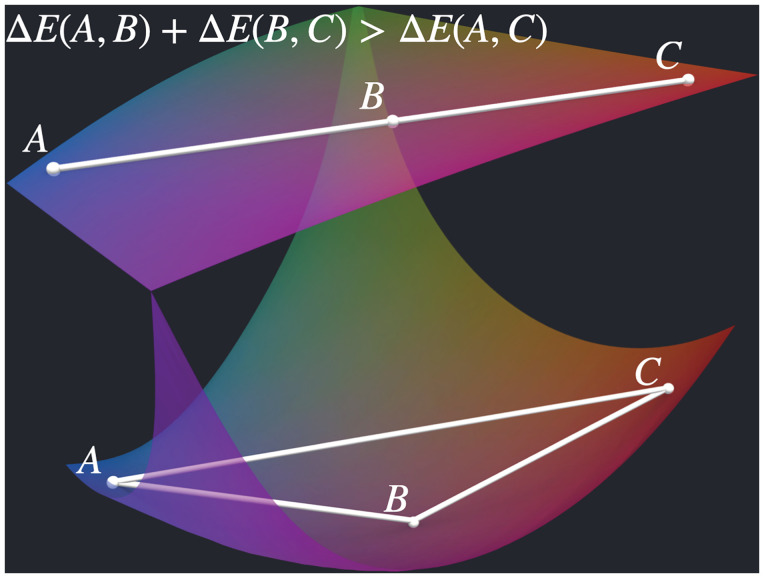
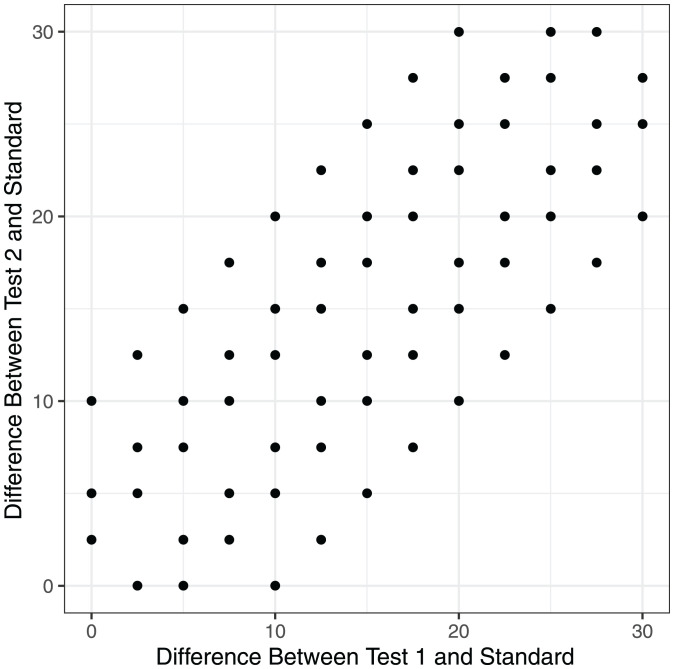
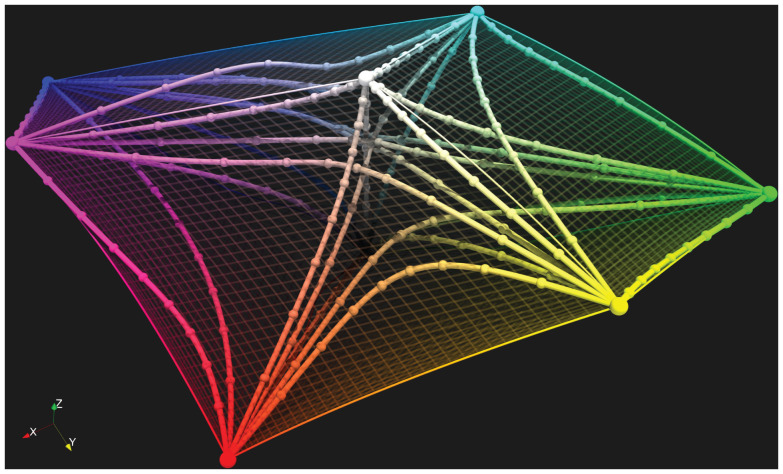
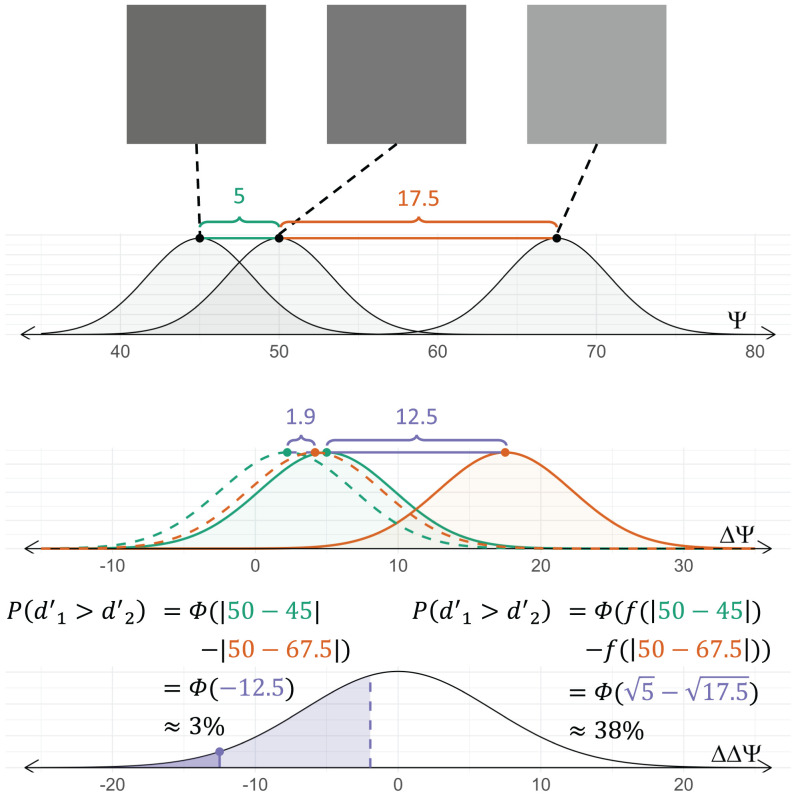
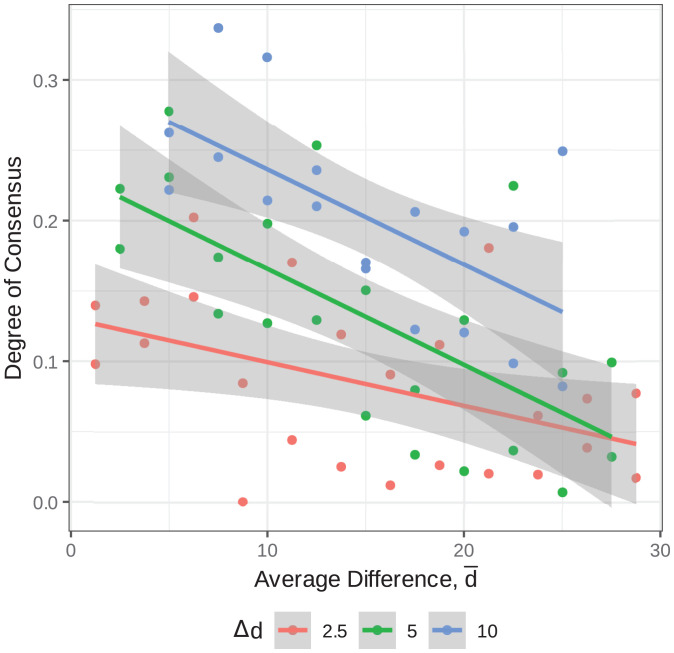
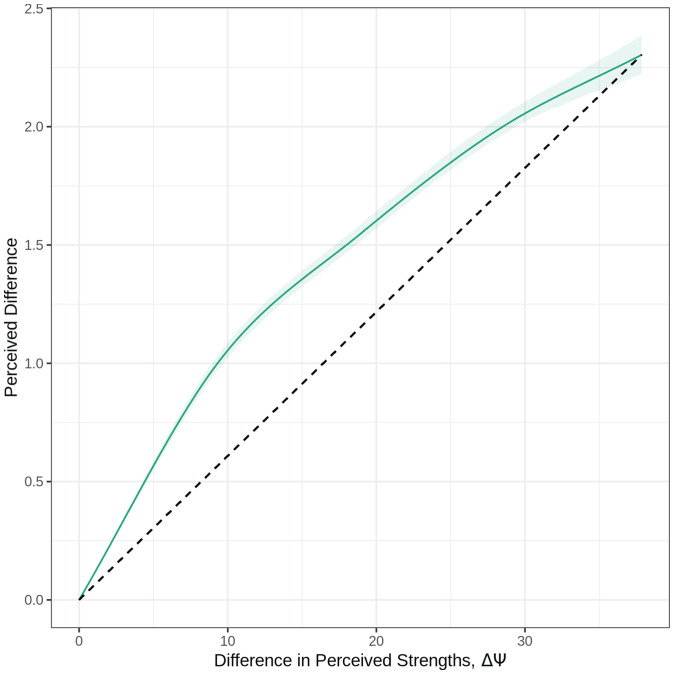
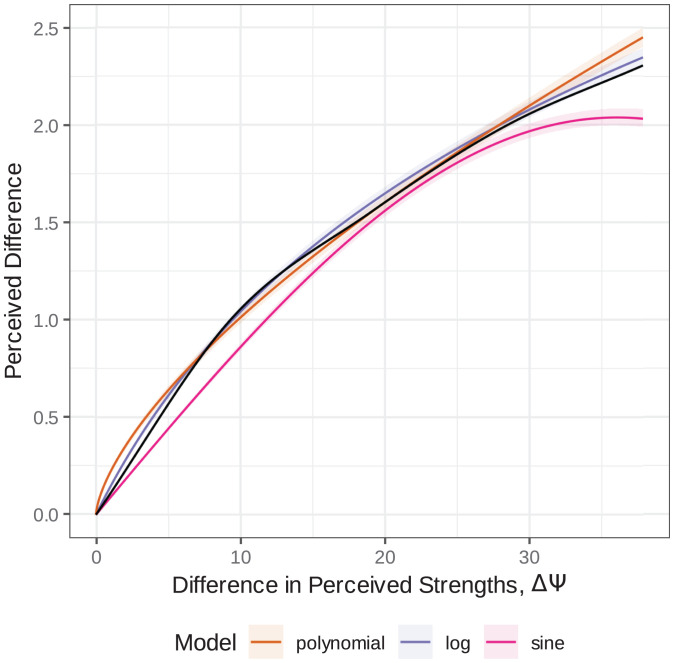
The scientific community generally agrees on the theory, introduced by Riemann and furthered by Helmholtz and Schrödinger, that perceived color space is not Euclidean but rather, a three-dimensional Riemannian space. We show that the principle of diminishing returns applies to human color perception. This means that large color differences cannot be derived by adding a series of small steps, and therefore, perceptual color space cannot be described by a Riemannian geometry. This finding is inconsistent with the current approaches to modeling perceptual color space. Therefore, the assumed shape of color space requires a paradigm shift. Consequences of this apply to color metrics that are currently used in image and video processing, color mapping, and the paint and textile industries. These metrics are valid only for small differences. Rethinking them outside of a Riemannian setting could provide a path to extending them to large differences. This finding further hints at the existence of a second-order Weber–Fechner law describing perceived differences.
科学界普遍认同由 Riemann 提出并由 Helmholtz 和 Schrödinger 进一步发展的理论,即感知的颜色空间不是欧几里得空间,而是一个三维的黎曼空间。我们证明了收益递减原则适用于人类的颜色感知。这意味着,通过添加一系列小步骤无法得出大的颜色差异,因此,感知的颜色空间不能用黎曼几何来描述。这一发现与当前建模感知颜色空间的方法不一致。因此,对颜色空间的假设形状需要进行范式转变。这一发现适用于当前在图像处理、视频处理、颜色映射以及油漆和纺织行业中使用的颜色度量。这些度量仅适用于小的差异。在黎曼设定之外重新思考这些度量,可以为将其扩展到大的差异提供一条途径。这一发现进一步暗示了存在描述感知差异的二阶 Weber–Fechner 定律。