Ng Thomas S C, Hu Huiyu, Kronister Stefan, Lee Chanseo, Li Ran, Gerosa Luca, Stopka Sylwia A, Burgenske Danielle M, Khurana Ishaan, Regan Michael S, Vallabhaneni Sreeram, Putta Niharika, Scott Ella, Matvey Dylan, Giobbie-Hurder Anita, Kohler Rainer H, Sarkaria Jann N, Parangi Sareh, Sorger Peter K, Agar Nathalie Y R, Jacene Heather A, Sullivan Ryan J, Buchbinder Elizabeth, Mikula Hannes, Weissleder Ralph, Miller Miles A
Center for Systems Biology, Massachusetts General Hospital Research Institute, Boston, MA, USA.
Department of Radiology, Massachusetts General Hospital and Harvard Medical School, Boston, MA, USA.
Sci Adv. 2022 Apr 29;8(17):eabl6339. doi: 10.1126/sciadv.abl6339.
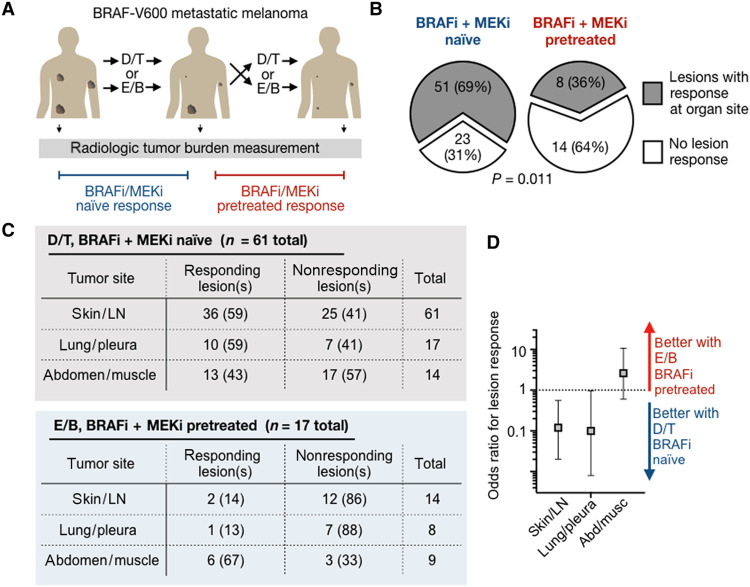
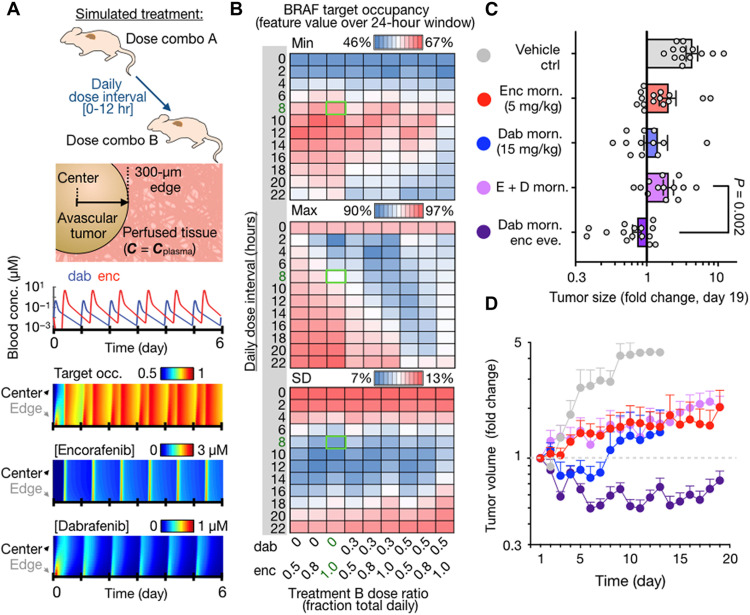
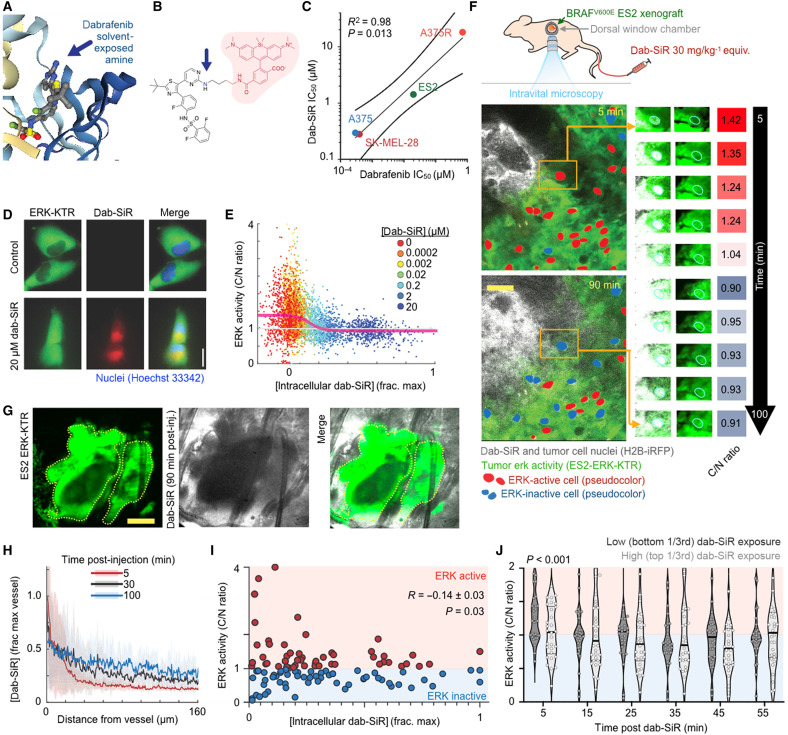
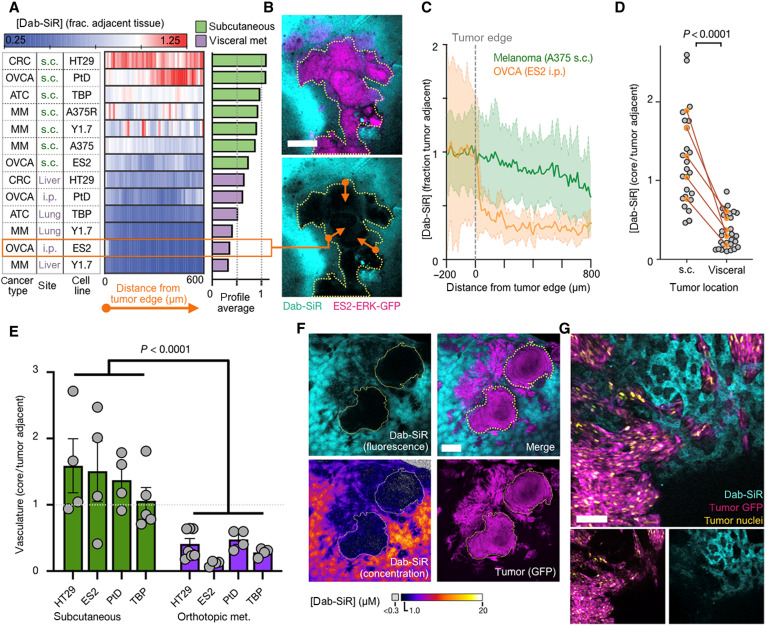
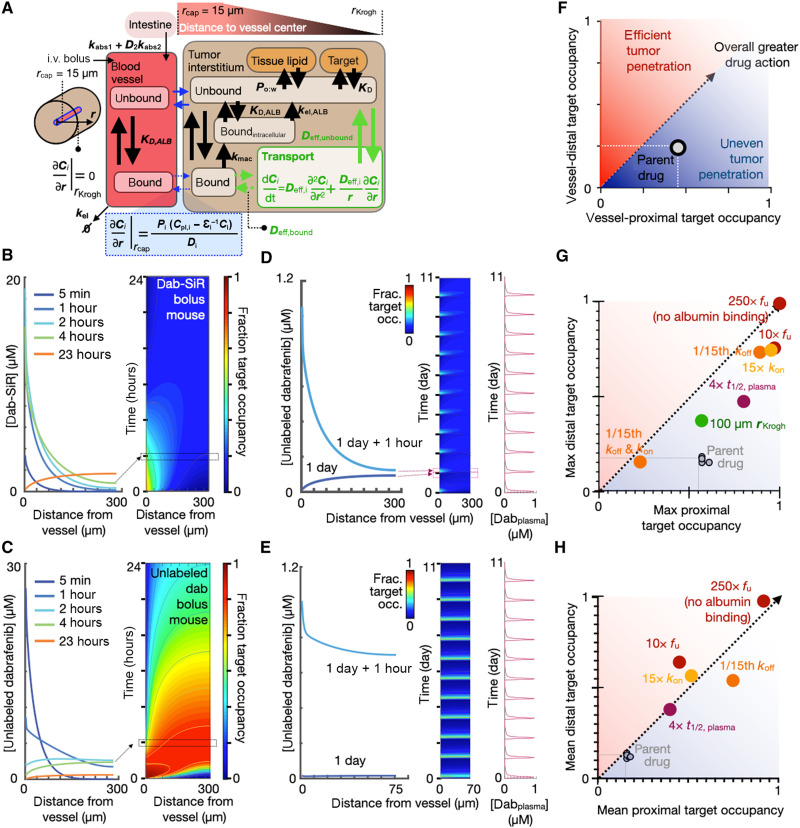
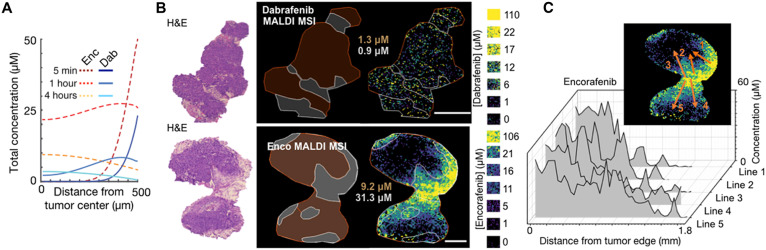
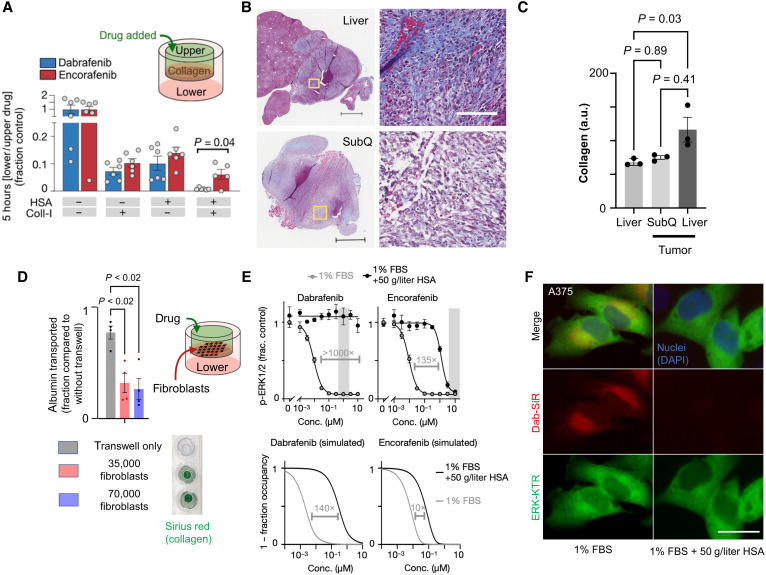
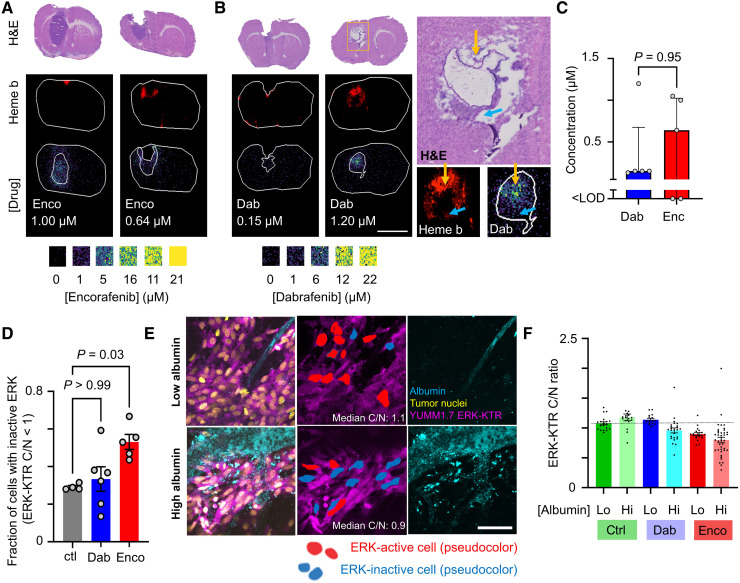
BRAF-targeted kinase inhibitors (KIs) are used to treat malignancies including BRAF-mutant non-small cell lung cancer, colorectal cancer, anaplastic thyroid cancer, and, most prominently, melanoma. However, KI selection criteria in patients remain unclear, as are pharmacokinetic/pharmacodynamic (PK/PD) mechanisms that may limit context-dependent efficacy and differentiate related drugs. To address this issue, we imaged mouse models of BRAF-mutant cancers, fluorescent KI tracers, and unlabeled drug to calibrate in silico spatial PK/PD models. Results indicated that drug lipophilicity, plasma clearance, faster target dissociation, and, in particular, high albumin binding could limit dabrafenib action in visceral metastases compared to other KIs. This correlated with retrospective clinical observations. Computational modeling identified a timed strategy for combining dabrafenib and encorafenib to better sustain BRAF inhibition, which showed enhanced efficacy in mice. This study thus offers principles of spatial drug action that may help guide drug development, KI selection, and combination.
BRAF靶向激酶抑制剂(KIs)用于治疗多种恶性肿瘤,包括BRAF突变的非小细胞肺癌、结直肠癌、间变性甲状腺癌,以及最常见的黑色素瘤。然而,患者的KI选择标准仍不明确,可能限制依具体情况而定的疗效并区分相关药物的药代动力学/药效学(PK/PD)机制也不清楚。为解决这一问题,我们对BRAF突变癌症的小鼠模型、荧光KI示踪剂和未标记药物进行成像,以校准计算机模拟的空间PK/PD模型。结果表明,与其他KI相比,药物的亲脂性、血浆清除率、更快的靶点解离,尤其是高白蛋白结合率,可能会限制达拉非尼在内脏转移中的作用。这与回顾性临床观察结果相关。计算模型确定了一种联合使用达拉非尼和恩考芬尼的定时策略,以更好地维持BRAF抑制,该策略在小鼠中显示出增强的疗效。因此,本研究提供了空间药物作用原理,可能有助于指导药物开发、KI选择和联合用药。