Shan Jieqiong, Ye Chao, Jiang Yunling, Jaroniec Mietek, Zheng Yao, Qiao Shi-Zhang
School of Chemical Engineering and Advanced Materials, The University of Adelaide, Adelaide, SA 5005, Australia.
Department of Chemistry and Biochemistry and Advanced Materials and Liquid Crystal Institute, Kent State University, Kent, OH 44242, USA.
Sci Adv. 2022 Apr 29;8(17):eabo0762. doi: 10.1126/sciadv.abo0762.
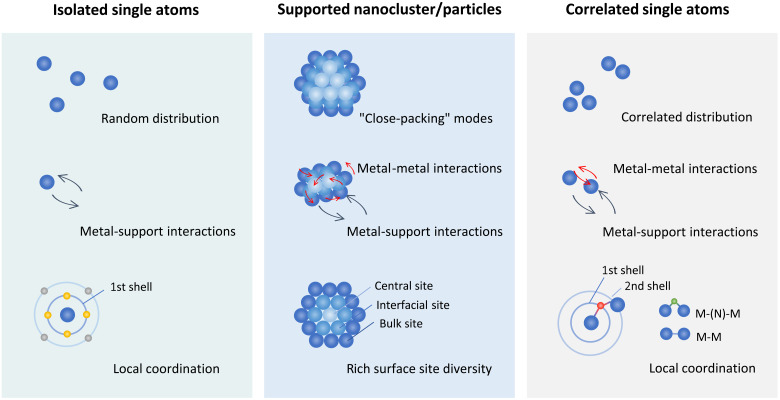
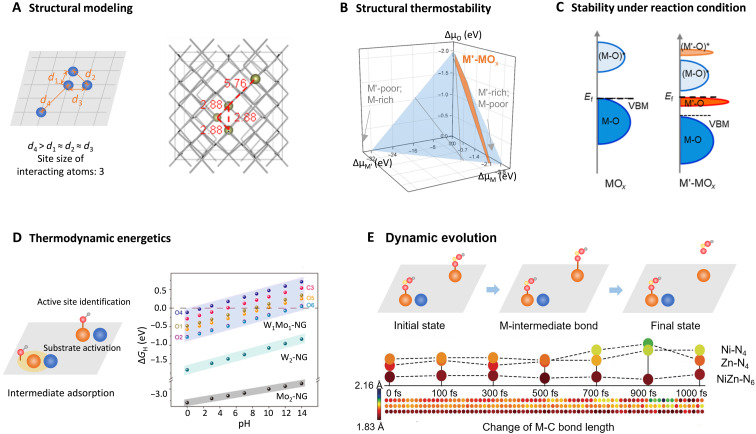
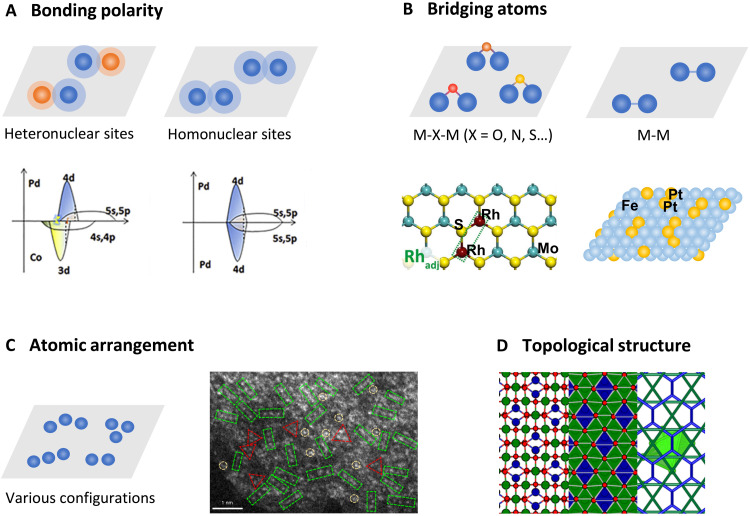
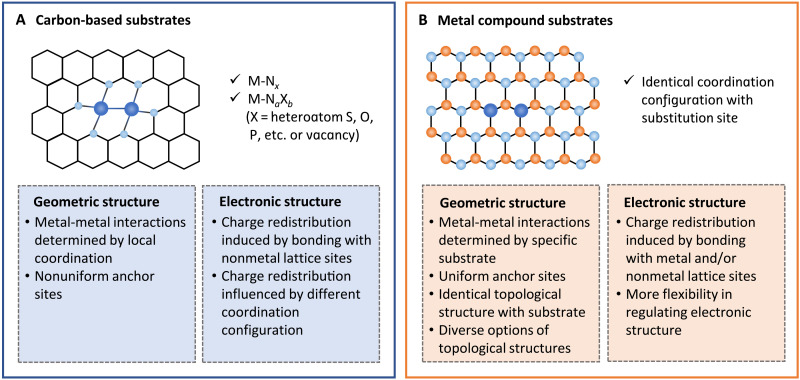
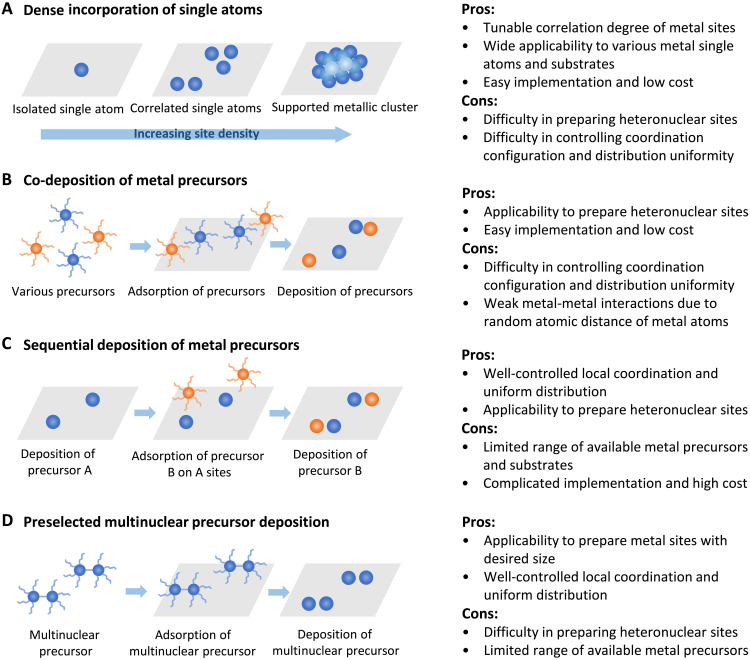
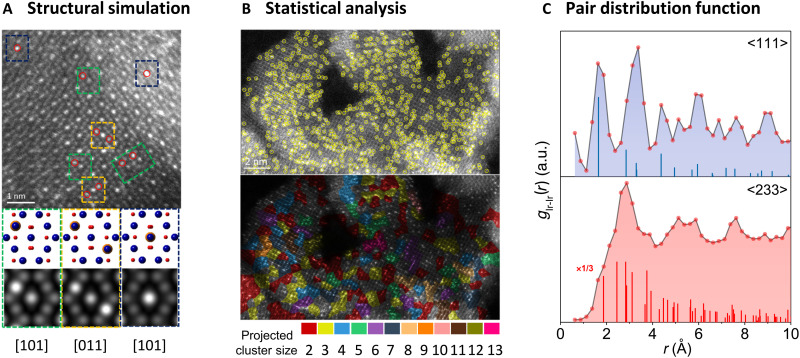
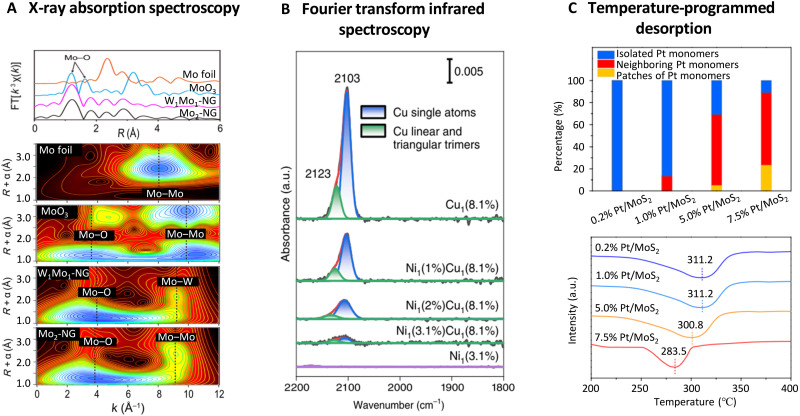
Single-atom catalysts (SACs) include a promising family of electrocatalysts with unique geometric structures. Beyond conventional ones with fully isolated metal sites, an emerging class of catalysts with the adjacent metal single atoms exhibiting intersite metal-metal interactions appear in recent years and can be denoted as correlated SACs (C-SACs). This type of catalysts provides more opportunities to achieve substantial structural modification and performance enhancement toward a wider range of electrocatalytic applications. On the basis of a clear identification of metal-metal interactions, this review critically examines the recent research progress in C-SACs. It shows that the control of metal-metal interactions enables regulation of atomic structure, local coordination, and electronic properties of metal single atoms, which facilitate the modulation of electrocatalytic behavior of C-SACs. Last, we outline directions for future work in the design and development of C-SACs, which is indispensable for creating high-performing new SAC architectures.
单原子催化剂(SACs)是一类具有独特几何结构的、很有前景的电催化剂。除了具有完全孤立金属位点的传统单原子催化剂外,近年来出现了一类相邻金属单原子之间存在位点间金属-金属相互作用的新型催化剂,可称为关联单原子催化剂(C-SACs)。这类催化剂为在更广泛的电催化应用中实现实质性的结构改性和性能提升提供了更多机会。基于对金属-金属相互作用的明确识别,本综述批判性地审视了C-SACs的最新研究进展。结果表明,对金属-金属相互作用的控制能够调节金属单原子的原子结构、局部配位和电子性质,从而有助于调控C-SACs的电催化行为。最后,我们概述了C-SACs设计和开发未来工作的方向,这对于创建高性能的新型SAC结构至关重要。