Gruendner Julian, Deppenwiese Noemi, Folz Michael, Köhler Thomas, Kroll Björn, Prokosch Hans-Ulrich, Rosenau Lorenz, Rühle Mathias, Scheidl Marc-Anton, Schüttler Christina, Sedlmayr Brita, Twrdik Alexander, Kiel Alexander, Majeed Raphael W
Chair of Medical Informatics, Friedrich-Alexander University Erlangen-Nürnberg, Erlangen, Germany.
Center of Medical Information and Communication Technology, University Hospital Erlangen, Erlangen, Germany.
JMIR Med Inform. 2022 May 25;10(5):e36709. doi: 10.2196/36709.
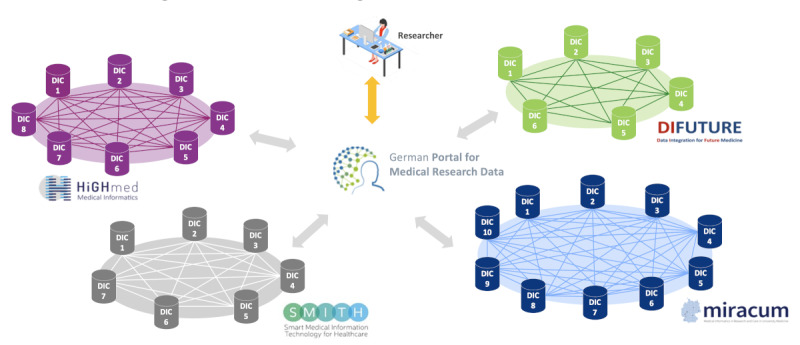
An essential step in any medical research project after identifying the research question is to determine if there are sufficient patients available for a study and where to find them. Pursuing digital feasibility queries on available patient data registries has proven to be an excellent way of reusing existing real-world data sources. To support multicentric research, these feasibility queries should be designed and implemented to run across multiple sites and securely access local data. Working across hospitals usually involves working with different data formats and vocabularies. Recently, the Fast Healthcare Interoperability Resources (FHIR) standard was developed by Health Level Seven to address this concern and describe patient data in a standardized format. The Medical Informatics Initiative in Germany has committed to this standard and created data integration centers, which convert existing data into the FHIR format at each hospital. This partially solves the interoperability problem; however, a distributed feasibility query platform for the FHIR standard is still missing.
This study described the design and implementation of the components involved in creating a cross-hospital feasibility query platform for researchers based on FHIR resources. This effort was part of a large COVID-19 data exchange platform and was designed to be scalable for a broad range of patient data.
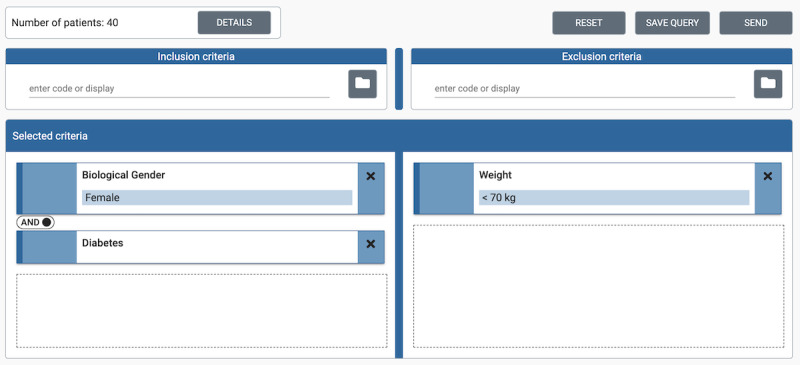
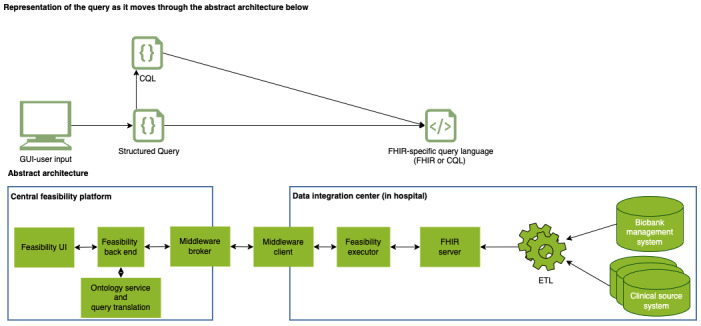
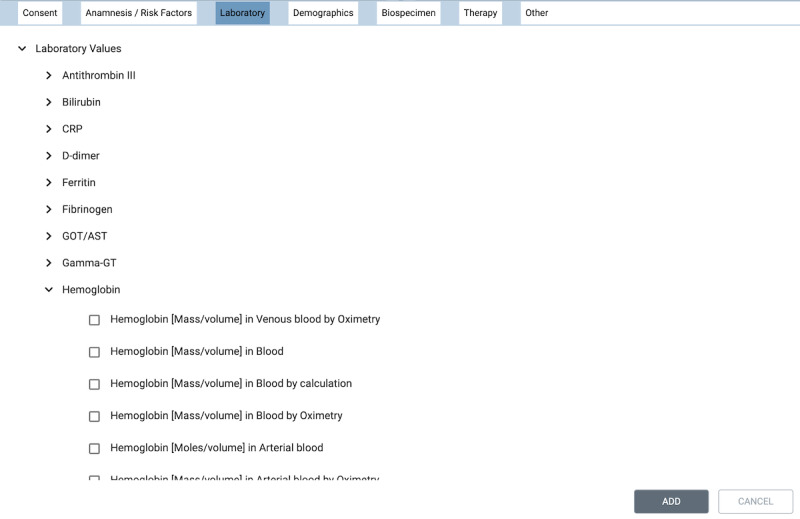
We analyzed and designed the abstract components necessary for a distributed feasibility query. This included a user interface for creating the query, backend with an ontology and terminology service, middleware for query distribution, and FHIR feasibility query execution service.
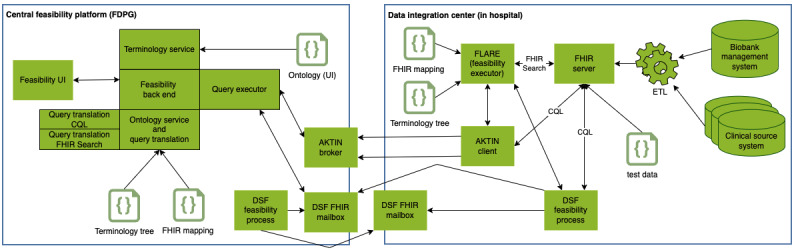
We implemented the components described in the Methods section. The resulting solution was distributed to 33 German university hospitals. The functionality of the comprehensive network infrastructure was demonstrated using a test data set based on the German Corona Consensus Data Set. A performance test using specifically created synthetic data revealed the applicability of our solution to data sets containing millions of FHIR resources. The solution can be easily deployed across hospitals and supports feasibility queries, combining multiple inclusion and exclusion criteria using standard Health Level Seven query languages such as Clinical Quality Language and FHIR Search. Developing a platform based on multiple microservices allowed us to create an extendable platform and support multiple Health Level Seven query languages and middleware components to allow integration with future directions of the Medical Informatics Initiative.
We designed and implemented a feasibility platform for distributed feasibility queries, which works directly on FHIR-formatted data and distributed it across 33 university hospitals in Germany. We showed that developing a feasibility platform directly on the FHIR standard is feasible.
在任何医学研究项目中,确定研究问题后的一个关键步骤是确定是否有足够的患者可用于研究以及从何处找到他们。对现有患者数据登记处进行数字可行性查询已被证明是重用现有真实世界数据源的绝佳方式。为支持多中心研究,这些可行性查询应设计并实现为可跨多个站点运行并安全访问本地数据。跨医院开展工作通常涉及处理不同的数据格式和词汇。最近,健康级别七(Health Level Seven)制定了快速医疗保健互操作性资源(Fast Healthcare Interoperability Resources,FHIR)标准来解决这一问题,并以标准化格式描述患者数据。德国的医学信息学倡议已致力于采用该标准并创建了数据集成中心,在每家医院将现有数据转换为FHIR格式。这部分解决了互操作性问题;然而,仍缺少针对FHIR标准的分布式可行性查询平台。
本研究描述了基于FHIR资源为研究人员创建跨医院可行性查询平台所涉及组件的设计与实现。这项工作是大型COVID-19数据交换平台的一部分,旨在可扩展以处理广泛的患者数据。
我们分析并设计了分布式可行性查询所需的抽象组件。这包括用于创建查询的用户界面、带有本体和术语服务的后端、用于查询分发的中间件以及FHIR可行性查询执行服务。
我们实现了方法部分中描述的组件。所得解决方案已分发给33家德国大学医院。使用基于德国新冠共识数据集的测试数据集展示了综合网络基础设施的功能。使用专门创建的合成数据进行的性能测试表明我们的解决方案适用于包含数百万条FHIR资源的数据集。该解决方案可轻松部署到各医院,并支持可行性查询,可使用诸如临床质量语言(Clinical Quality Language)和FHIR搜索等标准健康级别七查询语言组合多个纳入和排除标准。基于多个微服务开发平台使我们能够创建一个可扩展平台,并支持多种健康级别七查询语言和中间件组件,以便与医学信息学倡议的未来发展方向集成。
我们设计并实现了一个用于分布式可行性查询的可行性平台,该平台直接处理FHIR格式的数据并将其分发给德国的33家大学医院。我们证明了直接基于FHIR标准开发可行性平台是可行的。