Abdelkhalek Amr, El-Latif Mona Abd, Ibrahim Hesham, Hamad Hesham, Showman Marwa
Department of Environmental Studies, Institute of Graduate Studies and Research (IGSR), Alexandria University, P.O. Box 832, Alexandria, Egypt.
Fabrication Technology Research Department, Advanced Technology and New Materials Research Institute (ATNMRI), City of Scientific Research and Technological Applications (SRTA-City), New Borg El-Arab City, Alexandria, 21934, Egypt.
Sci Rep. 2022 Apr 29;12(1):7060. doi: 10.1038/s41598-022-10602-4.
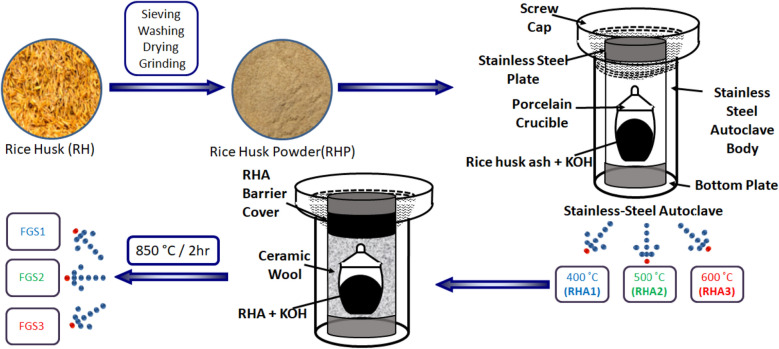
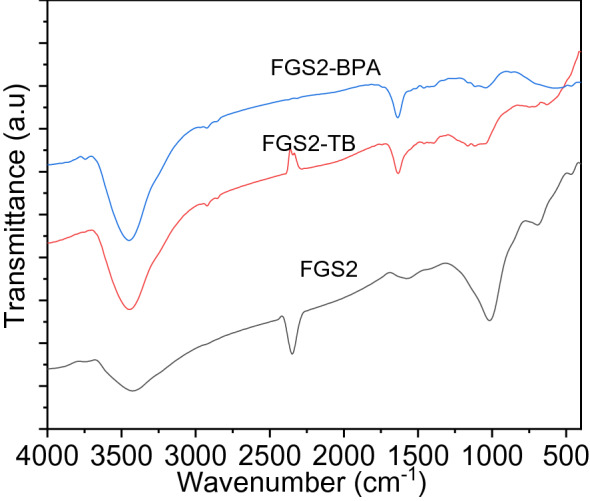
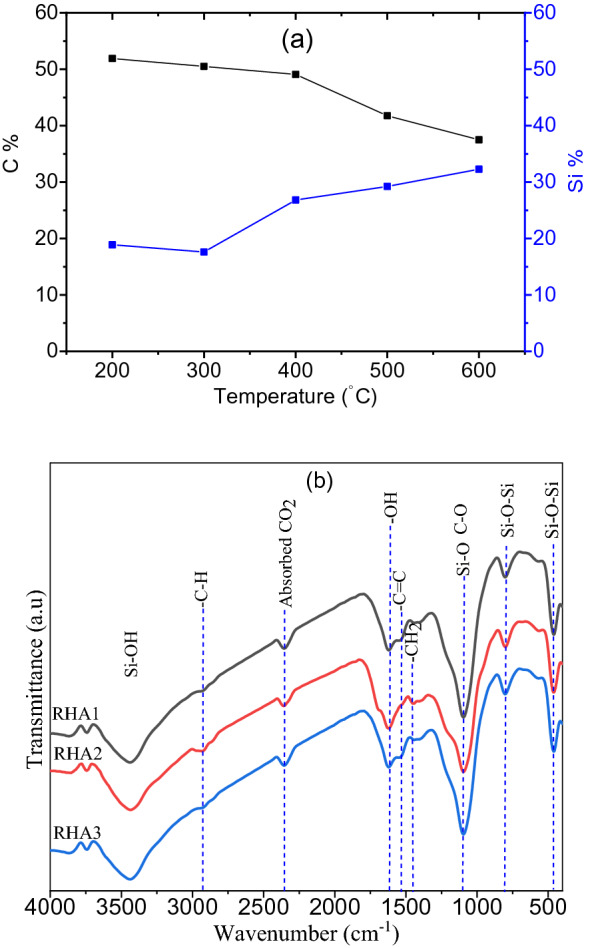
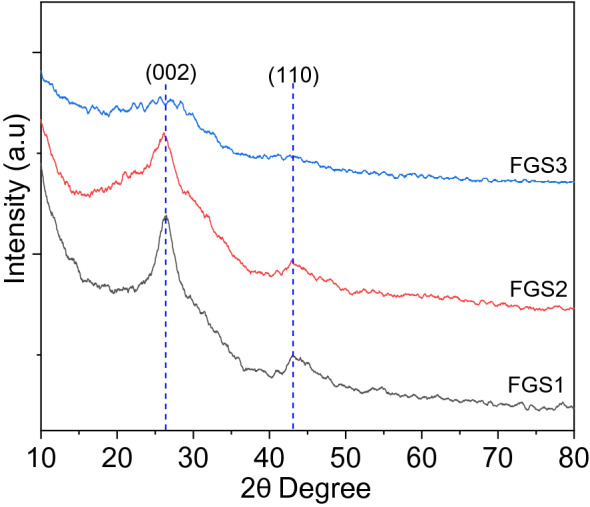
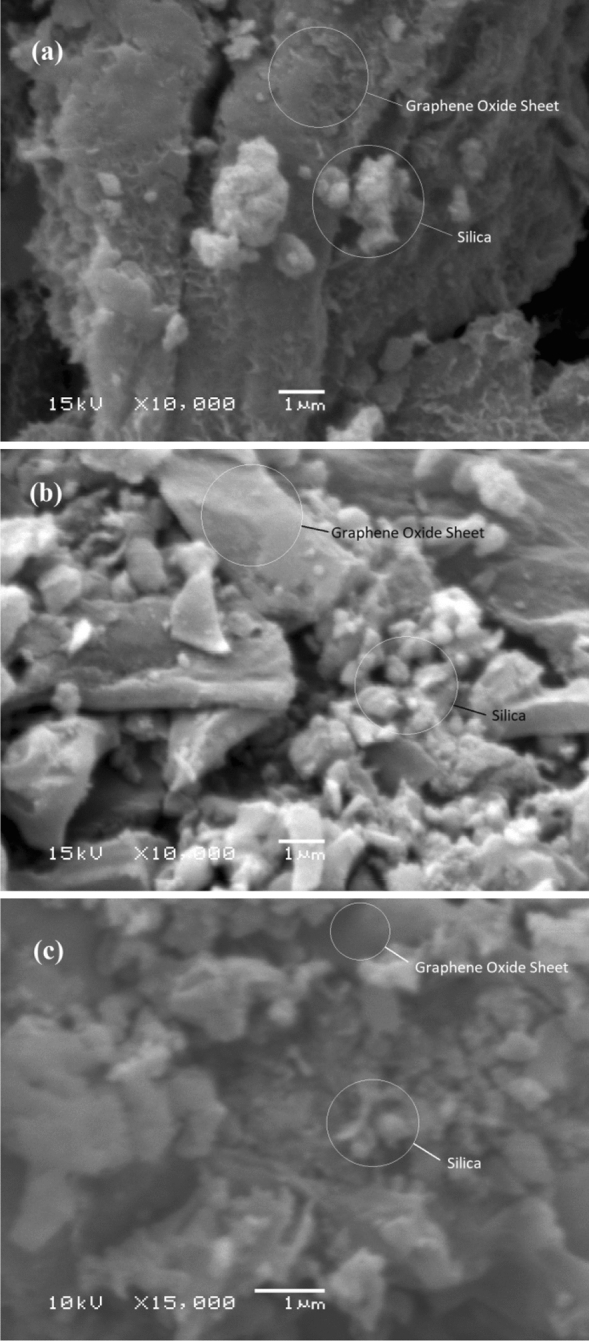
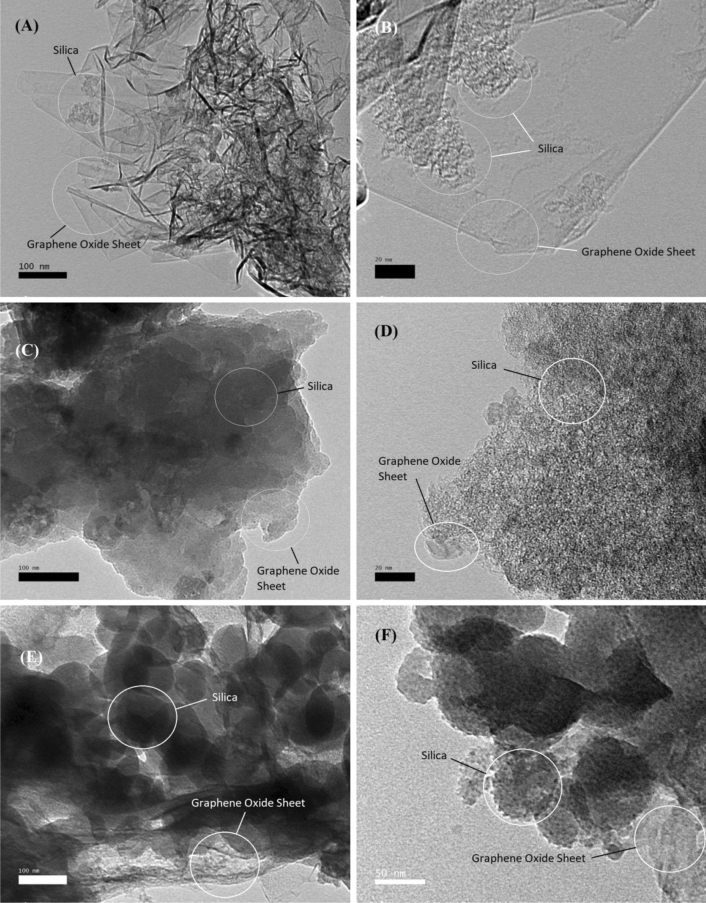
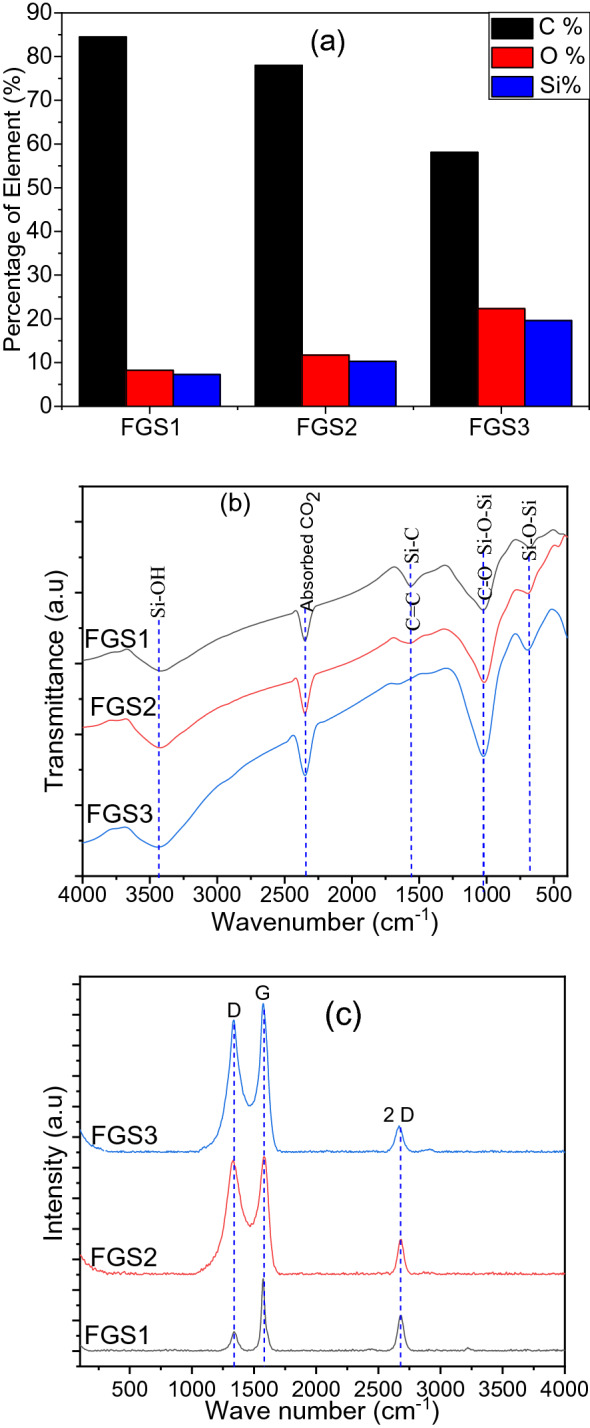
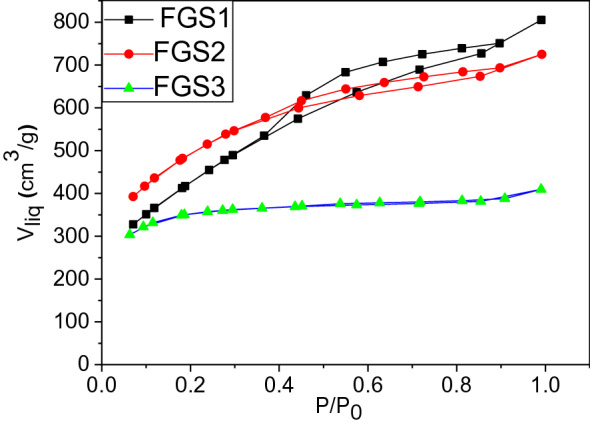
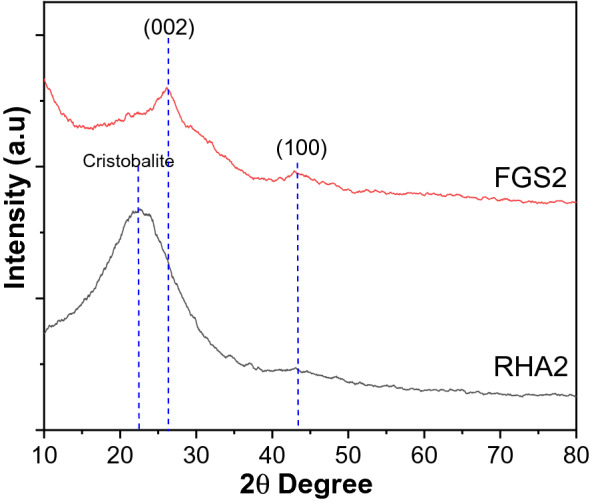
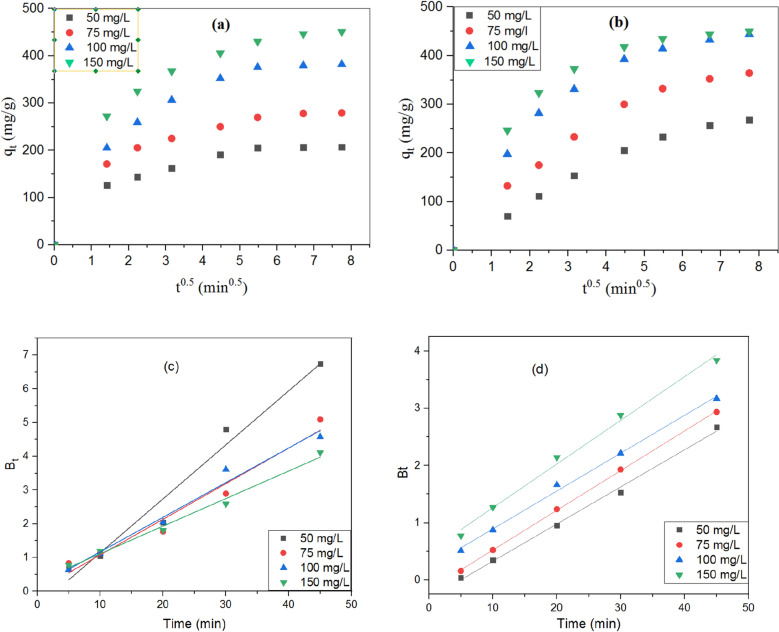
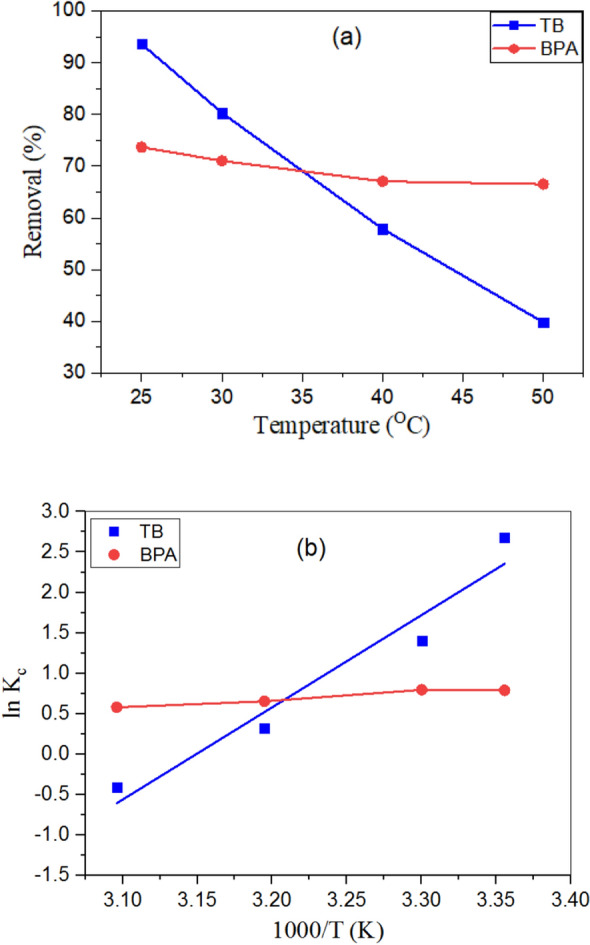
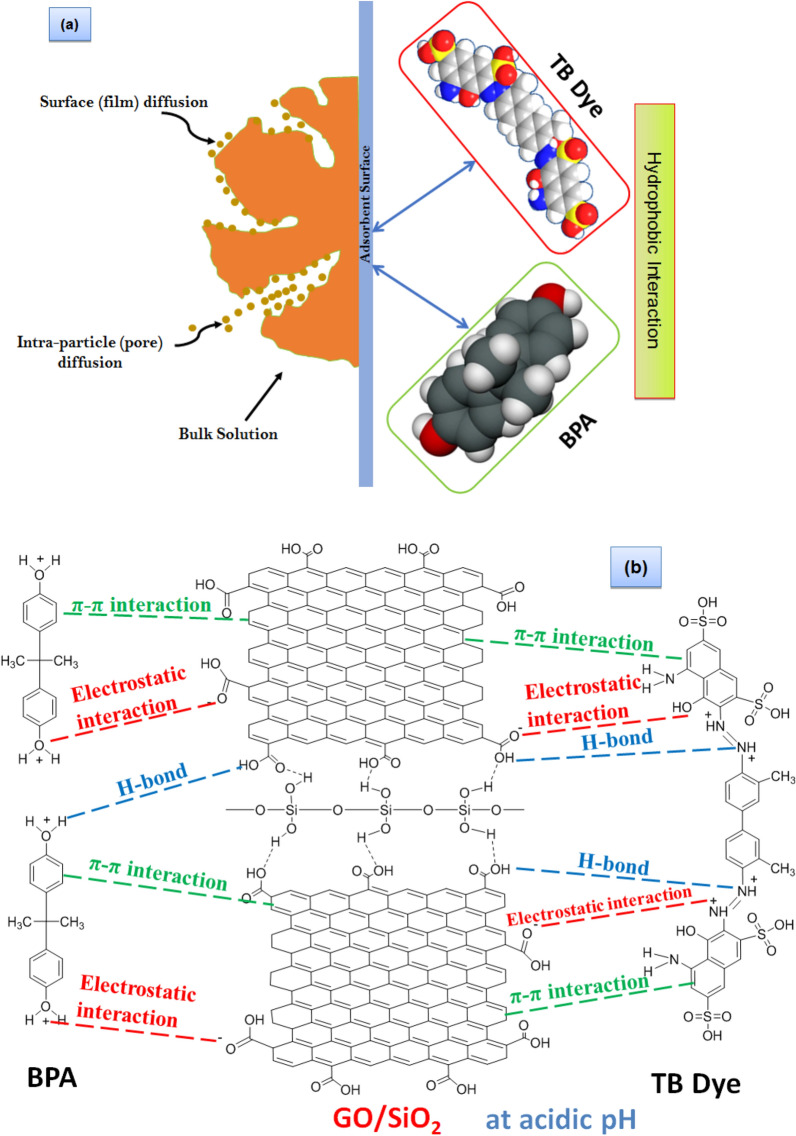
The remarkable characteristics of graphene make it a model candidate for boosting the effectiveness of nano-adsorbents with high potential owing to its large surface area, π-π interaction, and accessible functional groups that interact with an adsorbate. However, the stacking of graphene reduces its influence adsorption characteristics and also its practical application. On the other hand, the widespread use of aromatic compounds in the industry has aggravated the contamination of the water environment, and how to effectively remove them has become a research hotspot. Herein, we develop the functionalization of silica nanoparticles on graphene oxide nanosheet (FGS) by a facile, cheap, and efficient synthesis protocol for adsorption of Trypan Blue (TB) and Bisphenol A (BPA). It was demonstrated that chemical activation with KOH at high autoclaving temperature successfully transformed rice husk ash (RHA) into FGS. The graphene oxide layered interlamination was kept open by using SiO to expose the interlayers' strong adsorption sites. XRD, EDX, FTIR, Raman spectroscopy, SEM, HR-TEM, and BET surface area are used to investigate the chemical composition, structure, morphology, and textural nature of the as-produced FGS hybrid nanocomposite. The various oxygen-containing functional groups of the hybrid nanocomposites resulted in a significantly increased adsorption capacity, according to experimental findings. In addition, FGS2, the best composite, has a specific surface area of 1768 mg. Based on Langmuir isotherms, the maximal TB dye and BPA removal capacity attained after 30 min were 455 and 500 mg/g, respectively. The Langmuir isotherm model, a pseudo-second-order kinetic model, and an intraparticle diffusion model have all been used to provide mechanistic insights into the adsorption process. This suggests that BPA and TB adsorption on FGS2 is mostly chemically regulated monolayer adsorption. Due to its unique sp-hybridized single-atom-layer structure, the exposed graphene oxide nanosheets' extremely hydrophobic effect, hydrogen bonding, and strong-electron donor-acceptor interaction contributed to their improved adsorption of BPA and TB. According to adsorption thermodynamics, FGS2 adsorption of TB and BPA is a spontaneous exothermic reaction that is aided by lowering the temperature. For adsorption-based wastewater cleanup, the produced nanocomposites with a regulated amount of carbon and silica in the form of graphene oxide and silica can be used. These findings suggest that functionalized GO/SiO hybrid nanocomposites could be a viable sorbent for the efficient and cost-effective removal of aromatic chemicals from wastewater.
石墨烯的显著特性使其成为一种极具潜力的纳米吸附剂增效的理想候选材料,这归因于其大表面积、π-π相互作用以及可与吸附质相互作用的可及官能团。然而,石墨烯的堆叠降低了其吸附特性及其实际应用价值。另一方面,芳香族化合物在工业中的广泛使用加剧了水环境的污染,如何有效去除它们已成为研究热点。在此,我们通过一种简便、廉价且高效的合成方案开发了氧化石墨烯纳米片上的二氧化硅纳米颗粒功能化材料(FGS),用于吸附锥虫蓝(TB)和双酚A(BPA)。结果表明,在高压釜高温下用KOH进行化学活化成功地将稻壳灰(RHA)转化为FGS。通过使用SiO保持氧化石墨烯层间开放,以暴露层间的强吸附位点。利用X射线衍射(XRD)、能量散射X射线光谱(EDX)、傅里叶变换红外光谱(FTIR)、拉曼光谱、扫描电子显微镜(SEM)、高分辨透射电子显微镜(HR-TEM)和比表面积分析仪(BET)来研究所制备的FGS杂化纳米复合材料的化学成分、结构、形态和织构性质。实验结果表明,杂化纳米复合材料的各种含氧官能团导致吸附容量显著增加。此外,最佳复合材料FGS2的比表面积为1768 mg。基于朗缪尔等温线,30分钟后获得的最大TB染料和BPA去除容量分别为455和500 mg/g。朗缪尔等温线模型、准二级动力学模型和颗粒内扩散模型均被用于深入了解吸附过程的机理。这表明BPA和TB在FGS2上的吸附主要是化学调控的单层吸附。由于其独特的sp杂化单原子层结构,暴露的氧化石墨烯纳米片的极强疏水效应、氢键和强电子供体-受体相互作用有助于其对BPA和TB的吸附改善。根据吸附热力学,FGS2对TB和BPA的吸附是一个自发的放热反应,降低温度有助于该反应进行。对于基于吸附的废水净化,可以使用以氧化石墨烯和二氧化硅形式存在的具有可控碳和二氧化硅含量的所制备的纳米复合材料。这些发现表明,功能化的GO/SiO杂化纳米复合材料可能是一种可行的吸附剂,用于从废水中高效且经济地去除芳香族化学物质。