Asgari Ghorban, Seidmohammadi Abdolmotaleb, Esrafili Ali, Faradmal Javad, Noori Sepehr Mohammad, Jafarinia Maghsoud
Social Determinants of Health Research Center (SDHRC), Hamadan University of Medical Sciences Hamadan Iran.
Department of Environmental Health Engineering, School of Public Health, Hamadan University of Medical Sciences Hamadan Iran
RSC Adv. 2020 Feb 21;10(13):7718-7731. doi: 10.1039/c9ra10095d. eCollection 2020 Feb 18.
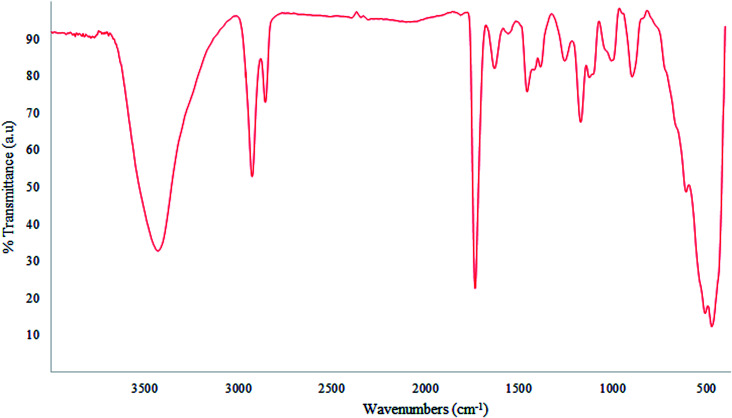
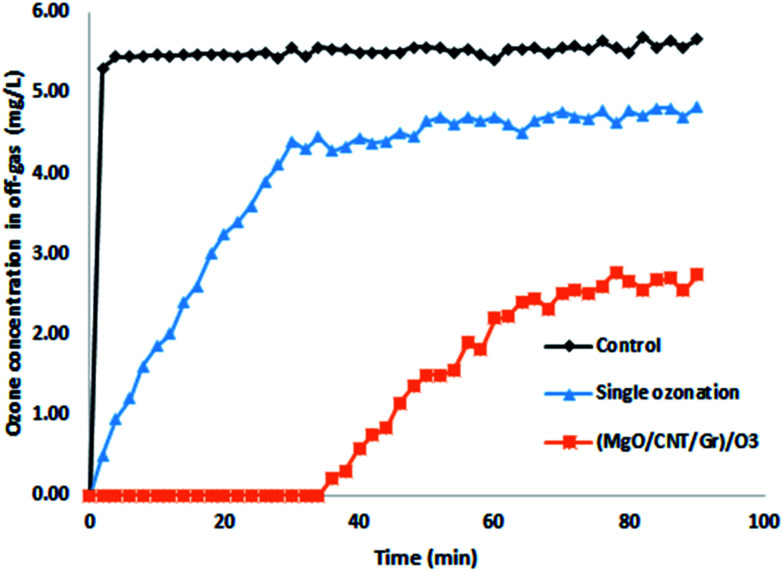
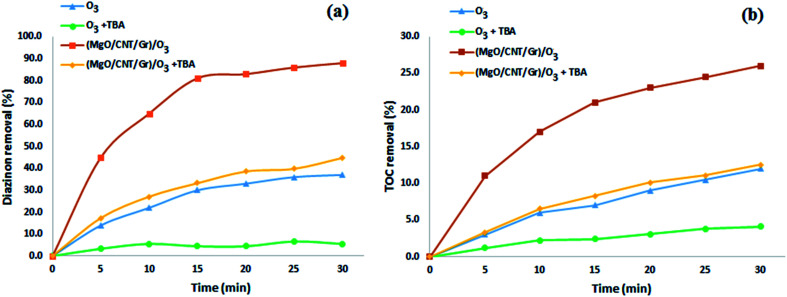
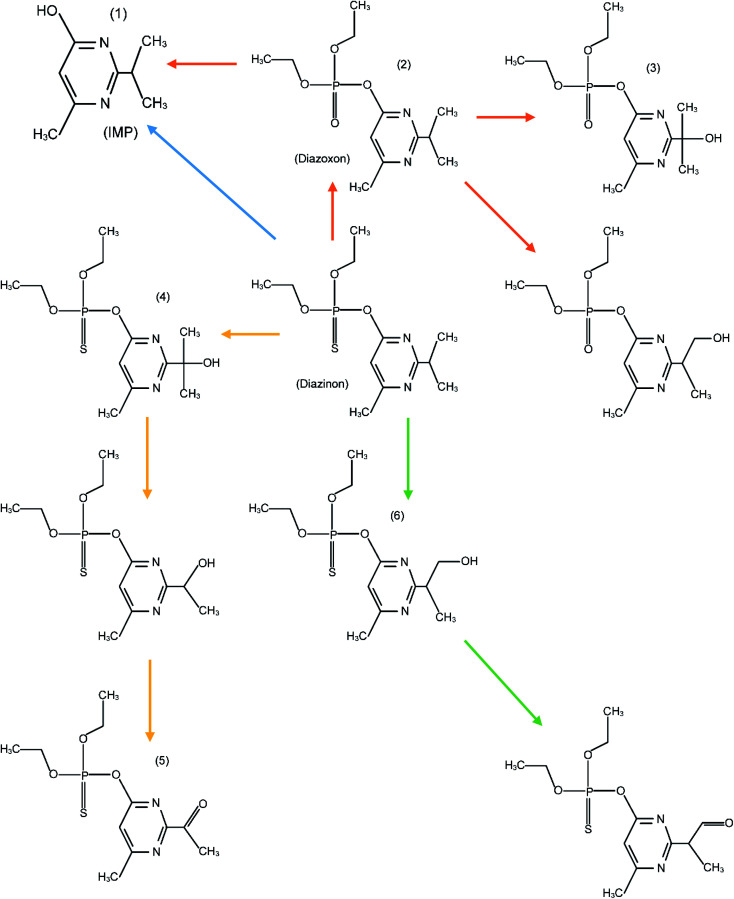
In this research, the degradation of the insecticide diazinon was studied using a new hybrid catalyst consisting of magnesium oxide nanoparticles (nano-MgO), carbon nanotubes (CNTs), and graphite (Gr), nano-MgO@CNT@Gr, under various experimental conditions. This study shows the optimization of the nano-MgO@CNT@Gr/O process for diazinon degradation in aqueous solutions. Box-Behnken experimental design (BBD) and response surface methodology (RSM) were used to assess and optimize the solo effects and interactions of four variables, pH, catalyst loading, reaction time, and initial diazinon concentration, during the nano-MgO@CNT@Gr/O process. Analysis of regression revealed an adequate fit of the experimental results with a quadratic model, with > 0.91. Following the collection of analysis of variance (ANOVA) results, pH, catalyst loading, and reaction time were seen to have significant positive effects, whereas the concentration of diazinon had a considerable negative impact on diazinon removal catalytic ozonation. The four variables for maximum diazinon removal were found to be optimum (82.43%) at the following levels: reaction time, 15 min; pH, 10; catalyst dosage, 1.5 g L; and diazinon concentration, 10 mg L. The degradation of diazinon gave six kinds of by-products. The mechanism of diazinon decomposition was considered on the basis of the identified by-products. According to these results, the nano-MgO@CNT@Gr/O process could be an applicable technique for the treatment of diazinon-containing wastewater.
在本研究中,使用一种由氧化镁纳米颗粒(纳米MgO)、碳纳米管(CNTs)和石墨(Gr)组成的新型混合催化剂纳米MgO@CNT@Gr,在各种实验条件下研究了杀虫剂二嗪农的降解情况。本研究展示了纳米MgO@CNT@Gr/O工艺在水溶液中二嗪农降解方面的优化。采用Box-Behnken实验设计(BBD)和响应面方法(RSM)来评估和优化纳米MgO@CNT@Gr/O工艺中四个变量(pH值、催化剂负载量、反应时间和二嗪农初始浓度)的单独作用及其相互作用。回归分析表明实验结果与二次模型拟合良好,相关系数大于0.91。在收集方差分析(ANOVA)结果后发现,pH值、催化剂负载量和反应时间对二嗪农去除率有显著的正向影响,而二嗪农浓度对催化臭氧化去除二嗪农有相当大的负面影响。发现二嗪农去除率最高时四个变量的最佳水平如下:反应时间15分钟;pH值10;催化剂用量1.5 g/L;二嗪农浓度10 mg/L。二嗪农降解产生了六种副产物。基于所鉴定的副产物对二嗪农分解机理进行了探讨。根据这些结果,纳米MgO@CNT@Gr/O工艺可能是一种适用于处理含二嗪农废水的技术。