• 文献检索
  • 文档翻译
  • 深度研究
  • 学术资讯
  • Suppr Zotero 插件Zotero 插件
  • 邀请有礼
  • 套餐&价格
  • 历史记录
应用&插件
Suppr Zotero 插件Zotero 插件浏览器插件Mac 客户端Windows 客户端微信小程序
定价
高级版会员购买积分包购买API积分包
服务
文献检索文档翻译深度研究API 文档MCP 服务
关于我们
关于 Suppr公司介绍联系我们用户协议隐私条款
关注我们

Suppr 超能文献

核心技术专利:CN118964589B侵权必究
粤ICP备2023148730 号-1Suppr @ 2026

文献检索

告别复杂PubMed语法,用中文像聊天一样搜索,搜遍4000万医学文献。AI智能推荐,让科研检索更轻松。

立即免费搜索

文件翻译

保留排版,准确专业,支持PDF/Word/PPT等文件格式,支持 12+语言互译。

免费翻译文档

深度研究

AI帮你快速写综述,25分钟生成高质量综述,智能提取关键信息,辅助科研写作。

立即免费体验

TiO2 包覆的 PET 光催化剂在可见光下对合成废水和实际废水中活性黑 5 的光催化降解

Photocatalytic degradation of reactive black 5 from synthetic and real wastewater under visible light with TiO coated PET photocatalysts.

作者信息

Mohammadi-Galangash Mohsen, Mousavi Seyedeh-Khadijeh, Shirzad-Siboni Mehdi

机构信息

Department of Environmental Sciences and Engineering, Faculty of Natural Resources, University of Guilan, Sowmeh Sara, Guilan,, Iran.

Research Center of Health and Environment, Guilan University of Medical Sciences, Rasht, Iran.

出版信息

Sci Rep. 2025 Apr 24;15(1):14314. doi: 10.1038/s41598-025-95091-x.

DOI:10.1038/s41598-025-95091-x
PMID:40274880
原文链接:https://pmc.ncbi.nlm.nih.gov/articles/PMC12022298/
Abstract

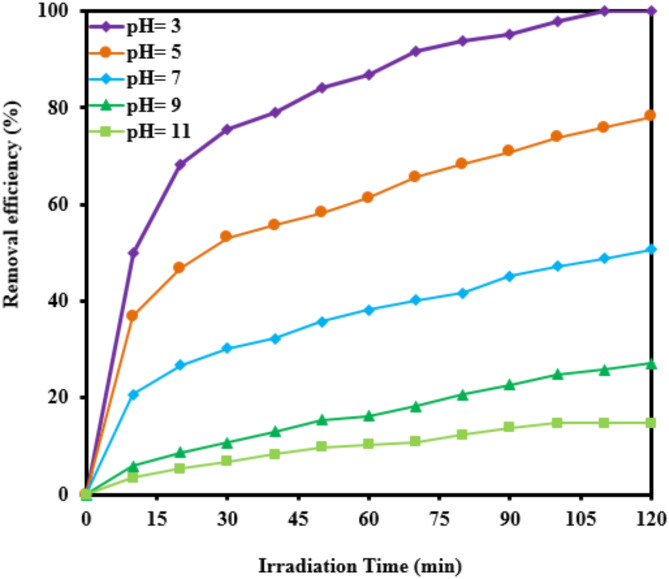
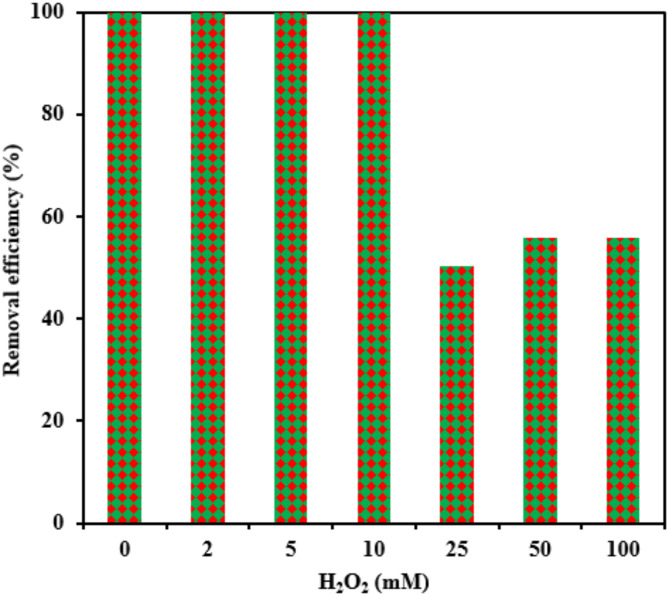
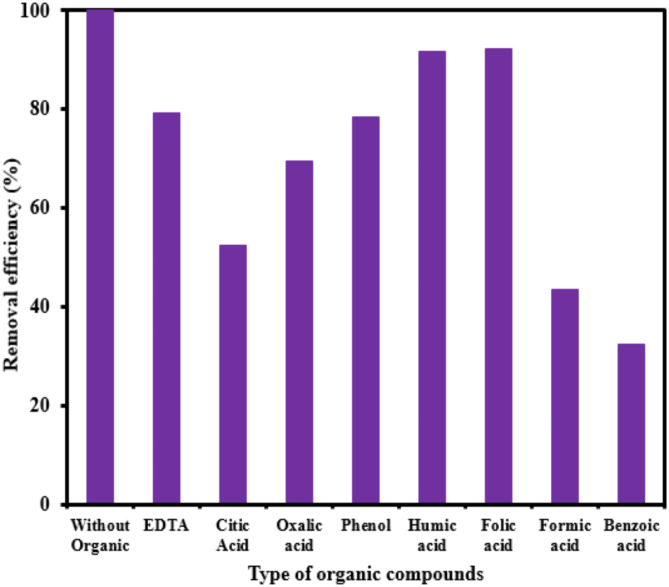
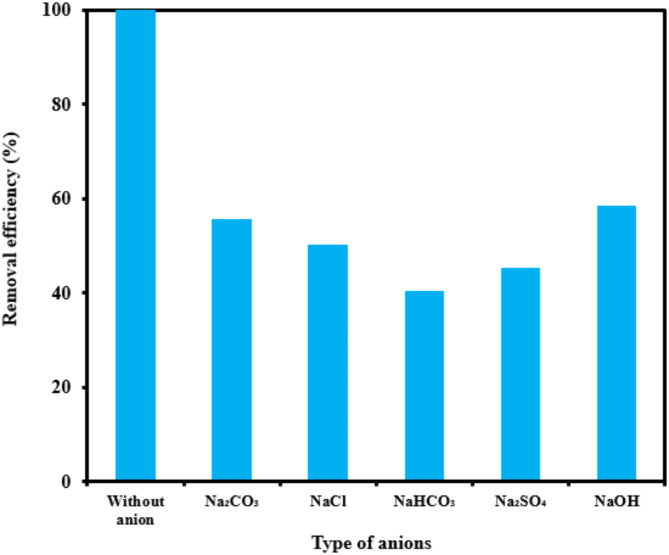
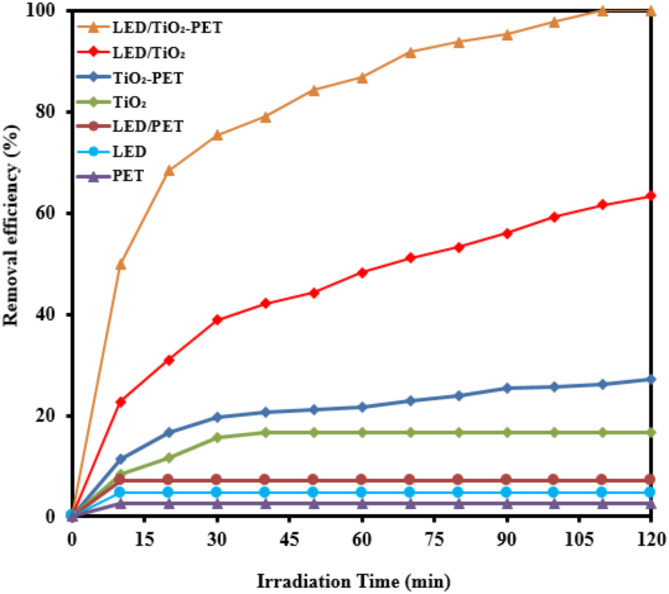
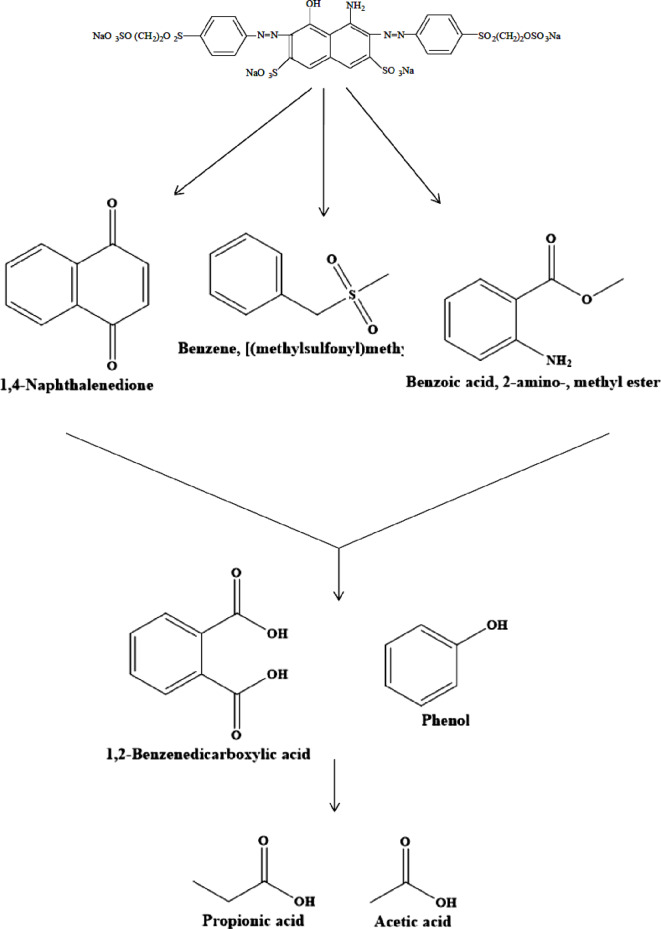
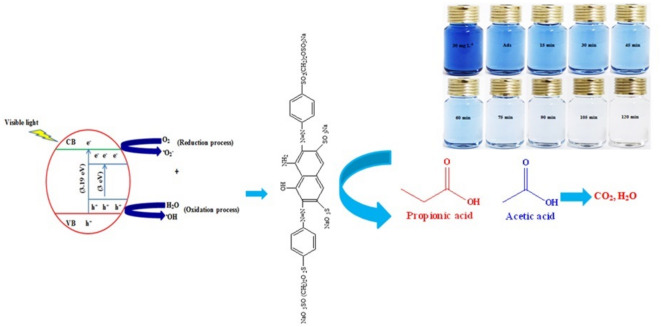
The photocatalytic removal of Reactive Black 5 (RB5) was investigated using a titanium dioxide-polyethylene terephthalate (TiO-PET) catalyst under visible (VIS) light. The sol-gel method was employed for the fabrication of the TiO-coated PET catalyst, which was then characterized using X-ray diffraction (XRD), Fourier transform infrared spectroscopy (FT-IR), scanning electron microscopy (SEM), energy-dispersive X-ray spectroscopy (EDX), and elemental mapping (MAP) analysis. This study examined the reaction kinetics using the one-factor-at-a-time (OFAT) approach and evaluates the effects of various parameters, including pH (3-11), catalyst dosage (0.1-1 g L), contact time (15-120 min), RB5 concentration (10-50 mg L), hydrogen peroxide (HO) content (2-100 mM), purging gases, organic compound types, and ionic strength, on the photocatalytic removal of RB5. Under optimal conditions (pH= 3, [RB5]= 20 mg L, nanocatalyst dosage= 0.5 g L), 99.99% of the dye was removed after 120 min. Increasing the RB5 concentration (10-50 mg L) resulted in a decrease in the observed reaction rate constant (k) from 0.052 to 0.0017 min, while the calculated electrical energy per order (EEO) increased from 11.08 to 338.82 kWh m. Furthermore, the total operating cost of the light emitting diode (LED)/TiO-PET process (3 USD kg) was lower than that of other photocatalytic processes, including LED/TiO (4.73 USD kg), LED/PET (40 USD kg), and LED (63.16 USD kg). The removal of RB5 was negatively affected by the presence of HO, O and N gases, organic compounds, and ionic species. Radical quenching experiments confirmed that hydroxyl radicals (OH) were the dominant reactive species responsible for RB5 degradation. The RB5 removal efficiency using the LED/TiO-PET method (99.99%) was significantly higher than that of the LED/TiO method (63.42%). Desorption experiments demonstrated excellent catalyst stability, maintaining catalytic activity for up to five sequential cycles. GC-MS analysis identified several intermediate degradation products, including 1,2-benzenedicarboxylic acid, benzoic acid (2-amino-, methyl ester), benzene [(methylsulfonyl) methyl], phenol, 4-naphthalenedione, acetic acid, and propionic acid. Moreover, the removal efficiency in drinking water samples was approximately 63.31%, whereas for real textile wastewater samples, it reached 96.66%. Toxicity tests conducted on the final treated solutions confirmed no toxicity toward Daphnia magna, demonstrating the effectiveness of the LED/TiO-PET method in degrading both RB5 dye and its toxic by-products.

摘要

采用二氧化钛-聚对苯二甲酸乙二酯(TiO-PET)催化剂在可见光(VIS)下研究了活性黑5(RB5)的光催化去除。采用溶胶-凝胶法制备TiO包覆的PET催化剂,然后用X射线衍射(XRD)、傅里叶变换红外光谱(FT-IR)、扫描电子显微镜(SEM)、能量色散X射线光谱(EDX)和元素映射(MAP)分析对其进行表征。本研究采用一次单因素(OFAT)方法研究反应动力学,并评估了各种参数对RB5光催化去除的影响,这些参数包括pH值(3-11)、催化剂用量(0.1-1 g/L)、接触时间(15-120分钟)、RB5浓度(10-50 mg/L)、过氧化氢(H₂O₂)含量(2-100 mM)、吹扫气体、有机化合物类型和离子强度。在最佳条件下(pH = 3,[RB5] = 20 mg/L,纳米催化剂用量 = 0.5 g/L),120分钟后99.99%的染料被去除。RB5浓度从10 mg/L增加到50 mg/L导致观察到的反应速率常数(k)从0.052降至0.0017 min⁻¹,而计算得出的每级电能(EEO)从11.08增加到338.82 kWh/m³。此外,发光二极管(LED)/TiO-PET工艺的总运行成本(3美元/kg)低于其他光催化工艺,包括LED/TiO(4.73美元/kg)、LED/PET(40美元/kg)和LED(63.16美元/kg)。H₂O₂、O₂和N₂气体、有机化合物和离子物种的存在对RB5的去除产生负面影响。自由基猝灭实验证实羟基自由基(·OH)是负责RB5降解的主要活性物种。LED/TiO-PET法对RB5的去除效率(99.99%)显著高于LED/TiO法(63.42%)。解吸实验表明催化剂具有优异的稳定性,在连续五个循环中均保持催化活性。气相色谱-质谱(GC-MS)分析确定了几种中间降解产物,包括1,2-苯二甲酸、苯甲酸(2-氨基-,甲酯)、苯[(甲基磺酰基)甲基]、苯酚、4-萘二酮、乙酸和丙酸。此外,饮用水样品中的去除效率约为63.31%,而对于实际纺织废水样品,去除效率达到96.66%。对最终处理溶液进行的毒性测试证实对大型溞无毒性,证明了LED/TiO-PET法在降解RB5染料及其有毒副产物方面的有效性。

https://cdn.ncbi.nlm.nih.gov/pmc/blobs/17b4/12022298/705cd40b1b84/41598_2025_95091_Fig19_HTML.jpg
https://cdn.ncbi.nlm.nih.gov/pmc/blobs/17b4/12022298/94017906105a/41598_2025_95091_Fig1_HTML.jpg
https://cdn.ncbi.nlm.nih.gov/pmc/blobs/17b4/12022298/5a5f5c903b7b/41598_2025_95091_Fig2_HTML.jpg
https://cdn.ncbi.nlm.nih.gov/pmc/blobs/17b4/12022298/56189414f60b/41598_2025_95091_Fig3_HTML.jpg
https://cdn.ncbi.nlm.nih.gov/pmc/blobs/17b4/12022298/66f26e7c05bd/41598_2025_95091_Fig4_HTML.jpg
https://cdn.ncbi.nlm.nih.gov/pmc/blobs/17b4/12022298/0bd4ffa1925c/41598_2025_95091_Fig5_HTML.jpg
https://cdn.ncbi.nlm.nih.gov/pmc/blobs/17b4/12022298/b29c52d849fc/41598_2025_95091_Fig6_HTML.jpg
https://cdn.ncbi.nlm.nih.gov/pmc/blobs/17b4/12022298/3f321207327e/41598_2025_95091_Fig7_HTML.jpg
https://cdn.ncbi.nlm.nih.gov/pmc/blobs/17b4/12022298/6d670e7d1cf2/41598_2025_95091_Fig8_HTML.jpg
https://cdn.ncbi.nlm.nih.gov/pmc/blobs/17b4/12022298/1d947f356367/41598_2025_95091_Fig9_HTML.jpg
https://cdn.ncbi.nlm.nih.gov/pmc/blobs/17b4/12022298/dac47b30c0bc/41598_2025_95091_Fig10_HTML.jpg
https://cdn.ncbi.nlm.nih.gov/pmc/blobs/17b4/12022298/456de7d46bb2/41598_2025_95091_Fig11_HTML.jpg
https://cdn.ncbi.nlm.nih.gov/pmc/blobs/17b4/12022298/eab596ef0d5f/41598_2025_95091_Fig12_HTML.jpg
https://cdn.ncbi.nlm.nih.gov/pmc/blobs/17b4/12022298/67385e61e967/41598_2025_95091_Fig13_HTML.jpg
https://cdn.ncbi.nlm.nih.gov/pmc/blobs/17b4/12022298/ff65113fe951/41598_2025_95091_Fig14_HTML.jpg
https://cdn.ncbi.nlm.nih.gov/pmc/blobs/17b4/12022298/31f351187cc8/41598_2025_95091_Fig15_HTML.jpg
https://cdn.ncbi.nlm.nih.gov/pmc/blobs/17b4/12022298/499e15ae1ce3/41598_2025_95091_Fig16_HTML.jpg
https://cdn.ncbi.nlm.nih.gov/pmc/blobs/17b4/12022298/915ec7de7560/41598_2025_95091_Fig17_HTML.jpg
https://cdn.ncbi.nlm.nih.gov/pmc/blobs/17b4/12022298/f1786e312b4e/41598_2025_95091_Fig18_HTML.jpg
https://cdn.ncbi.nlm.nih.gov/pmc/blobs/17b4/12022298/705cd40b1b84/41598_2025_95091_Fig19_HTML.jpg
https://cdn.ncbi.nlm.nih.gov/pmc/blobs/17b4/12022298/94017906105a/41598_2025_95091_Fig1_HTML.jpg
https://cdn.ncbi.nlm.nih.gov/pmc/blobs/17b4/12022298/5a5f5c903b7b/41598_2025_95091_Fig2_HTML.jpg
https://cdn.ncbi.nlm.nih.gov/pmc/blobs/17b4/12022298/56189414f60b/41598_2025_95091_Fig3_HTML.jpg
https://cdn.ncbi.nlm.nih.gov/pmc/blobs/17b4/12022298/66f26e7c05bd/41598_2025_95091_Fig4_HTML.jpg
https://cdn.ncbi.nlm.nih.gov/pmc/blobs/17b4/12022298/0bd4ffa1925c/41598_2025_95091_Fig5_HTML.jpg
https://cdn.ncbi.nlm.nih.gov/pmc/blobs/17b4/12022298/b29c52d849fc/41598_2025_95091_Fig6_HTML.jpg
https://cdn.ncbi.nlm.nih.gov/pmc/blobs/17b4/12022298/3f321207327e/41598_2025_95091_Fig7_HTML.jpg
https://cdn.ncbi.nlm.nih.gov/pmc/blobs/17b4/12022298/6d670e7d1cf2/41598_2025_95091_Fig8_HTML.jpg
https://cdn.ncbi.nlm.nih.gov/pmc/blobs/17b4/12022298/1d947f356367/41598_2025_95091_Fig9_HTML.jpg
https://cdn.ncbi.nlm.nih.gov/pmc/blobs/17b4/12022298/dac47b30c0bc/41598_2025_95091_Fig10_HTML.jpg
https://cdn.ncbi.nlm.nih.gov/pmc/blobs/17b4/12022298/456de7d46bb2/41598_2025_95091_Fig11_HTML.jpg
https://cdn.ncbi.nlm.nih.gov/pmc/blobs/17b4/12022298/eab596ef0d5f/41598_2025_95091_Fig12_HTML.jpg
https://cdn.ncbi.nlm.nih.gov/pmc/blobs/17b4/12022298/67385e61e967/41598_2025_95091_Fig13_HTML.jpg
https://cdn.ncbi.nlm.nih.gov/pmc/blobs/17b4/12022298/ff65113fe951/41598_2025_95091_Fig14_HTML.jpg
https://cdn.ncbi.nlm.nih.gov/pmc/blobs/17b4/12022298/31f351187cc8/41598_2025_95091_Fig15_HTML.jpg
https://cdn.ncbi.nlm.nih.gov/pmc/blobs/17b4/12022298/499e15ae1ce3/41598_2025_95091_Fig16_HTML.jpg
https://cdn.ncbi.nlm.nih.gov/pmc/blobs/17b4/12022298/915ec7de7560/41598_2025_95091_Fig17_HTML.jpg
https://cdn.ncbi.nlm.nih.gov/pmc/blobs/17b4/12022298/f1786e312b4e/41598_2025_95091_Fig18_HTML.jpg
https://cdn.ncbi.nlm.nih.gov/pmc/blobs/17b4/12022298/705cd40b1b84/41598_2025_95091_Fig19_HTML.jpg

相似文献

1
Photocatalytic degradation of reactive black 5 from synthetic and real wastewater under visible light with TiO coated PET photocatalysts.TiO2 包覆的 PET 光催化剂在可见光下对合成废水和实际废水中活性黑 5 的光催化降解
Sci Rep. 2025 Apr 24;15(1):14314. doi: 10.1038/s41598-025-95091-x.
2
Synthesis of ZnO immobilized on recycled polyethylene terephtalate for sonocatalytic removal of Cr(VI) from synthetic, drinking waters and electroplating wastewater.负载于回收聚对苯二甲酸乙二酯上的氧化锌用于声催化去除合成水、饮用水及电镀废水中六价铬的合成
J Environ Manage. 2022 Dec 15;324:116395. doi: 10.1016/j.jenvman.2022.116395. Epub 2022 Oct 6.
3
Efficient photocatalytic degradation of organic pollutants by magnetically recoverable nitrogen-doped TiO2 nanocomposite photocatalysts under visible light irradiation.磁性可回收的氮掺杂TiO₂纳米复合光催化剂在可见光照射下对有机污染物的高效光催化降解
Environ Sci Pollut Res Int. 2015 Dec;22(23):18859-73. doi: 10.1007/s11356-015-5032-3. Epub 2015 Jul 24.
4
Synthesis and Characterization of Fe-TiO Nanomaterial: Performance Evaluation for RB5 Decolorization and In Vitro Antibacterial Studies.铁掺杂二氧化钛纳米材料的合成与表征:对活性艳红5脱色性能评估及体外抗菌研究
Nanomaterials (Basel). 2021 Feb 9;11(2):436. doi: 10.3390/nano11020436.
5
A novel route to the synthesis of α-Fe2O3@C@SiO2/TiO2 nanocomposite from the metal-organic framework as a photocatalyst for water treatment.一种新颖的合成方法:由金属有机骨架制备α-Fe2O3@C@SiO2/TiO2 纳米复合材料,作为用于水处理的光催化剂。
Chemosphere. 2022 Jun;297:133992. doi: 10.1016/j.chemosphere.2022.133992. Epub 2022 Mar 2.
6
Photocatalytic removal of bentazon by copper doped zinc oxide nanorods: Reaction pathways and toxicity studies.铜掺杂氧化锌纳米棒光催化去除苯达松:反应途径和毒性研究。
J Environ Manage. 2021 Sep 15;294:112962. doi: 10.1016/j.jenvman.2021.112962. Epub 2021 Jun 5.
7
Photocatalytic Decolorization and Biocidal Applications of Nonmetal Doped TiO: Isotherm, Kinetic Modeling and In Silico Molecular Docking Studies.非金属掺杂 TiO 的光催化脱色和杀菌应用:等温线、动力学模型和计算机分子对接研究。
Molecules. 2020 Sep 29;25(19):4468. doi: 10.3390/molecules25194468.
8
Graphene quantum dot and iron co-doped TiO photocatalysts: Synthesis, performance evaluation and phytotoxicity studies.石墨烯量子点和铁共掺杂 TiO2 光催化剂:合成、性能评价及植物毒性研究。
Ecotoxicol Environ Saf. 2021 Dec 15;226:112855. doi: 10.1016/j.ecoenv.2021.112855. Epub 2021 Oct 7.
9
Preparation and application of α-FeO@TiO@SOH for photocatalytic degradation and COD reduction of woodchips industry wastewater.α-FeO@TiO@SOH 的制备及其在木屑工业废水光催化降解和 COD 去除中的应用。
Environ Sci Pollut Res Int. 2021 Oct;28(40):56449-56472. doi: 10.1007/s11356-021-14085-0. Epub 2021 May 31.
10
Titanium Dioxide/Polyvinyl Alcohol/Cork Nanocomposite: A Floating Photocatalyst for the Degradation of Methylene Blue under Irradiation of a Visible Light Source.二氧化钛/聚乙烯醇/软木纳米复合材料:一种在可见光照射下用于降解亚甲基蓝的漂浮光催化剂。
ACS Omega. 2021 May 25;6(22):14493-14503. doi: 10.1021/acsomega.1c01458. eCollection 2021 Jun 8.

引用本文的文献

1
Understanding Photocatalytic Degradation of RB5 Dye under Salts Using Nickel Sulfide Nanoparticles: Insights from Dynamic Light Scattering and Theoretical Investigations.利用硫化镍纳米颗粒理解盐存在下RB5染料的光催化降解:来自动态光散射和理论研究的见解
ACS Omega. 2025 Jul 25;10(30):32918-32938. doi: 10.1021/acsomega.5c01902. eCollection 2025 Aug 5.

本文引用的文献

1
Eco-friendly fabrication of copper oxide nanoparticles using peel extract of Citrus aurantium for the efficient degradation of methylene blue dye.利用酸橙果皮提取物环保制备氧化铜纳米颗粒用于高效降解亚甲基蓝染料。
Sci Rep. 2024 Nov 25;14(1):29156. doi: 10.1038/s41598-024-79589-4.
2
Understanding the variations in degradation pathways and generated by-products of antibiotics in modified TiO and ZnO photodegradation systems: A comprehensive review.理解抗生素在改性 TiO 和 ZnO 光降解系统中的降解途径和生成副产物的差异:全面综述。
J Environ Manage. 2024 Nov;370:122402. doi: 10.1016/j.jenvman.2024.122402. Epub 2024 Sep 6.
3
Synergistic photocatalytic breakdown of azo dyes coupled with H generation via Cr-doped α-FeO nanoparticles.
通过掺铬α-FeO纳米颗粒实现偶氮染料的协同光催化分解与氢生成。
Sci Rep. 2024 Aug 28;14(1):19916. doi: 10.1038/s41598-024-65672-3.
4
Highly efficient visible light active iron oxide-based photocatalysts for both hydrogen production and dye degradation.用于制氢和染料降解的高效可见光活性氧化铁基光催化剂。
Sci Rep. 2024 Aug 7;14(1):18299. doi: 10.1038/s41598-024-69413-4.
5
Novel Approach to Photocatalytic Removal of Linezolid by Advanced Nano-Biochar/Bismuth Oxychloride Hybrid.先进的纳米生物炭/氯氧化铋复合材料光催化去除利奈唑胺的新方法
ACS Omega. 2024 Jul 8;9(28):30963-30974. doi: 10.1021/acsomega.4c04007. eCollection 2024 Jul 16.
6
Green synthesis, characterization, and photocatalytic activity of superparamagnetic MgFeO@ZnAlO nanocomposites.超顺磁性MgFeO@ZnAlO纳米复合材料的绿色合成、表征及光催化活性
Sci Rep. 2024 Jul 19;14(1):16670. doi: 10.1038/s41598-024-67655-w.
7
Photodecoration of tungsten oxide nanoparticles onto eggshell as an ultra-fast adsorbent for removal of MB dye pollutant.将氧化钨纳米颗粒光装饰到蛋壳上作为用于去除亚甲基蓝染料污染物的超快吸附剂。
Sci Rep. 2024 Jun 24;14(1):14478. doi: 10.1038/s41598-024-65573-5.
8
Rapid photocatalytic dye degradation, enhanced antibacterial and antifungal activities of silver stacked zinc oxide garnished on carbon nanotubes.快速光催化染料降解,堆叠银增强的氧化锌纳米管负载的碳纳米管的抗菌和抗真菌活性。
Sci Rep. 2024 Jun 18;14(1):14045. doi: 10.1038/s41598-024-64746-6.
9
The enhanced photocatalytic performance of CPAA doping with different concentrations of Titanium oxide nanocomposite against MB dyes under simulated sunlight irradiations.不同浓度二氧化钛掺杂的CPAA纳米复合材料在模拟太阳光照射下对亚甲基蓝染料的光催化性能增强。
Sci Rep. 2024 Jun 4;14(1):12768. doi: 10.1038/s41598-024-61983-7.
10
Cellulose-based materials in tailoring a novel defective titanium‑carbon‑phosphorus hybrid composites for highly efficient photocatalytic activity.用于定制新型缺陷钛-碳-磷杂化复合材料的纤维素基材料,以实现高效光催化活性。
Int J Biol Macromol. 2024 Jun;270(Pt 1):132304. doi: 10.1016/j.ijbiomac.2024.132304. Epub 2024 May 12.