Guzmán-Guzmán Iris Paola, Nogueda-Torres Benjamín, Zaragoza-García Oscar, Navarro-Zarza José Eduardo, Briceño Olivia, Pérez-Rubio Gloria, Falfán-Valencia Ramcés, Gutiérrez-Pérez Ilse Adriana, Parra-Rojas Isela
Faculty of Chemical-Biological Sciences, Universidad Autónoma de Guerrero, Chilpancingo, Mexico.
Department of Parasitology, Escuela Nacional de Ciencias Biológicas, Instituto Politécnico Nacional, Mexico City, Mexico.
Front Med (Lausanne). 2022 Apr 12;9:846934. doi: 10.3389/fmed.2022.846934. eCollection 2022.
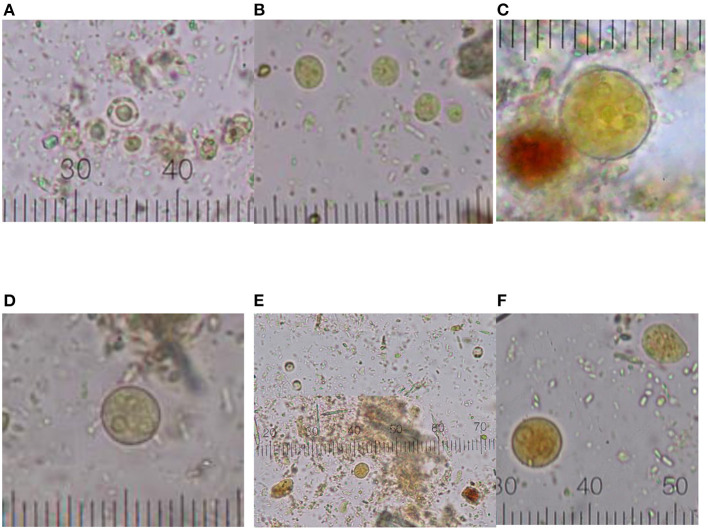
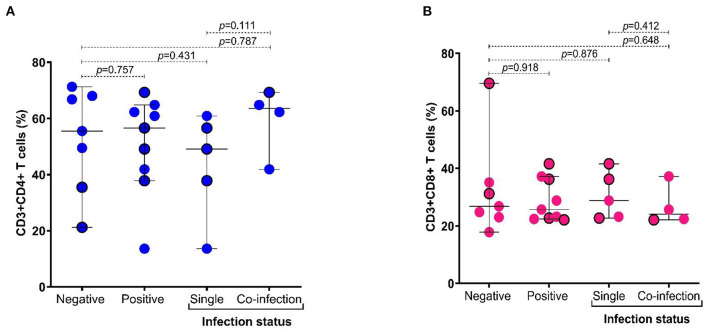
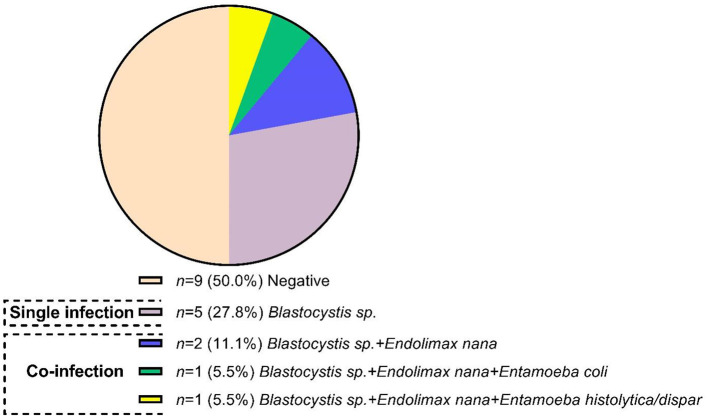
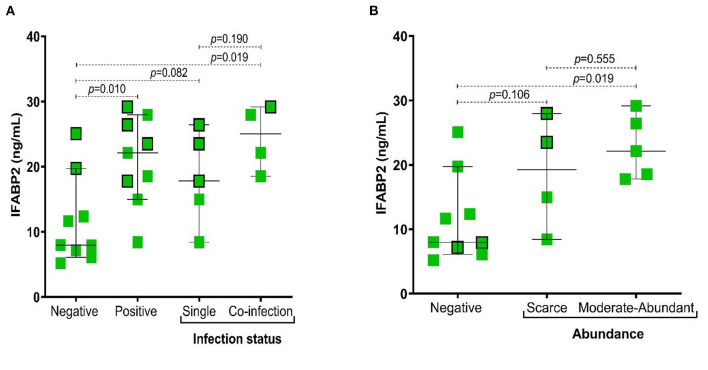
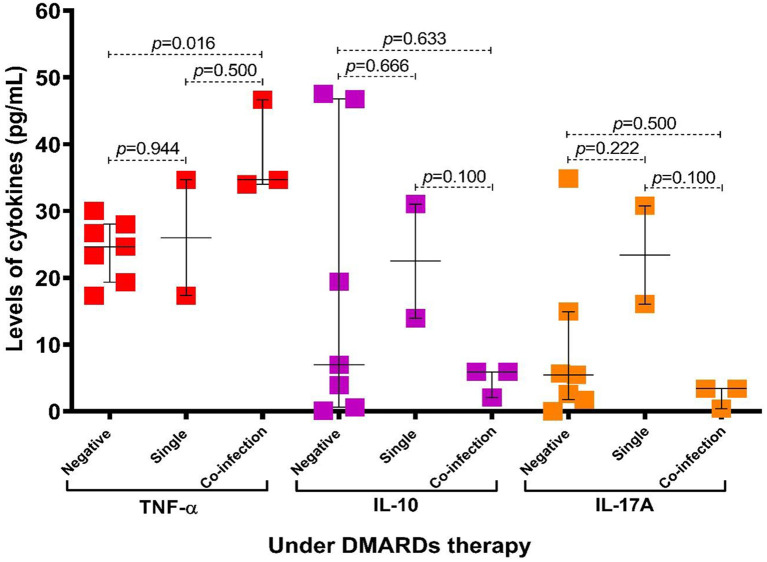
Protozoa, nematodes, and platyhelminths are of clinical interest due to their role on the modulation of the immune responses. To determine the frequency of infection by intestinal parasites as well as the status of single or mixed infection (coinfection) and its relation with inflammation and intestinal permeability markers in patients with rheumatoid arthritis (RA), a cross-sectional study was conducted in 18 women diagnosed with RA. A fecal sample of each participant was analyzed for parasitic identification. The DAS28-erythrocyte sedimentation rate score, as well as the serum levels of TNF-α, IL-10, IL-17A, and the intestinal fatty-acid binding protein 2 (IFABP2), was determined through the ELISA technique. The T CD4+ and CD8+ lymphocytes' proportions were determined by flow cytometry. In this study, 50% ( = 9) of the total sample tested were positive to the presence of intestinal protozoa (27% by single infection and 22.2% by coinfection). . and were the most frequently identified protozoa. The serum levels of IFABP2 were increased in patients with infection by protozoa, mainly in those individuals with coinfection and a larger abundance of . We found that coinfection by protozoa was related to higher levels of TNF-α and higher frequency of T CD4+ lymphocytes, mainly in patients under antirheumatic treatment. Infection by intestinal protozoa is associated with increased intestinal permeability in patients with RA; thus, infection, coinfection, and abundance of intestinal protozoa should be clinically screened because they could be an associated factor to the clinical variability of the disease.
原生动物、线虫和扁形虫因其在免疫反应调节中的作用而具有临床研究价值。为了确定类风湿性关节炎(RA)患者肠道寄生虫感染的频率以及单一感染或混合感染(合并感染)的状况及其与炎症和肠道通透性标志物的关系,对18名确诊为RA的女性进行了一项横断面研究。对每位参与者的粪便样本进行寄生虫鉴定分析。通过酶联免疫吸附测定(ELISA)技术测定疾病活动评分28-红细胞沉降率(DAS28-ESR)评分以及肿瘤坏死因子-α(TNF-α)、白细胞介素-10(IL-10)、白细胞介素-17A(IL-17A)和肠道脂肪酸结合蛋白2(IFABP2)的血清水平。通过流式细胞术测定T辅助性T细胞(CD4+)和细胞毒性T细胞(CD8+)淋巴细胞的比例。在本研究中,测试的总样本中有50%(n = 9)的肠道原生动物检测呈阳性(单一感染占27%,合并感染占22.2%)。 和 是最常鉴定出的原生动物。原生动物感染患者的IFABP2血清水平升高,主要是在合并感染且 丰度较高的个体中。我们发现原生动物合并感染与TNF-α水平升高和T CD4+淋巴细胞频率增加有关,主要是在接受抗风湿治疗的患者中。肠道原生动物感染与RA患者肠道通透性增加有关;因此,临床上应筛查肠道原生动物的感染、合并感染和丰度,因为它们可能是该疾病临床变异性的相关因素。