Beijing Key Laboratory of Pediatric Respiratory Infection Diseases, Key Laboratory of Major Diseases in Children, Ministry of Education, National Clinical Research Center for Respiratory Diseases, National Key Discipline of Pediatrics (Capital Medical University), Beijing Pediatric Research Institute, Beijing Children's Hospital, Capital Medical University, National Center for Children's Health, Beijing, China.
Research Unit of Critical Infection in Children, Chinese Academy of Medical Sciences, Beijing, China.
Front Cell Infect Microbiol. 2022 Apr 13;12:878430. doi: 10.3389/fcimb.2022.878430. eCollection 2022.
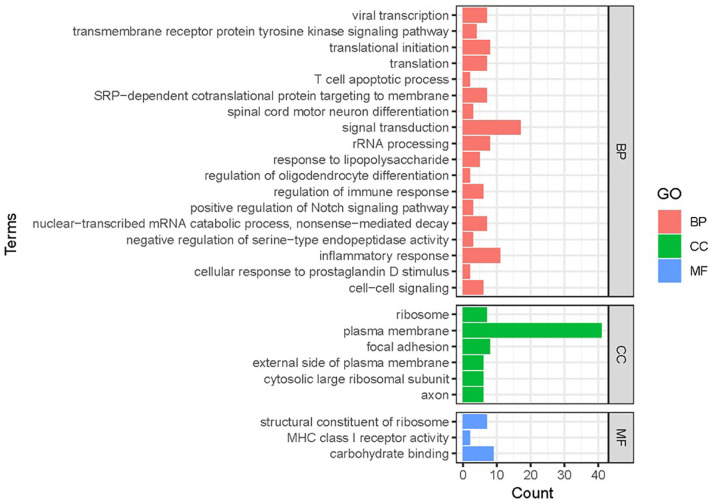
Respiratory syncytial virus (RSV) is the most common and critical viral pathogen causing acute lower respiratory tract infection in infants and young children and has a huge disease burden worldwide. At present, there are many studies on RSV transcriptomics exploring the mechanism of disease, but different studies show different gene expression patterns and results due to different sample collection platforms and data analysis strategies. A meta-analysis was performed on eight whole blood transcriptome datasets containing 436 children with acute RSV infection and 241 healthy children. A total of 319 differentially expressed genes (DEGs) (P value <0.0001) were identified in a meta-analysis using a random effect model. Functional enrichment analysis showed that several pathways related to immunity were significantly altered, including the "chemokine signaling pathway", "natural killer cell mediated cytotoxicity" and "cytokine-cytokine receptor interaction". Immune cell type analysis showed that the proportion of neutrophils in most RSV-infected children was higher than that in healthy children. These immune characteristics may help to provide new insights into RSV infection in children.
呼吸道合胞病毒(RSV)是导致婴幼儿急性下呼吸道感染的最常见和最严重的病毒病原体,在全球造成了巨大的疾病负担。目前,有许多关于 RSV 转录组学的研究探索疾病的发病机制,但由于样本采集平台和数据分析策略的不同,不同的研究显示出不同的基因表达模式和结果。对包含 436 例急性 RSV 感染患儿和 241 例健康儿童的 8 个全血转录组数据集进行了荟萃分析。使用随机效应模型对荟萃分析确定了 319 个差异表达基因(DEGs)(P 值<0.0001)。功能富集分析表明,一些与免疫相关的途径发生了显著改变,包括“趋化因子信号通路”、“自然杀伤细胞介导的细胞毒性”和“细胞因子-细胞因子受体相互作用”。免疫细胞类型分析表明,大多数 RSV 感染患儿中性粒细胞的比例高于健康儿童。这些免疫特征可能有助于深入了解儿童 RSV 感染。